Tortuguero: Canals at First Light | Costa Rica Travel Professionals
Travel Stories
Tortuguero: Canals at First Light
Before sunrise, the water is almost the same color as the sky. I sit in a small boat and listen to the quiet sounds that become clear when an engine is low and nobody is trying to fill the silence. The settlement behind us recedes
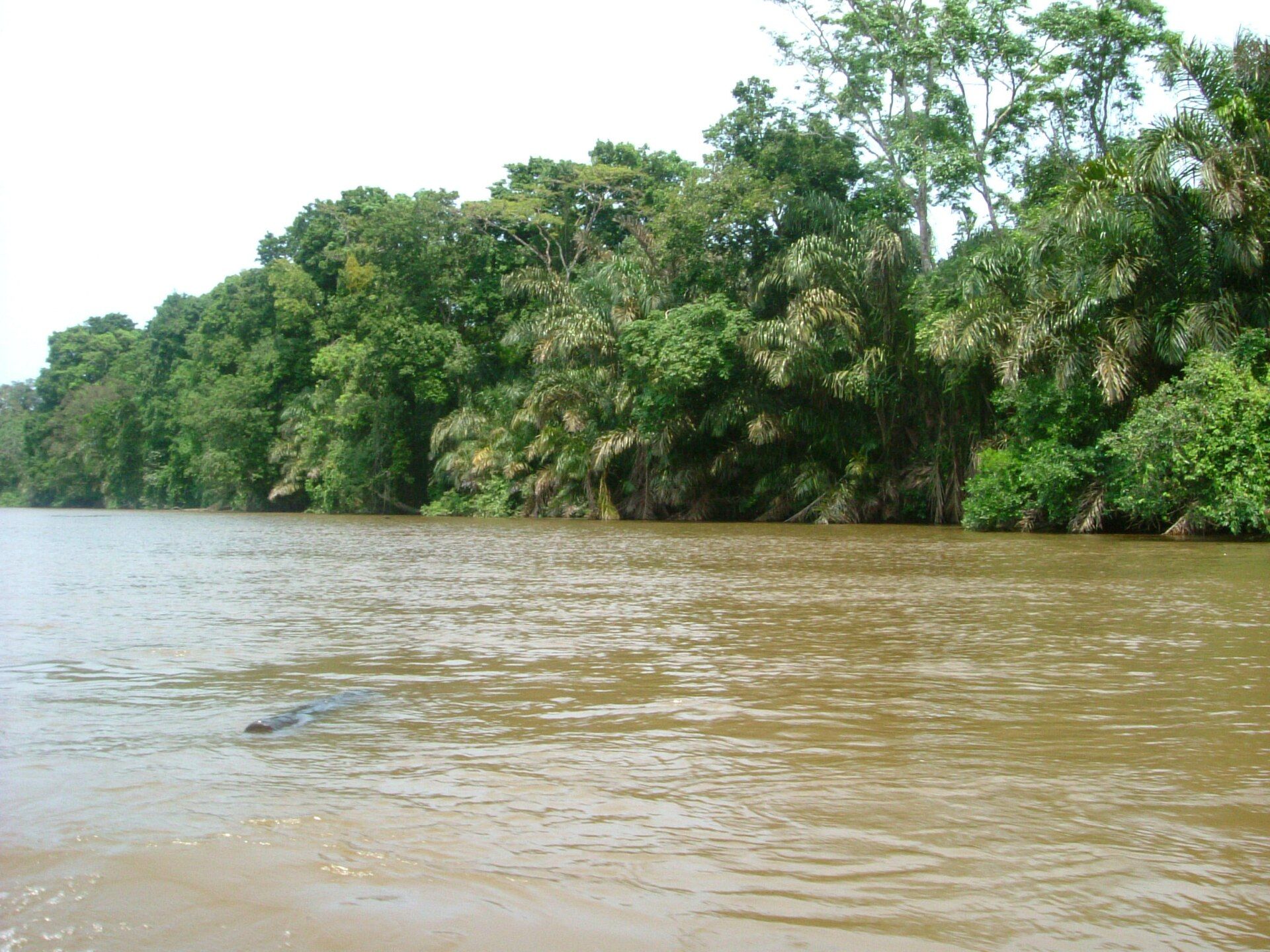
Image: File:A Tortuguero canal - Flickr - S. Rae.jpg by S. Rae from Scotland, UK, via Wikimedia Commons (https://commons.wikimedia.org/wiki/File:A_Tortuguero_canal_-_Flickr_-_S._Rae.jpg). License: CC BY 2.0 (https://creativecommons.org/licenses/by/2.0/). Cropped for display.
Before sunrise, the water is almost the same color as the sky. I sit in a small boat and listen to the quiet sounds that become clear when an engine is low and nobody is trying to fill the silence. The settlement behind us recedes. Ahead, the channels of Tortuguero open into a green world that seems to begin at the water's edge and continue beyond anything I can see. I had expected the boat to be a way into the park. Within minutes, I understand that the water is part of the place itself.
Tortuguero National Park lies in northeastern Costa Rica, where rivers and streams create a network through protected forest and wetlands. Access to the park is by boat. Those facts sounded practical when I read them before the trip. At first light they feel more profound. There is no road beside us to hurry the journey along. We move at the pace of the channel and the attention of the people in the boat.
The water leads
The boat eases away from the open stretch and enters a narrower passage. Branches lean toward the water, and their reflections make it hard to tell where one layer of green ends and another begins. The surface holds the sky in patches. A single falling leaf breaks the mirror, sending rings outward until the current erases them. I lean forward without meaning to, drawn by how close everything feels.
I am aware of the other passengers, but we have become unusually quiet together. Nobody has asked us to be solemn. The place simply offers so much to hear: a bird somewhere back in the trees, the brush of leaves, water moving against the hull. When the guide gestures toward the bank, every head turns. We search without knowing exactly what we are looking for. I find that shared attention as memorable as any sighting.
The park is known for its wildlife and for the protection of green sea turtle nesting habitat along its beach. This morning, however, the canals are my focus. I keep the turtle story in mind without imagining that it can be summoned on demand or at any season. Conservation means more than the chance to witness a famous animal. It also means protecting the complex habitat through which we are moving now.
As the light strengthens, the forest gains depth. What looked like one dark bank separates into trees, vines, and openings. I see a bird lift from a branch and cross the channel too quickly for me to name. Its reflection follows it for an instant. I have no photograph, but I hold the movement in memory: dark shape against pale water, then green closing behind it.
A village behind the forest
I think of Tortuguero village and the nearby communities we passed before entering this quiet stretch. The park does not float outside human life. People live around it, maintain traditions, work on the water, and welcome visitors. The official tourism information notes how boats are central to access and how nearby settlements have their own rhythms. My visit is only a brief passage through a place that others know as home.
That awareness changes how I listen to the guide. I do not want the canals reduced to a catalog of species, though I am eager to learn. I want to understand the relationship between land, water, wildlife, and people. I want to leave room for the fact that a visitor's dawn can be someone else's working morning. The boat carries us through both landscapes at once.
When the channel widens, I can feel more air across my face. The first direct sunlight catches the upper leaves, leaving the water below in shade. For a moment the forest seems divided into two times of day. I watch the line of brightness travel downward. It is a slow event, too subtle for a schedule and too beautiful to ignore.
I have taken other boat rides where the destination was the point. Here, every bend is a destination for a few seconds. A low branch changes the shape of the channel. A patch of open sky changes the color of the water. The boat turns, and the view behind us is not the view we entered. I begin to understand why the word labyrinth appears so often in descriptions of wetland places, though from this seat the route feels less like a puzzle than a conversation.
Watching without demanding
At a particularly quiet bend, we pause. I scan the shore for movement. The temptation is strong to ask whether we will see a monkey, a caiman, or a bird bright enough to identify from a distance. I stop myself. Wildlife is present whether or not it chooses to be visible. The plants leaning over the water, the sounds in the canopy, and the changing surface are enough to make the habitat real.
Then something stirs among the branches, and the guide raises a hand. I see a shape briefly, partly hidden by leaves. It may be a bird settling deeper into cover. It may be something else. I cannot name it with confidence, and I am oddly pleased not to invent certainty. The uncertainty makes me look more carefully at the whole bank instead of chasing a single label.
Our boat moves on. The channel is narrow enough that the forest seems to wrap around us. Yet I never feel closed in. The water carries light through the green, a moving corridor open to the sky. I trail my gaze along a line of roots and notice the way they meet the water without a clean border. Land and canal exchange space, especially in a landscape shaped by rain and current.
I think about the beach beyond this inland network. It is part of the same protected system, even if I do not see it from the boat. Tortuguero's green sea turtle nesting significance is often the first thing travelers learn about the park. The canals teach me that a place cannot be understood by one celebrated species alone. Protection reaches across water, forest, shore, and the lives connected to them.
The morning becomes brighter
By midmorning the muted colors of dawn have given way to brighter greens. I can see details I missed earlier: the line of a leaf against the bank, a small movement at the surface, the pattern of shadows under the overhanging branches. The boat's wake briefly disturbs the water, then the reflection reforms. The speed of that recovery makes the channel look timeless, though I know it changes continuously.
We return by a route that feels familiar only in fragments. I recognize a particular bend and then fail to recognize the next. The light has moved. My attention has moved with it. What seemed like a passage at dawn now feels like a series of small rooms, each with its own sound and color. I am glad we have not rushed.
I imagine what it would be like to return in rain. The surface would look different, the canopy would sound different, and the channels might feel more enclosed. Or I might return on a clear day and see far into the branches. The point is not to collect every version. It is to understand that this morning is one version among many, shaped by weather, season, and the wildlife's own movements.
Back toward the village, human sounds gradually return. I hear voices before I can make out words. A bicycle appears along a path. The transition is gentle, not a break from nature but a reminder that Tortuguero includes community as well as protected park. I am grateful for the people who know how to move through these waterways and for the opportunity to see them respectfully.
What stays after the boat stops
When I step onto land, my body still feels the boat's slight movement. I stand for a moment until the ground seems steady. The canal is behind me, but its pace has stayed with me. I speak more softly than I did before we left. I notice the small spaces between sounds. A morning on water has tuned my attention to things I might otherwise have passed by.
I do not have a list of spectacular sightings to recite. I have a sequence of images that feel more faithful to the experience: first light on the channel, a falling leaf, a bird crossing its own reflection, a guide's quiet gesture toward a bank. None could carry the whole morning alone. Together they give it shape.
I think about how to describe Tortuguero to someone planning a Costa Rica journey. I would tell them that the approach matters. Boat access is not merely a transportation detail to solve; it changes the traveler's sense of arrival. The waterways lead into a different rhythm. I would also tell them to treat the park's wildlife as possibility rather than promise, and to give equal attention to the community around it.
The most meaningful part of the morning may be the way it unsettles my usual idea of a destination. I did not arrive at a single viewpoint. I moved through a living system whose beauty was inseparable from motion. The water was path, mirror, habitat, and memory at once. Its slow turns asked me to stay alert without being impatient.
Later, I will remember the first minutes before sunrise most clearly. The water and sky were nearly one color, and I did not yet know what the day would reveal. That open feeling is rare. Tortuguero gave me no guarantee, only a quiet channel ahead and enough time to look. It was more than enough.
I carry away a respect for the scale of what I saw only in part. A short boat ride cannot explain a network of rivers, the life along their banks, or the long work of protecting a nesting beach. It can begin a relationship of curiosity. Mine begins with a line of light widening on the water and a sense that I should leave the place as patiently as I entered it.
At lunch I find myself still watching reflections. A glass on the table catches a pale rectangle of sky, and for a second I am back on the canal. The memory is not a picture of one remarkable animal. It is a way of seeing movement at the edge of things. I think of the boat rounding a bend and the whole forest rearranging without any hurry. I think of the guide letting a silence last long enough for us to hear what lived inside it. The place followed me off the water because it changed the pace at which I met the rest of the day. That is the kind of travel I hope for: an experience that makes the hours afterward feel more awake.
Editor's note: This first-person story is an illustrative, researched narrative created for travel inspiration. It does not recount an actual visit by a Costa Rica Travel Professionals staff member or customer. Wildlife sightings, water conditions, and community details vary; turtle viewing is seasonal and subject to conservation rules.
A world of wonder awaits
Plan your Costa Rica adventure
Tell our destination concierges what you want from Costa Rica, and we will help shape the journey.