Tenorio: Walking Toward Río Celeste | Costa Rica Travel Professionals
Travel Stories
Tenorio: Walking Toward Río Celeste
The road near Bijagua gave me time to wonder whether the blue could really look the way it did in pictures. Río Celeste had lived in my mind as a startling color, almost too vivid to belong to a river. Yet I knew that a photograph
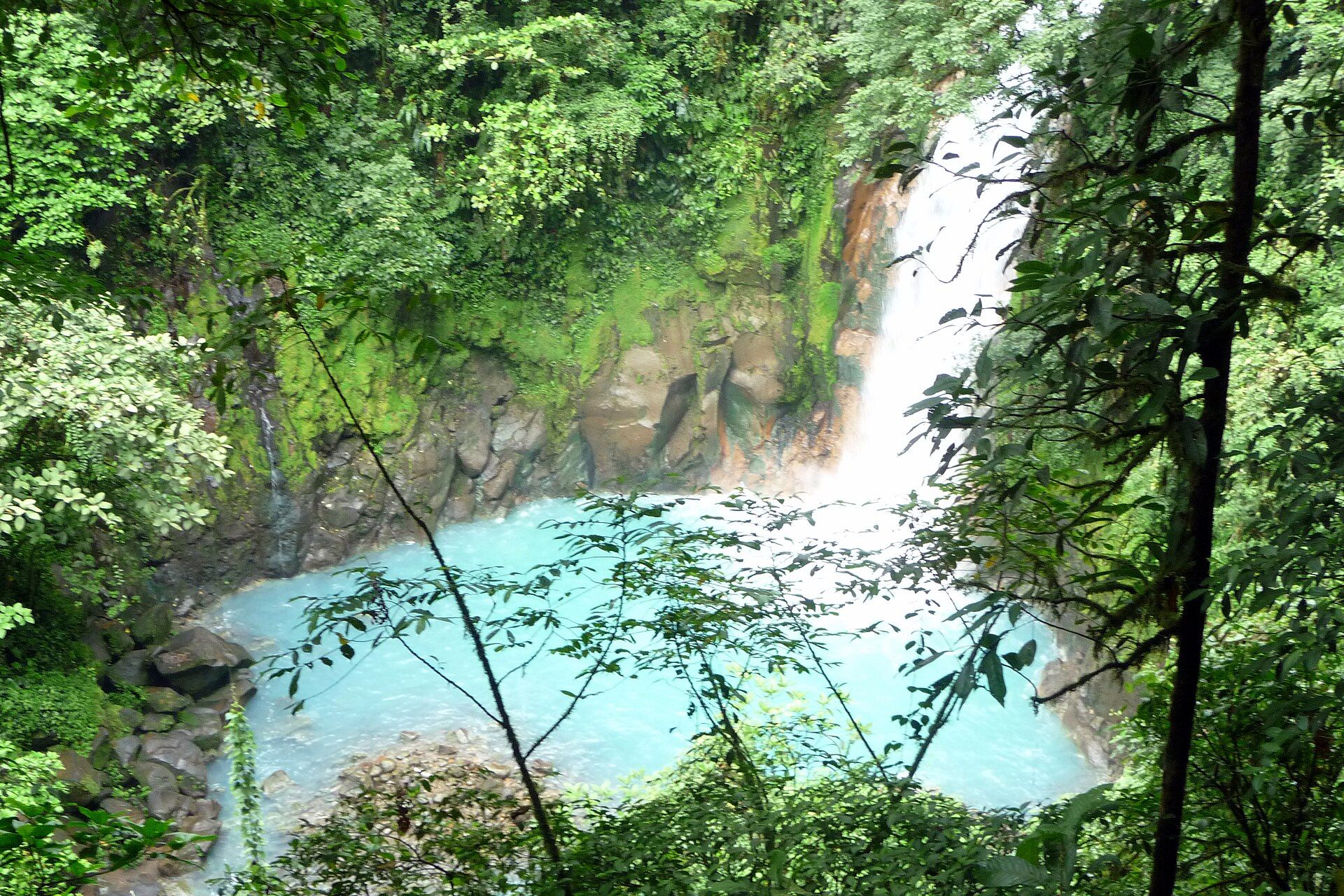
Image: File:Rio Celeste. Parc natural Volcan Tenorio. Bijagua de Upala - panoramio (1).jpg by Imatges, algunes lle…, via Wikimedia Commons (https://commons.wikimedia.org/wiki/File:Rio_Celeste._Parc_natural_Volcan_Tenorio._Bijagua_de_Upala_-_panoramio_(1).jpg). License: CC BY 3.0 (https://creativecommons.org/licenses/by/3.0/). Cropped for display.
The road near Bijagua gave me time to wonder whether the blue could really look the way it did in pictures. Río Celeste had lived in my mind as a startling color, almost too vivid to belong to a river. Yet I knew that a photograph could not tell me what the forest around it would feel like, how the trail would change underfoot, or what weather might do to the view. I had come to Tenorio Volcano National Park with the waterfall in mind. As I entered the protected landscape, I wanted to give the walk a chance to become more than a long approach to one famous image.
The forest made that easy. Moist air settled against my skin, and the vegetation gathered in layers I could not see through all at once. Palm shapes rose among ferns and broader leaves. The path asked me to watch my footing, especially where earth and stone held the day's dampness. I slowed, partly for comfort and partly because the forest kept offering small reasons to stop. Water moved somewhere out of sight. A leaf carried a bright drop at its tip. I could hear birds without pretending to identify them. The river's color was still ahead, but the place was already becoming real to me.
I had read the official park description of Tenorio's forests and its place in the volcanic mountain range. Facts like those can seem distant until a walk gives them texture. Here, the words tropical wet forest became the feeling of shaded air and a path that required care. I did not need to claim an encounter with every animal listed as possible in the park. A protected forest is not a wildlife show scheduled for visitors. The possibility of unseen life was enough to make my movements more attentive. I kept to the designated route and let the forest remain larger than my view of it.
When I first caught a glimpse of blue water, it appeared between leaves rather than all at once. I stopped and looked again. The color seemed to belong both to the river and to the light falling on it, a bright ribbon in a landscape of deeper greens. I had expected a single moment of amazement. Instead, the color entered the story gradually, disappearing behind vegetation and returning at a different angle. That made it feel less like a trick image and more like a real river moving through a real forest. I was glad I had not rushed.
The waterfall viewpoint brought a different scale. Water descended into a pool whose color drew my eyes even while the sound filled the space around me. I stood where visitors were permitted, without imagining a swim beneath the falls or a path beyond the designated access. The beauty of the scene did not require crossing a boundary. Mist softened the rock; the forest enclosed the view; the river continued beyond the frame. I felt a familiar impulse to photograph it quickly, as though the color might vanish. Then I put the phone down for a moment and simply watched the water move.
The blue did not make the rest of the landscape disappear. If anything, it sharpened my awareness of everything around it. The darker foliage seemed deeper beside the water. The rock offered a rough contrast to its bright surface. People arriving and leaving changed the rhythm of the viewpoint. I noticed my own breathing after the walk and the way a pause restored my attention. A spectacular color can overwhelm a first glance; staying longer let the scene settle into its surroundings. Río Celeste stopped being only blue. It became sound, terrain, weather, and movement.
I thought about how often the river is described as magical. The word fits the first astonishment, but I did not want it to replace curiosity. The official park sources place the river within Tenorio's protected landscape, and the area includes the meeting of waters known as Los Teñideros. The vivid color has a physical explanation, though the details are more intricate than a casual travel story can responsibly compress. I was content to leave the science to careful sources and to describe what the scene made me notice. Understanding that nature can produce such a color did not make it less wondrous.
The trail continued to offer changes in texture. One stretch felt enclosed, another opened a view toward moving water. I crossed only where the established route allowed, aware that rain can alter the character of a forest path. My shoes gathered a little earth. The sound of the river came and went. I liked the way the journey refused to be a straight line toward a single reward. Even after seeing the falls, there was pleasure in walking onward, in learning how the river and forest shaped each other through the landscape.
At Los Teñideros, I imagined the meeting of waters as a quiet hinge in the story. Before the confluence, separate flows carried their own character; after it, the river's famous color became visible. I did not need to invent a precise shade at every moment or promise it would look identical in all conditions. Light, rain, and water levels can alter what a visitor sees. The point was to notice the relationship between place and appearance. The blue belonged to a living system, not to a permanent paint line laid across a map.
I stopped under the trees and tried to hear the river without looking for it. Its sound helped me place myself within the forest even when the water was hidden. A breeze moved overhead. Somewhere farther away, another walker spoke and then fell quiet. The scene gave me an unusual sense of companionship without demanding conversation. We were all temporary guests moving through the same protected place, each bringing our own anticipation and leaving with a different version of the day. Mine was becoming a story about patience as much as color.
The path back made the familiar details new. On the way in, I had been drawn forward by the promise of the falls. Returning, I noticed the shape of roots and the way the forest light changed from one bend to the next. The blue river appeared again in a gap, and I felt less surprised but more attached to it. I now knew a little of the trail around that view. The image had acquired a before and an after, which a postcard could never supply. It belonged to a walk, not simply to a spot.
I considered what I would say to someone planning the journey. I would tell them that the waterfall is beautiful and the forest deserves equal time. I would suggest checking current park access and trail guidance rather than relying on an old description of conditions. I would mention that weather can affect both footing and color, and that no wildlife sighting is assured. Those are practical considerations, but they are also invitations to travel well. Expectations can be generous without becoming rigid. It is easier to appreciate what happens when you have not promised yourself an exact picture.
By the time I reached the end of the route, I felt the pleasant tiredness of having paid attention with my whole body. My legs remembered the uneven ground; my ears remembered the river before my eyes did. The forest had framed every bright glimpse, turning the blue into part of a larger experience. I had come seeking an image that seemed almost impossible. I left with something less easily summarized: the sense of having walked through a wet, breathing landscape toward a color that changed with distance and light.
Back near Bijagua, the ordinary sounds of the community returned. A vehicle passed. Voices carried from a doorway. The transition reminded me that a protected park is connected to nearby places and people, not floating outside the world. A thoughtful trip could make room to learn from local knowledge, pause for a meal, and keep the day from becoming a race to the next attraction. I would not invent a particular conversation or endorse a business I had not verified. It was enough to recognize that the area has a life beyond the famous waterfall and that visitors have a chance to meet it respectfully.
I looked back toward the green mass of the highlands and thought about how brief my imagined visit had been against the river's continuing flow. The blue would be there under conditions of its own, appearing differently to the next visitor. That was part of its appeal. I did not possess the color because I had seen it. I had encountered it for a short time, from a designated path, and carried away the feeling of being surprised by something genuinely natural. The difference matters. It keeps wonder from turning into a claim of ownership.
Later, when I scrolled past the few photographs I had taken, I found that they captured the color but not the waiting. They did not hold the coolness beneath the canopy or the care I took on the damp path. They did not show the moment a glimpse through leaves persuaded me to slow down. I was glad to have the pictures, yet the real memory lived around them. Travel images can open a door; they cannot walk the trail for us. The best part of this day had been moving through the landscape rather than arriving at an exact frame.
I imagined planning another Costa Rica journey and choosing to return under a different sky. Perhaps the water would appear softer after rain, perhaps the light would make it even brighter. Either way, the forest would ask for attention, and the route would have its own character that day. The possibility of change made the memory feel alive rather than incomplete. Río Celeste was not a single image I had checked off. It was a place with seasons, weather, and a river that continued whether or not I was there to watch.
That is the story I would share: a walk that began with doubt about a color and ended with trust in the whole landscape around it. The waterfall mattered, and I can still picture the blue beneath it. Yet I remember the forest first, the way it held the sound of water and let the color appear in fragments. Tenorio gave me more than a beautiful view. It gave me a way to approach one: with care for the place, patience with the weather, and enough time to let the journey become part of what I came to see.
Even the moments when the river was hidden now felt important. They had given my eyes a chance to rest on bark, fern, and shadow before another flash of blue appeared. I thought about how different the walk would have felt if a path led straight from the entrance to a single overlook. The surprise might have been sharper, but the memory would have been thinner. Tenorio's forest made anticipation into a form of attention. The blue water was the unmistakable center of the day, yet the time spent approaching it gave that center its depth.
Editorial note: This is an illustrative first-person story, imagined from research to inspire travel. It does not describe a real visit by Costa Rica Travel Professionals staff or a customer. Check current SINAC access, trail guidance, and weather before planning.
A world of wonder awaits
Plan your Costa Rica adventure
Tell our destination concierges what you want from Costa Rica, and we will help shape the journey.