Tárcoles River and Carara Forest | Costa Rica Travel Professionals
Travel Stories
Tárcoles River and Carara Forest
The morning near the Tárcoles River began with a question of scale. From the road, the water looked broad and slow, gathering the color of the sky and carrying it toward the coast. I had seen images of crocodiles associated with t
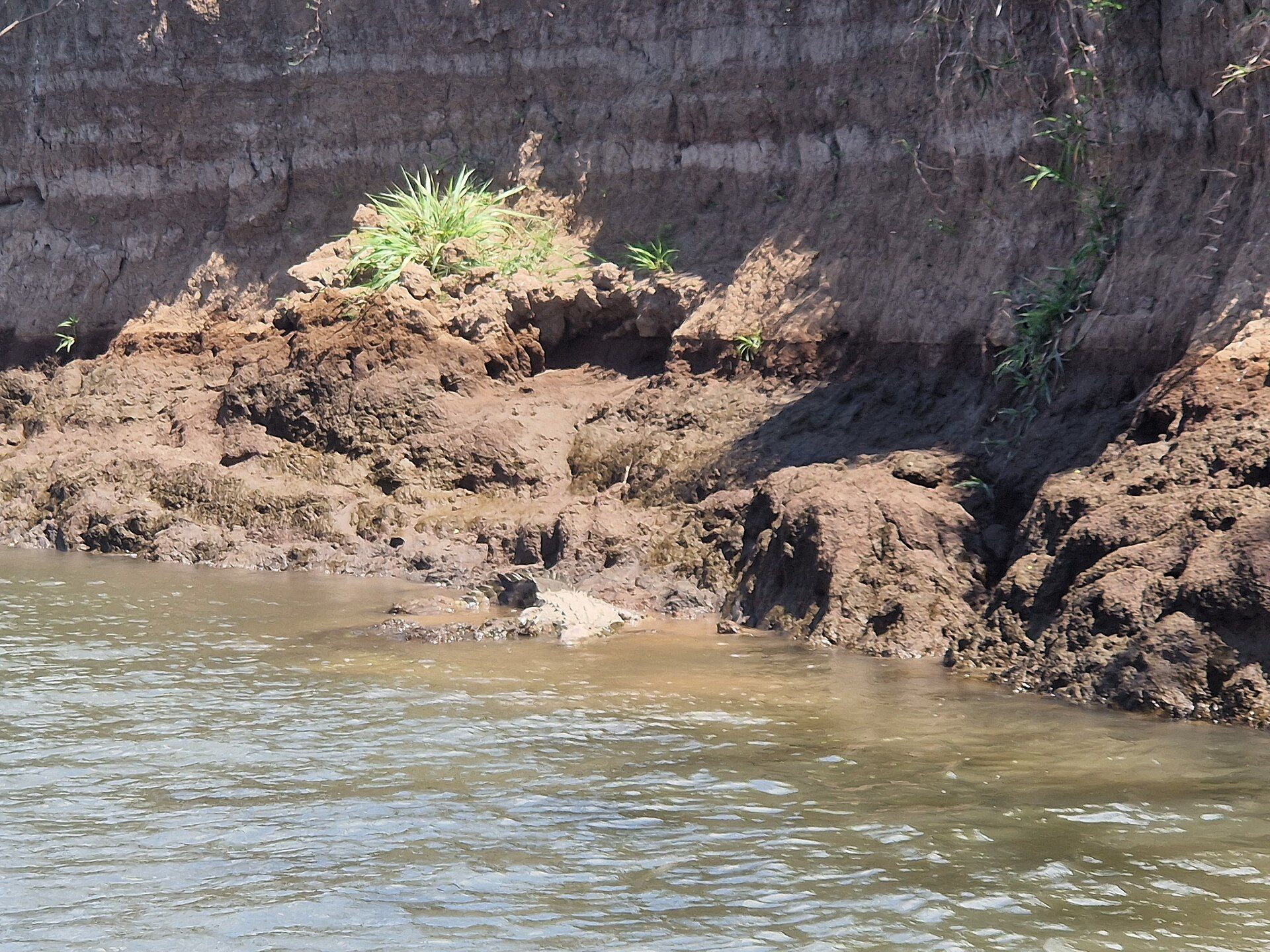
Image: File:American Crocodile in Tarcoles river, Costa Rica (2).jpg by Hanay, via Wikimedia Commons (https://commons.wikimedia.org/wiki/File:American_Crocodile_in_Tarcoles_river,_Costa_Rica_(2).jpg). License: CC BY-SA 4.0 (https://creativecommons.org/licenses/by-sa/4.0/). Cropped for display.
The morning near the Tárcoles River began with a question of scale. From the road, the water looked broad and slow, gathering the color of the sky and carrying it toward the coast. I had seen images of crocodiles associated with this river, and I knew how easily a place could be reduced to that single possibility. I wanted to look longer. The estuary was a meeting place for water, birds, vegetation, and human routes through the Central Pacific region. Nearby Carara National Park offered a different view from beneath the trees. I planned to let the two landscapes speak to each other across the day.
I began by keeping a respectful distance from the river. It was not a backdrop for a daring photograph or a place to approach wildlife casually. From an appropriate vantage, I could watch the water's surface and the banks beyond it. A bird crossed low over the current, then disappeared into vegetation. I could not tell what it was, and I did not invent an identification for the sake of a more impressive story. The flight was enough to pull my gaze along the river. The estuary felt open, but every movement suggested hidden layers of life.
The name Tárcoles had entered my trip plan as a stop on the way elsewhere. Standing near the river changed that. Water moved at a pace unlike my own, carrying reflections that broke apart and reformed. The banks held a mix of exposed edges and dense growth. I imagined what a knowledgeable local guide might notice here: the difference between a passing bird and a resident one, the signs of changing water, the quiet places where an animal could be present without being obvious. For me, the first lesson was to wait. Watching a river is not the same as glancing at it.
When I continued toward Carara National Park, the landscape shifted from horizontal openness to close forest. The official tourism description calls Carara a transitional forest, a place where elements associated with dry and rain forests meet. I could feel the idea before I could explain it botanically. The path moved through overlapping textures, some sections bright and airy, others shaded and dense. The river remained in my memory, though I could no longer see it. Together, these places made the region feel layered rather than divided into separate attractions.
At the park entrance, I followed the current visitor guidance and chose an established path. Carara is known for birdwatching, including the possibility of seeing scarlet macaws, but possibility is the right word. Birds move according to their own lives, not to a visitor's schedule. I listened for calls and watched the canopy without promising myself a particular sighting. The forest offered plenty even in uncertainty: the texture of leaves at different heights, the movement of light, and the sense that a familiar path could still conceal much from an untrained eye.
I paused beside a tree whose roots shaped the ground around it. I could hear distant voices, then a sharper sound from the canopy. Looking up, I caught motion but not a clear view. My first impulse was frustration. I wanted to know what I had heard, to turn the experience into a name I could report later. Instead, I let the sound remain part of the forest. A place famous for birds does not become less remarkable when some stay unseen. In fact, the effort to listen more carefully made the walk feel more intimate than a quick list of sightings would have.
The park's universal access path is an important part of its public story. Official tourism information describes it as a way for more visitors to experience the forest, and I appreciated the intention behind that access. I did not assume that every route or every condition would meet every traveler's needs; current details deserve to be checked. Still, the idea that a protected forest should be experienced by a wider range of people felt meaningful. The path was more than a convenience. It was a statement that wonder should be shared as thoughtfully as possible.
The forest's edges kept changing. A patch of sun reached the ground and made a small clearing glow. A few steps later, the canopy gathered overhead again. I was reminded of the river's shifting reflections, though the setting could hardly have looked more different. Both places rewarded attention to transition. At Tárcoles, water and bank met. At Carara, different forest characters overlapped. The day did not move from one isolated sight to another; it moved through boundaries where one environment touched the next.
I thought about the scarlet macaw as a presence that could define a visitor's hopes. The tourism board highlights the bird's connection to Carara, and its colors are easy to imagine against green foliage. But I did not want the whole visit to hang on whether I saw one. The forest had its own dignity when the canopy remained still. I could notice shape, sound, and movement without making a wildlife encounter the price of a successful day. That seemed especially important in a protected area, where the animals' freedom to remain out of view is part of what protection means.
At a quiet point on the trail, I remembered the river again. I could picture its broad surface beyond the trees and the bird crossing it in the morning. Carara was close enough to Tárcoles that the two formed a natural pair in my mind, but each demanded a different way of looking. The river asked for a patient gaze across distance. The forest asked me to look upward, inward, and sometimes at the ground. Moving between them kept my senses alert. The day felt like a conversation between openness and enclosure.
I made room for a pause without trying to fill it with a practical task. A travel day can become crowded with decisions: where to go next, how long to stay, whether a photograph is worth taking. Sitting still for a few minutes answered none of those questions and made all of them less urgent. The light shifted across a leaf. I heard footsteps farther along the path. The forest went on. I was not needed for the scene to be complete, and that was a comforting thought. I could be a visitor without being the center of the story.
When I walked again, I noticed the careful choreography of staying on the path. It kept my feet from crossing into the forest's own space and helped me move through a protected place with less disturbance. I thought of the riverbank and the same principle there: a close view is not always a better view if it requires taking a risk or pressing into an animal's habitat. Distance can make observation more thoughtful. It gives the place room to remain itself, and it gives the visitor time to see relationships rather than isolated creatures.
The afternoon light grew warmer. As I returned from the trail, the change in temperature reminded me how quickly the Central Pacific can shift between shade and open sun. I carried water and the ordinary tiredness of a day spent looking closely. The forest had not delivered a grand moment on cue. It had given me a collection of quieter moments: a call I could not name, a root curving across the ground, a clearing that brightened for a minute, and the feeling of being surrounded by lives that did not need to show themselves to me.
I returned toward the Tárcoles landscape with those forest details in mind. The river now seemed less like an isolated channel and more like part of the wider ecology of the region. I did not claim a scientific understanding after one imagined day; I simply saw a connection I had missed in the morning. Water, shore, and forest were close neighbors. The birds that had pulled my eye across the river helped me think about movement between them. A carefully designed Costa Rica itinerary could offer that connection without turning every stop into a separate checklist item.
The popular image of the Tárcoles River often centers on crocodiles. Their presence deserves respect, and any observation should follow safe local guidance from an appropriate distance. Yet my strongest memory was of waiting for a bird to cross the water, then following its path until I lost it. That modest moment opened the day. It made me curious about the forest beyond, and the forest sent me back to the river with a more patient eye. Sometimes a place becomes memorable because one small movement changes how you see everything around it.
I imagined telling someone about the route and found myself avoiding guarantees. I could not promise a scarlet macaw at Carara or a crocodile visible from a particular vantage. I could say that the park is recognized for birdlife and transitional forest, and that the nearby river and estuary offer a contrasting landscape. I could recommend checking current park access and choosing responsible local guidance for wildlife watching. Most of all, I could describe the value of allowing enough time. A hurried stop might capture a photograph; a slower day lets the relationships emerge.
As the light began to soften, I looked once more across the river. Its surface had changed color again, and the farther bank appeared almost flat in the distance. I thought of the forest's layered interior, invisible from here. The contrast made the day feel complete without a dramatic finale. I had moved from open water to close trees and back, and each scene had deepened the other. The route held a sense of geography as well as emotion. I could feel how places connect across a landscape rather than exist as dots on a map.
Travel often asks me to choose a favorite moment, but I did not want to separate this day so neatly. The river's breadth gave the forest's closeness meaning. The forest's sounds made the quiet movement of the estuary feel richer. Even the moments when wildlife stayed hidden mattered, because they reminded me that these places are inhabited on their own terms. I left with a story that depended less on what I had managed to see than on how long I had been willing to look.
The final image I carried was not a crocodile or a bright bird, though either could be part of another traveler's day. It was the bend of the river holding late light, with the thought of Carara's trees nearby. Tárcoles and Carara had invited me to practice a form of attention that felt both generous and careful. I could let wildlife remain wild, let the forest remain more than a list of species, and let the river keep moving beyond my brief visit. That was enough to make the Central Pacific feel unexpectedly intimate.
I pictured another morning here with someone who knew the birds by their calls. They might hear a whole conversation where I heard only scattered notes. That possibility did not make my own listening feel inadequate; it made the place feel inviting. There would always be more to learn. I could return with questions, find a responsible local guide, or simply make a little more time to stand beside the water. The day's best lesson was not a fact I could carry away and repeat. It was a habit of looking that might make every later stop in Costa Rica more interesting.
Editorial note: This is an illustrative first-person story, imagined from research to inspire travel. It does not describe a real visit by Costa Rica Travel Professionals staff or a customer. Check current park access and follow local wildlife safety guidance before planning.
A world of wonder awaits
Plan your Costa Rica adventure
Tell our destination concierges what you want from Costa Rica, and we will help shape the journey.