Savegre Valley: Birding and Mountain Stillness | Costa Rica Travel Professionals
Travel Stories
Savegre Valley: Birding and Mountain Stillness
I had come to Costa Rica imagining heat. In the suitcase I had packed for beaches and lowland trails, the warmest thing was a thin sweater. Then the road climbed toward San Gerardo de Dota, the air through the open window sharpene
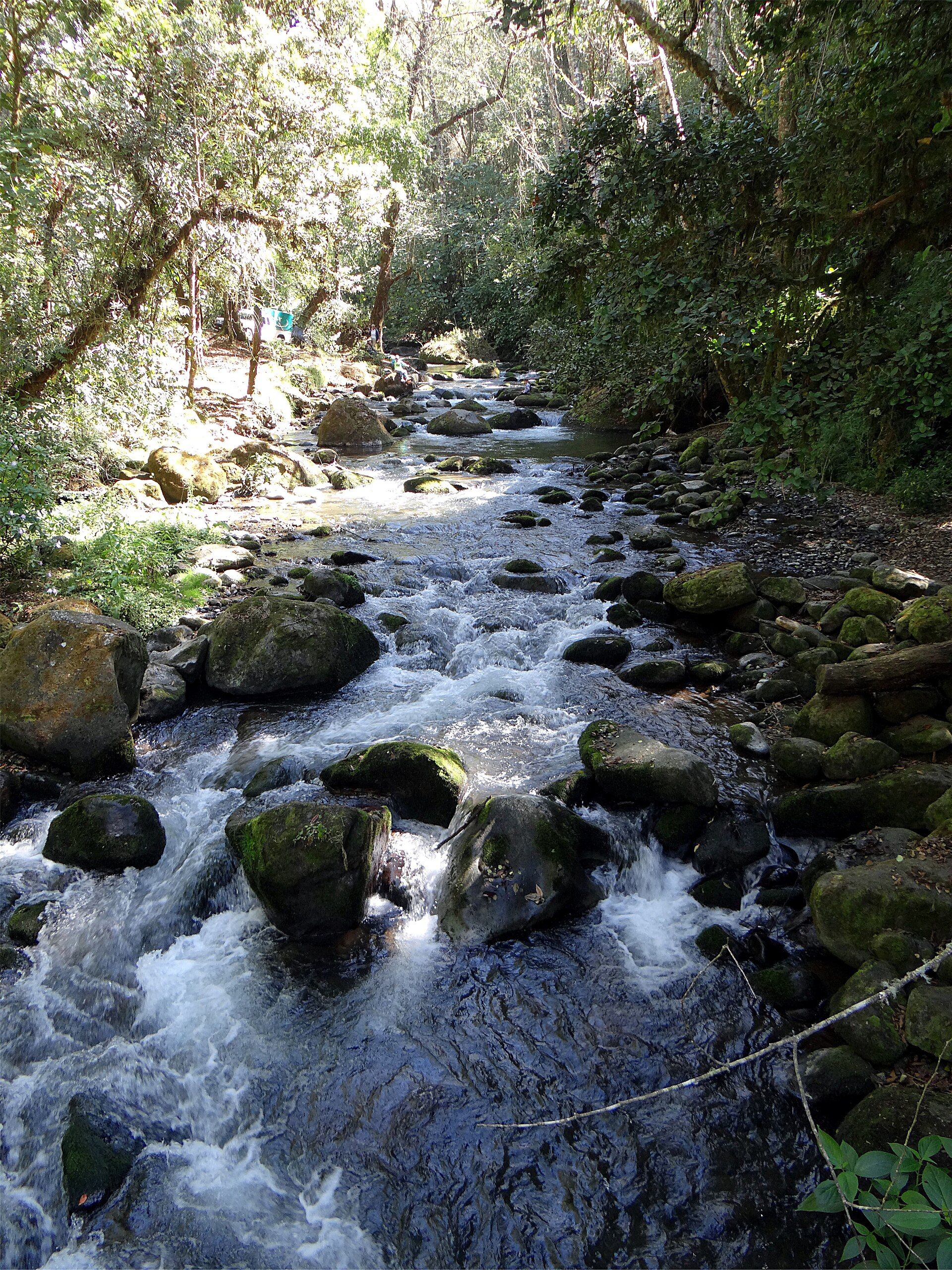
Image: File:Costa Rica - San Gerardo de Dota 01.jpg by Wayne77, via Wikimedia Commons (https://commons.wikimedia.org/wiki/File:Costa_Rica_-_San_Gerardo_de_Dota_01.jpg). License: CC BY-SA 4.0 (https://creativecommons.org/licenses/by-sa/4.0/). Cropped for display.
I had come to Costa Rica imagining heat. In the suitcase I had packed for beaches and lowland trails, the warmest thing was a thin sweater. Then the road climbed toward San Gerardo de Dota, the air through the open window sharpened, and the country I thought I knew began to change. The green did not disappear. It became deeper and more layered, rising from the valley in close ranks of trees. Clouds moved across the slopes slowly enough for me to see their shadows travel. I pulled on the sweater and felt as if I had arrived in a different season without leaving Costa Rica.
The Savegre valley invited a quieter kind of attention than the trip I had been planning in my head. I had pictured a list of sightings, an early start, perhaps a resplendent quetzal. Instead, the first thing I noticed was the sound of water somewhere below the road. It was steady but never quite visible. The second was the way every pause rewarded me: a pale flower on a bank, moss thick around a branch, a bird call that vanished before I could find its owner. I stopped trying to turn the landscape into an itinerary. I wanted to let the valley set the pace.
A morning measured in listening
Before daylight, I stood with a mug warming my hands and watched the dark outlines of the trees become separate shapes. There was no dramatic sunrise. A dull silver slowly gathered between branches. At first I heard only moving water. Then one bird called close by, another farther away, and the silence I had admired revealed itself as a crowded conversation. I was tempted to identify every voice. Instead I listened to the distance between them. The valley seemed to have depth even with my eyes closed.
When I joined a birding walk, I carried binoculars but kept lowering them. A good guide can point out movement I would have overlooked, yet no one can make a wild bird appear on command. That uncertainty was part of the pleasure. We waited at the edge of a stand of trees and watched leaves that looked still begin to twitch with small, precise movements. A flash of color crossed a gap. I lifted the binoculars too late and laughed at myself. The next time I waited instead of chasing. The reward was a little longer look, though I did not need to name the bird to feel the thrill of finally seeing it.
The quetzal remained the possibility hanging over the morning. In this highland area, birders come hoping to see its green plumage and striking tail. Hope can easily become pressure: the thought that a trip has somehow failed if the most famous resident does not show up. I tried to resist that arithmetic. Each time I raised my binoculars, I reminded myself that the forest was not performing for me. The act of looking closely was already giving me something. I could see the subtle difference between one shade of leaf and another, the soft edge of mist against the far hillside, the quick hesitation of a bird before it slipped back into cover.
At one point, the group stopped without anyone having to ask. There was movement in the branches above us. My heart sped up before I knew what I was seeing. For a few seconds, I found a shape through the leaves and lost it, found it again, then let the binoculars drop. Whether the bird resolved into the sighting I had hoped for felt less important than the way all of us had become completely present at once. Nobody checked a phone. Nobody asked what came next. We were simply looking up.
The beauty of an unfinished list
After breakfast, I took a short walk without the bird list I had tucked into my pocket earlier. The trail asked me to pay attention to the ground as well as the trees. Moist earth yielded beneath my shoes. Ferns reached out over the path. In places, the forest closed in enough that the light felt filtered through green glass. I heard the river more clearly whenever the path dipped, then lost it as the trees thickened again. It became a kind of companion I did not need to see.
I had read about cloud forest before arriving, but a phrase on a screen had not prepared me for how changeable the air could feel. One minute the slope across the valley appeared in detail. The next, cloud softened the individual trees into a single shape. I began to understand why a fixed photograph can never quite hold a place like this. The scene kept revising itself. The same bend in the path looked new on the return walk because the light had moved and moisture had gathered on the leaves.
I paused at a fallen branch covered in small plants. It would have been easy to pass without seeing anything remarkable. Up close, it held several miniature worlds: a curl of fern, a patch of moss, a bead of water clinging to a leaf tip. The longer I stood there, the less I wanted to hurry toward a promised viewpoint. I had expected the valley to give me a grand image. It kept offering small ones instead. By the time I reached an opening among the trees, I was ready for the wide view, but I no longer needed it to justify the walk.
Below me, the valley folded into itself. The river had carved the line I had been hearing all morning. Roofs were scattered among the green rather than crowding it. Clouds drifted across the higher slopes and briefly uncovered a darker ridge behind them. I thought about the drive in, when I had treated the cool air as a surprise. Now it felt like the essential fact of the place: a reminder that Costa Rica contains many climates and rhythms, and that a thoughtful trip can move between them without treating any one landscape as the whole country.
A table, a window, and the mountain air
The middle of the day asked for nothing more ambitious than a seat near a window. I set my binoculars beside me and watched the light change on the far slope. In a beach town, I often feel the pleasant pull of the water, the wish to be outdoors every minute. Here, staying inside for a little while did not feel like retreat. The view came to the table. A bird crossed the opening beyond the glass, too fast for me to identify. The river continued its unseen work. Warm food felt especially welcome in the cool air.
I thought of all the places I had tried to collect on earlier trips, each reduced afterward to a name beside a photograph. Savegre seemed to resist that habit. Its pleasures did not line up neatly as attractions. They gathered through repetition: the same sound of water heard from a road, a trail and a room; the same cloud passing across a slope I had already watched for an hour; the same impulse to check for a bird, then the decision simply to enjoy the quiet. I was not doing very much. I felt unusually full of the day.
That afternoon, I walked again, choosing a different pace rather than a different destination. On the way out, I moved slowly enough to notice color. On the way back, I concentrated on sound. The exercise was unplanned, but it changed the route. Water seemed louder after a bend. A rustle that had escaped me earlier became the main event of a minute. Somewhere above, the canopy caught a breath of wind before I felt it on my face. I stopped and waited for the movement to reach me. It did, gently.
The mountain weather did not promise me clear skies. A brief shower made the leaves shine and sent me under cover. I could have called the interruption bad timing. Instead, I watched rain draw thin lines across the valley. The slopes seemed to retreat and come forward again as the clouds moved. When I returned to the trail, the air carried the clean, earthy smell that follows rain. I found myself walking carefully, partly because the ground was damp and partly because I did not want to disturb the hush.
What a birding day taught me
Birding had sounded, before this trip, like a skill I needed to acquire before I could enjoy it. I imagined quick calls and exact names, people who could recognize a silhouette in one glance. There is knowledge like that, and I was grateful for the people willing to share it. But the deeper lesson of the morning was available to a beginner. Look at one place long enough for it to reveal movement. Notice the conditions. Accept that an animal may remain hidden. Let a glimpse be a glimpse rather than turning it into a claim. I left the valley with more questions than names, and I liked that balance.
I also began to notice how much of a wildlife encounter depends on what the traveler brings to it. My excitement could have made me step too close, speak too loudly, or demand a better angle. Staying on an established path and allowing space for the birds made the experience calmer for everyone, including me. The forest did not need me to improve the scene. My part was to observe with care. That felt less like a rule imposed on a vacation and more like a way to belong, briefly and respectfully, to the place I was visiting.
As evening approached, the colors I had been trying to describe all day became harder to separate. The near trees stood dark against a softer hillside. The river, still out of view, sounded clearer. I sat outside for a while with the sweater pulled close, not waiting for any particular bird. The valley had given me a new relationship with time. There had been no hurry in the clouds, no guarantee in the birding, no need to complete every walk. I could imagine returning in a different season and finding a different version of the same place.
On the final morning, I woke before the light again. I did not set out to repeat the first day or redeem a missed sighting. I stood where I could hear the water and watched the outlines of the trees appear. A small bird moved on a branch close enough to see without binoculars. I followed it for a moment, then let it disappear. The sky brightened, slowly. I realized I was no longer waiting for the valley to become spectacular. It had changed the meaning of spectacular for me.
When the road eventually climbed away, I kept looking back through the window. The roofs grew smaller, then the folds of the valley closed around them. I knew I would remember the cold handle of my mug, the sound of water in darkness, and the collective stillness of people looking into one tree. I would remember the quetzal as a possibility as much as a bird. Most of all, I would remember arriving with an agenda and leaving with an appetite for the kind of travel that makes room for uncertainty. Savegre had offered no single perfect moment. It had offered a whole day in which I knew where I was.
Editorial note: This first-person story is an illustrative, researched narrative created to inspire travel. It does not describe a documented visit by a Costa Rica Travel Professionals staff member or customer; wildlife sightings and moment-by-moment scenes are imagined.
A world of wonder awaits
Plan your Costa Rica adventure
Tell our destination concierges what you want from Costa Rica, and we will help shape the journey.