Sarapiquí: River and Rainforest Life | Costa Rica Travel Professionals
Travel Stories
Sarapiquí: River and Rainforest Life
The first thing I heard in Sarapiquí was not the river. It was rain ticking against a roof while I stood over a map, trying to make a sensible plan. I had arrived with two competing ideas of the place. One was a river adventure, a
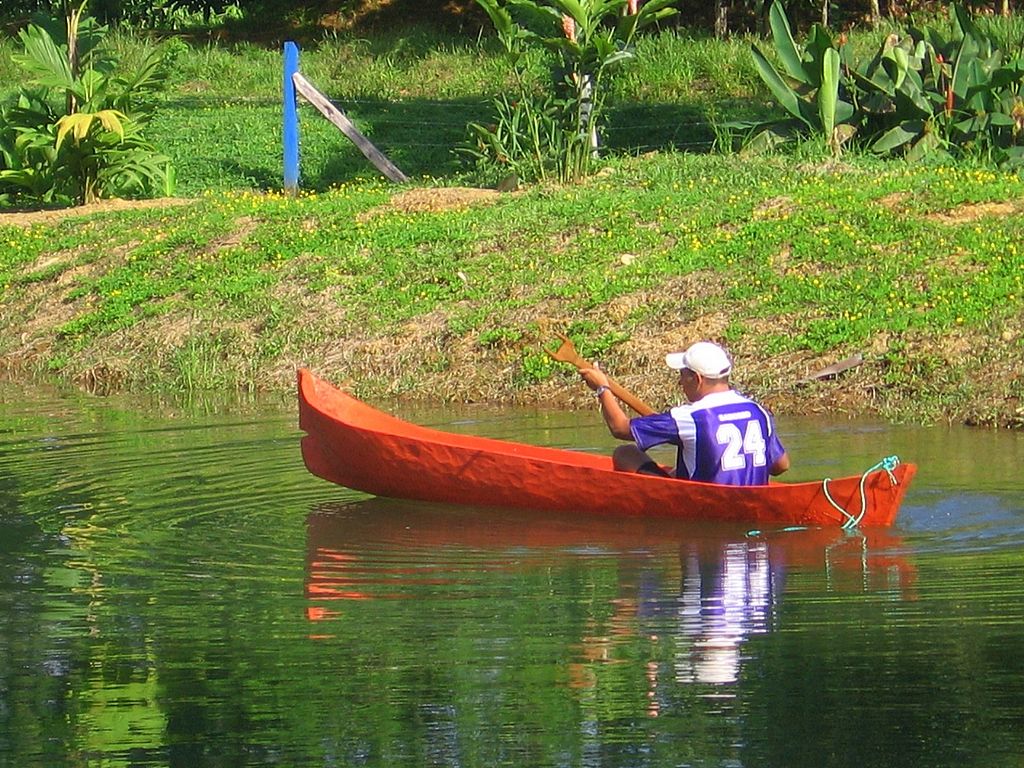
Image: File:Sarapiqui river. Costa Rica.jpg by Gilbert Corrales Villalobos, via Wikimedia Commons (https://commons.wikimedia.org/wiki/File:Sarapiqui_river._Costa_Rica.jpg). License: CC BY-SA 2.0 (https://creativecommons.org/licenses/by-sa/2.0/). Cropped for display.
The first thing I heard in Sarapiquí was not the river. It was rain ticking against a roof while I stood over a map, trying to make a sensible plan. I had arrived with two competing ideas of the place. One was a river adventure, all motion and splashing water. The other was rainforest life, patient and nearly hidden. By the end of the day I understood that these were not competing stories. The water shaped the forest, and the forest gave the river its presence. I folded the map, waited for the shower to ease, and decided to begin by walking.
The air felt full. Every leaf seemed to hold a little rain, and when a breeze moved through the canopy, droplets fell long after the sky had cleared. I was traveling in Costa Rica's northern lowlands, where Sarapiquí offers a very different mood from the high mountain valleys and Pacific beaches I had seen in photographs. The warmth and moisture were immediate. So was the sense of abundance. Vines crossed the trunks, broad leaves overlapped narrow ones, and sounds traveled through the green without giving away their source. I had been eager to see wildlife. The forest first asked me to learn how little I could see at a glance.
Slowing down enough to notice
On a guided forest walk, I kept making the same mistake. I looked for the largest movement and missed the smaller one close to me. A leaf with a ragged edge was not a leaf at all when it shifted. A dark knot on a branch became a bird when it turned its head. The guide did not rush us from one discovery to the next. Each pause seemed to change the scale of the place. What I first understood as a wall of vegetation became a collection of individual lives, each occupying its own small space.
I had expected the rainforest to be loud all the time. Sometimes it was. Insects supplied a continuous fine buzz; birds gave brief calls that cut through it. Yet there were moments when the loudest sound was water falling from one leaf to another. I began to appreciate how a guide listens as much as looks. I also appreciated the restraint of a group willing to remain on the path and let the animals keep their distance. A brief sighting held more meaning when it was allowed to end naturally.
At a clearing, I watched a line of ants cross the ground. My instinct was to step around them and move on. Instead I crouched, careful to leave their route alone, and followed their determined movement with my eyes. It was an ordinary scene by rainforest standards, and that made it useful. I could not pretend that every minute in Sarapiquí would be a dramatic encounter. The place had enough detail to hold my attention without one. I stood again, brushed the damp from my knees, and saw that my companions had been looking at entirely different things. We compared discoveries as if we had walked separate trails.
The name of La Selva had come up when I began reading about this region. The Organization for Tropical Studies maintains its research station here, a reminder that Sarapiquí is a place people study carefully, not merely pass through for a thrill. I did not want to borrow the authority of researchers for my own casual observations. I could, however, let their presence change my attitude. Each tiny relationship in the forest had a history and a role I did not yet understand. That thought made the walk feel less like a search for exotic animals and more like an invitation to pay attention.
Meeting the river without rushing it
Later, I reached the Sarapiquí River. It was broader and more complex than the single blue line I had imagined on the map. The surface changed character from one stretch to another. In one place it moved smoothly enough to reflect the bank. Around a bend it folded and broke around rocks. I stood back and listened before deciding how I wanted to experience it. The water did not need to be either a scenic backdrop or an athletic challenge. It could be both, depending on the section, conditions and a traveler's comfort.
For my imagined river outing, the most important moment came before anyone entered a boat: the safety conversation. I wanted a qualified local operator who would judge current conditions, explain equipment and choose an appropriate section. The river changes with weather and water level; a photograph cannot tell me what is suitable on a particular day. I did not want the story to pretend that courage alone was preparation. The pleasure of a river experience depends in part on trusting people who understand it and being honest about my own ability.
Once on the water, I felt how quickly perspective changed. From the bank, the river had appeared to move past me. In the boat, the banks seemed to slide by while the water held us. The forest rose on either side, no longer a view through a narrow opening but a living edge. A branch leaned over the current. A bird crossed above us and disappeared before I could decide what it was. Between more active stretches, I stopped thinking about the next bend and let the sound of water fill the silence.
There were moments that asked for work. I focused on the guide's directions, on the angle of my paddle, on the people beside me. Then the current eased and everyone seemed to exhale together. I liked the contrast. It made the quiet intervals feel earned without turning them into an advertisement for risk. I could not see around every bend, and I did not need to. The river's rhythm gave the day a shape more compelling than any list of stops I might have planned.
A place shaped by water
Back on land, I noticed the river everywhere. It was in the damp soil near a path and in the heavy air under the trees. It was in the small streams crossing the road after rain. The forest did not appear as an untouched stage set. It was changing, growing, shedding, feeding. A fallen leaf had already begun to become something else by the time it reached the ground. The details I had noticed on the morning walk seemed connected to the broad movement I had felt from the boat.
I spent the afternoon without a strict schedule. The rain returned briefly, and I watched it from shelter rather than treating it as a delay. In a tropical landscape, rain is part of the experience, not a mistake in the forecast. The sound on the roof brought me back to the morning, when I had been impatient to start. Now I was content to watch the view soften and sharpen again. Steam seemed to rise from the road when the shower passed. The air smelled of wet earth and leaves.
At a table near an open window, I tried to write down what I had seen. The notebook filled with verbs rather than names: dripped, flashed, folded, called, slipped. I could describe movement more confidently than species. That felt honest. I had not become a rainforest expert in a day, nor had I visited a laboratory and emerged with its knowledge. I had learned the value of a carefully guided introduction and the pleasure of continuing to notice after the guide was gone. The notebook could remain incomplete.
The region also reminded me that a good trip should not treat living communities as scenery. My encounters in Sarapiquí, whether with guides, hosts or people passing through the same day, would belong to them as much as to me. I resisted inventing a meaningful conversation to prove that I had connected with local life. Connection can begin with ordinary courtesy: learning a place name properly, listening before asking, choosing experiences that respect the people and landscapes that make them possible. I carried that thought into the evening.
What I took away
As the light faded, the river became harder to see but easier to hear. I stood where a path opened toward it and watched the last bright patches move across the surface. The day had begun with a false choice between adventure and observation. On the water I had felt alert and physically present. On the trail I had learned to stop. Each experience made the other richer. The rainforest gave context to the river; the river gave motion to the rainforest.
I thought about the temptation to measure a place by how many species I had seen or how exciting a rapid had felt. Those are easy stories to tell afterward because they fit in one sentence. The slower story is harder to reduce. It includes a guide asking us to pause, a raindrop falling from a leaf when the shower was over, and a river bend that concealed what came next. None of those moments was a trophy. Together they changed how I looked at the landscape.
The next morning, before leaving, I returned to the edge of the trees. The air was already warm. A bird called somewhere I could not see, and I let the call remain a mystery. The river continued beyond my view. I knew there were many more ways to know Sarapiquí than the one I had imagined: longer study, different trails, a quieter stretch of water, more time with local knowledge. That possibility made departure easier. I was leaving with curiosity rather than the false satisfaction of having finished the place.
I gave myself a few extra minutes by the bank. The river carried bits of leaf around a curve and out of sight. Nothing about that small movement was arranged for my benefit, yet I found it unexpectedly reassuring. Travel sometimes encourages the idea that every hour should be optimized. Here, an unscheduled pause helped me remember the whole day more clearly than another activity might have. I could feel the weight of the paddle in my hands again, then the patient stillness of the morning trail. They belonged together in my memory. So did the rain, which had seemed inconvenient only until I stopped trying to outpace it.
The memory of the guide's pauses changed how I looked at the riverbank. I could not identify every plant or sound, but I no longer felt obliged to fill each silence with a guess. I watched a patch of shade move across the water and wondered what I would notice if I stayed another hour. Perhaps nothing unusual. Perhaps enough small changes to make the place feel entirely new. That was Sarapiquí's gift to me: it made curiosity feel like a complete experience, even when the notebook held more questions than answers.
When I unfolded my map again, its neat lines looked less complete than they had the day before. I could locate the river, the road and the next destination, but I could not draw the changing air or the small discoveries between them. I folded it carefully anyway. It had brought me here. The rest had required me to put it away, step outside and allow a living landscape to move at its own speed.
Editorial note: This first-person story is an illustrative, researched narrative created to inspire travel. It does not describe a documented visit by a Costa Rica Travel Professionals staff member or customer; the narrator, conversations, conditions and moment-by-moment scenes are imagined.
A world of wonder awaits
Plan your Costa Rica adventure
Tell our destination concierges what you want from Costa Rica, and we will help shape the journey.