San José: Central Market and Cultural Landmarks | Costa Rica Travel Professionals
Travel Stories
San José: Central Market and Cultural Landmarks
I entered San José with the wrong kind of hurry. In my mind, Costa Rica's capital was the place to pass through before the beach or the forest began. The city immediately made that assumption feel thin. Streets crossed and recross
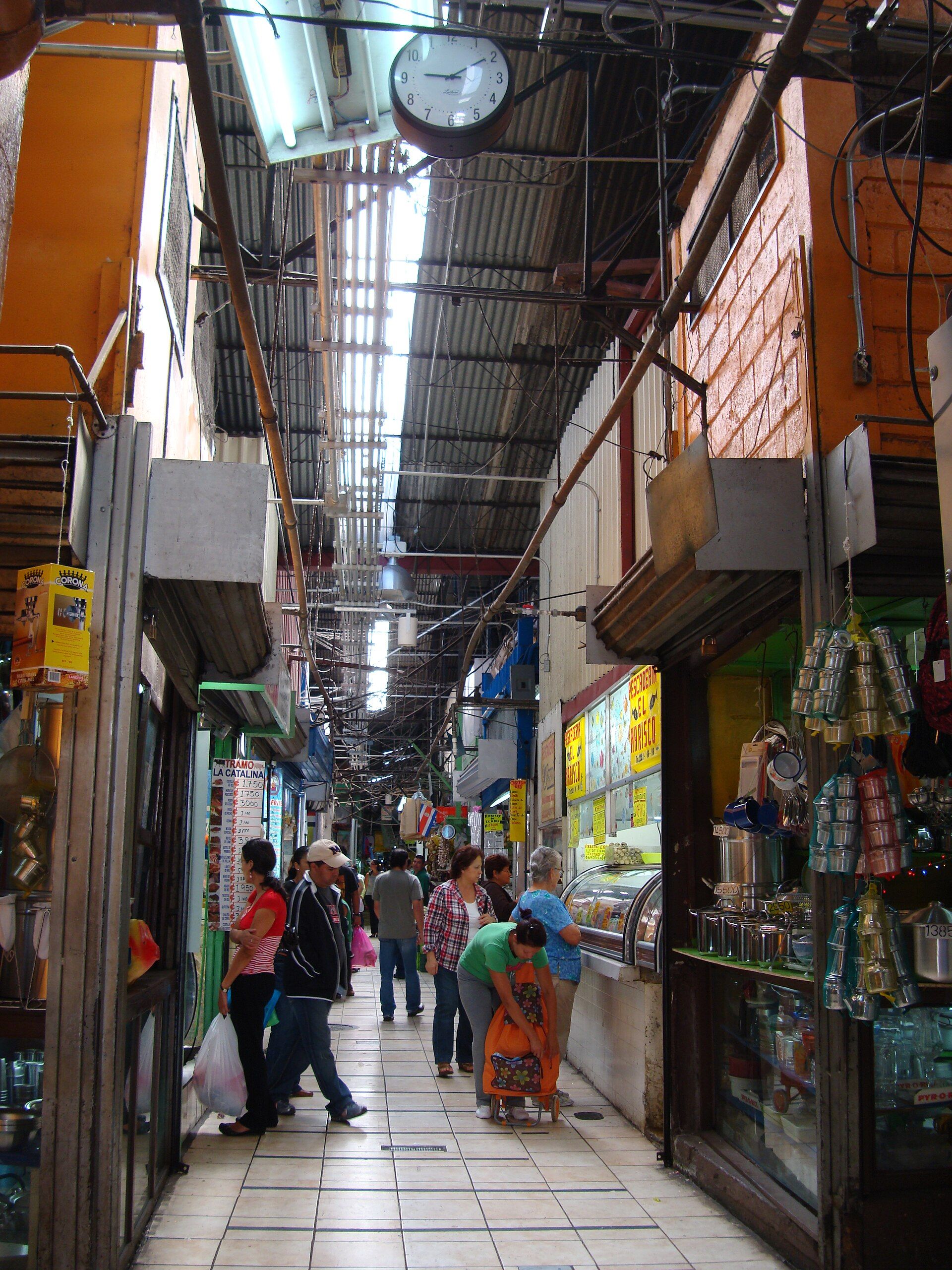
Image: File:Mercado Central San Jose Costa Rica.JPG by Eric T Gunther, via Wikimedia Commons (https://commons.wikimedia.org/wiki/File:Mercado_Central_San_Jose_Costa_Rica.JPG). License: CC BY-SA 3.0 (https://creativecommons.org/licenses/by-sa/3.0/). Cropped for display.
I entered San José with the wrong kind of hurry. In my mind, Costa Rica's capital was the place to pass through before the beach or the forest began. The city immediately made that assumption feel thin. Streets crossed and recrossed my plan. People moved toward work, errands, and meetings. A museum, a theater, and an old market were not dots to collect on a map; they belonged to a capital with a life that continued whether or not I had time to notice it.
The Costa Rica Tourism Board places San José in the Central Valley and emphasizes its museums, parks, theaters, and historic buildings. I chose a simple route for this imagined day: begin with the Central Market's everyday energy, then let the National Theater and nearby cultural landmarks draw me into a different kind of attention. I did not need to turn the walk into a race. I wanted to see how the city changed as I changed pace.
The market met me in layers of sound. A voice rose above another. Footsteps passed close by. Somewhere ahead, an ordinary exchange at a counter continued without concern for my notebook. I resisted the urge to call it an “authentic local experience,” a phrase that can make other people's daily routines sound like a performance staged for visitors. It was a working market. I was the visitor, and that fact helped me move through it with more care.
Inside the market's rhythm
I walked slowly enough to see the difference between stalls instead of treating the market as a blur. Shapes, colors, and smells shifted from one passage to another. I thought about buying something small, then decided to look first and choose with attention. The aim was not to extract a perfect story from a vendor or claim an intimate exchange that had not occurred. It was to participate as an ordinary customer might: make space, ask clearly if I needed help, and remember that a market is a workplace.
The scale felt personal after the open streets. Outside, traffic and buildings had pulled my eye ahead. Inside, I watched near details: a hand arranging goods, a narrow opening between two groups of shoppers, the way light changed near an entrance. I could not verify every item that might be sold on any given day, and I would not turn a particular stall into a promise for future visitors. The more durable impression was movement. The market seemed to gather the city's daily needs under one roof.
I paused where I could stand without blocking anyone. The first few minutes had been overwhelming because I had tried to take in everything at once. Now I let the scene come in pieces. A conversation on one side faded. Another began behind me. The sounds did not resolve into a tourist soundtrack. They reminded me that travel is often most interesting when a place does not simplify itself for my benefit.
I imagined a companion who preferred quiet museums to busy markets. Would this opening stop work for them? Perhaps, if we kept it brief and unhurried, and accepted that different people experience crowds differently. A city itinerary can be flexible. I did not need to prove that every traveler should love the same place. For me, the market was a useful beginning because it pulled me out of the habit of seeing San José only through landmarks.
The National Theater changes the frame
Later, near the National Theater, my eye moved upward. The institution's own history says the theater was inaugurated in 1897 and became part of a transformation in the capital's cultural life. I did not treat that date as a trivia point. I looked at the building as evidence of a public decision to make space for performance and gathering. The city's everyday commerce and its formal cultural architecture were both part of San José, and the walk between them made the contrast meaningful.
I imagined standing outside for several minutes before considering whether to go in. Schedules and access can change, so I would check current theater information rather than promising a particular tour or performance. Even from the public space around it, the theater made me pause. The entrance, the sense of ceremony, and the people passing by created a scene where history and present life shared the same frame.
The theater was not merely a beautiful facade to photograph. Its official account describes it as an institution for the performing arts as well as a historic building. That matters to the story. A cultural landmark is most alive when it continues to serve people. I could admire its architecture while remembering that the work on a stage, the staff who care for the building, and the audiences who return give it an ongoing role.
I compared my reaction with the market's energy. One place drew me into close, ordinary exchange. The other invited me to think about national cultural ambitions and public memory. Neither canceled the other. Together they made San José feel larger than the narrow category of “arrival city” I had given it before coming.
A city beyond a checklist
I continued walking with no need to fit every museum into the afternoon. The tourism board points to San José's museums and parks, and I wanted to leave them as possibilities for a longer stay rather than pretending I had visited them all. One good city day can open more doors than it closes. I found myself looking at street corners and public spaces with the same curiosity I had brought to protected areas elsewhere in Costa Rica.
The city offered different kinds of shade, different rhythms of traffic, and sudden moments of quiet between busier stretches. I noticed how quickly I had adopted a travel story in which culture belonged to one designated building and nature belonged outside the capital. The green hills and volcanic setting of the Central Valley are part of San José's context, just as theater and markets are part of Costa Rica's wider story. The country did not divide itself according to my brochure categories.
I thought about how I would write this day without borrowing anyone else's voice. I could describe my imagined walk and the facts established by official institutions. I could not invent a vendor's greeting, a theater guide's insight, or a family recipe overheard at the market. Those would be appealing details, but they would falsely turn other people into characters in a story they had not told. The city was rich enough without that invention.
Instead, I recorded my own change of attention. I had entered with a transfer mindset. By afternoon I wanted another day. I wanted time for one museum, then a park, then perhaps a performance if the schedule allowed it. I wanted to return to the market as a customer rather than a collector of quick impressions. San José had not asked me to abandon the rest of my trip. It had asked me to stop postponing the trip until I left the capital.
The small spaces between landmarks
The walk between the market and theater stayed with me as much as either destination. A route through a city is not empty travel time. It is where one scene gives way to another and where I notice scale. The market's close passages made the next open street feel broad. The theater's formal presence made the ordinary storefronts around it feel no less real, only different. If I had moved by vehicle from one point to the next, I might have missed that conversation between places.
I also noticed my own fatigue. A city can overwhelm the senses, and a thoughtful plan leaves room to sit, drink water, and decide whether to continue. I did not need a heroic walking day to make the capital worthwhile. A few attentive hours were enough to change its place in my memory. The rest could wait for another visit.
The sun shifted, and I looked back toward the direction of the market. I could no longer hear its interior sounds. Yet I could recall the feeling of stepping into a space where the city was close at hand. Ahead was a cultural institution with a long public history. Between them, I had begun to understand San José as a city of many scales: practical, ceremonial, historic, and alive in the present.
What I would keep on the itinerary
If I were helping someone imagine a Costa Rica journey, I would give the capital its own page in the plan. I would ask what kind of city experience they enjoy. A traveler who loves food and everyday commerce might begin at the Central Market. Someone drawn to architecture or performance might start near the National Theater. A museum lover might choose one institution and allow enough time to absorb it. These are different doors into the same place.
I would avoid promising a fixed route or a particular opening. I would check current information for each institution and plan around the day's conditions. More important, I would resist treating the city as a hurdle before the “real” trip. San José is part of the real trip. Its markets and cultural spaces give context to the forests, beaches, and highlands that follow.
The final image I carried from this imagined day was not a monument standing alone. It was movement: people entering and leaving the market, passersby crossing the space near the theater, and me walking between those scenes with a slower step than when I arrived. The capital had not become simple. It had become worth my time. That was the discovery I wanted to bring into the next morning.
When I imagined reviewing my notes that night, I noticed how few facts they contained compared with my notes from a national park. I had written down the theater's opening year and the capital's place in the Central Valley, but much of the page was about changing scale: the market's close passageways, the wider public space, a quieter corner after a busy street. That did not make the account less useful. It reminded me that a city is learned partly through relationships between places. Facts tell me what a building is; walking tells me how it sits among other parts of daily life.
I would give a future visit more time for that connective tissue. Rather than book a sequence of back-to-back stops, I would choose one cultural institution and leave room to wander nearby. I would check whether a public performance suited the evening, and I would accept that a different date might lead to a different plan. I would make space for a meal without treating it as a staged lesson in local culture. Most of all, I would let San José surprise me on its own terms. A capital cannot be understood in one day, but a day can change whether I want to understand it at all.
I had begun by counting the hours until departure. I ended by wondering what I had walked past too quickly. That is a feeling I trust when I travel. It means a place has become more than a slot in an itinerary. It has offered enough to invite a return, and enough unanswered questions to make that return feel worthwhile.
Editorial note: This first-person story is an imagined traveler narrative informed by official sources. It does not recount a staff or customer visit. Market vendors, theater staff, activities, and opening arrangements are not represented as actual encounters or guarantees.
A world of wonder awaits
Plan your Costa Rica adventure
Tell our destination concierges what you want from Costa Rica, and we will help shape the journey.