Los Quetzales: A Highland Cloud Forest | Costa Rica Travel Professionals
Travel Stories
Los Quetzales: A Highland Cloud Forest
The air changed before the forest came into view. I had left the lower, warmer landscape behind, and by the time I reached the highlands I wanted another layer on my shoulders. Mist gathered among the trees. The road seemed to ent
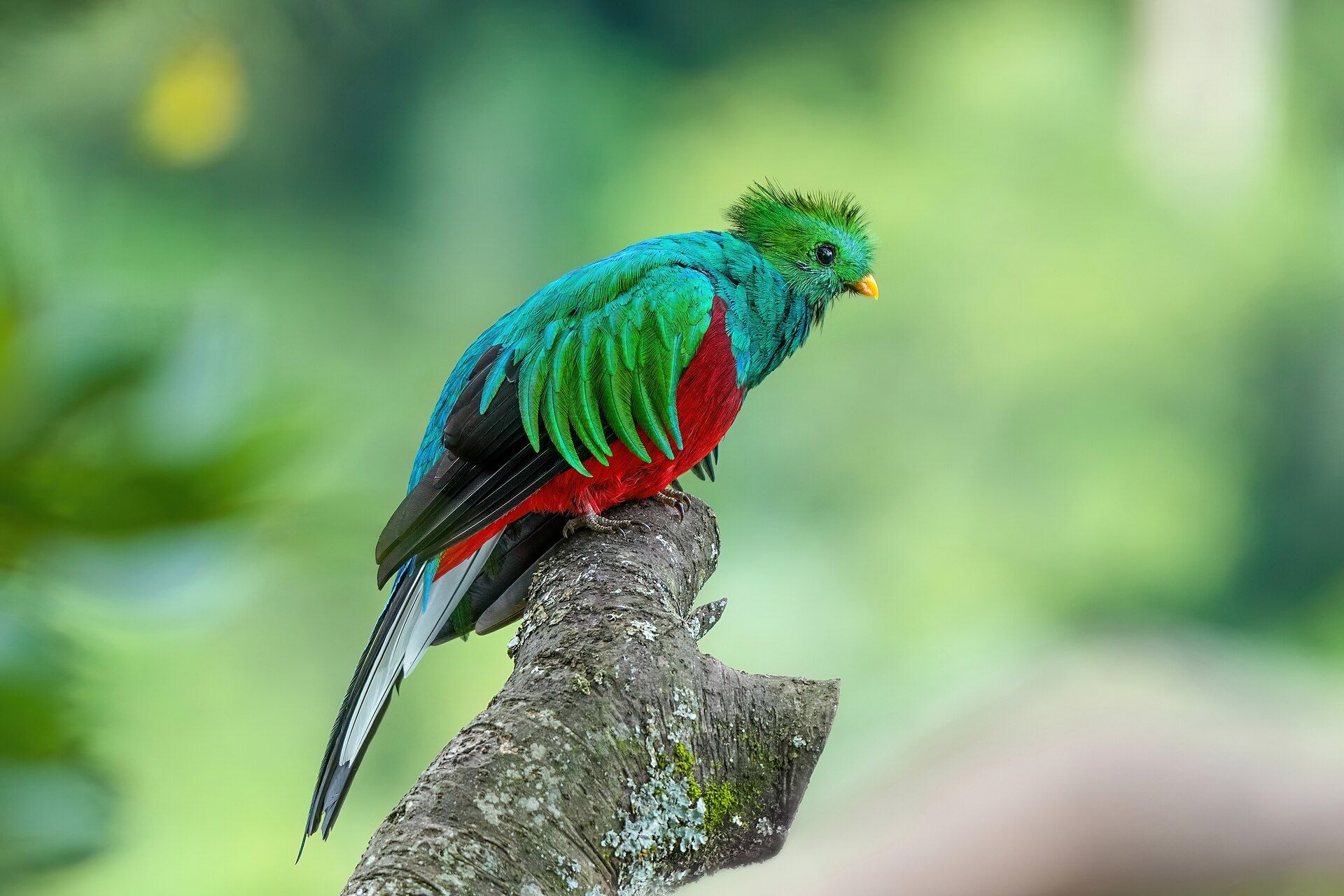
Image: File:058 Male Resplendent quetzal in Los Quetzales National Park Photo by Giles Laurent.jpg by Giles Laurent, via Wikimedia Commons (https://commons.wikimedia.org/wiki/File:058_Male_Resplendent_quetzal_in_Los_Quetzales_National_Park_Photo_by_Giles_Laurent.jpg). License: CC BY-SA 4.0 (https://creativecommons.org/licenses/by-sa/4.0/). Cropped for display.
The air changed before the forest came into view. I had left the lower, warmer landscape behind, and by the time I reached the highlands I wanted another layer on my shoulders. Mist gathered among the trees. The road seemed to enter the clouds rather than climb toward them. I had come to Los Quetzales hoping for a rare glimpse of its namesake bird, but the first gift of the day was simpler: the sensation of arriving somewhere with a different pace and a different weather.
Los Quetzales National Park lies in the district of Copey, in Dota canton of San José province. The Costa Rica Tourism Board identifies it as a cloud forest area especially significant for birdwatching, including the resplendent quetzal. Those facts explained my choice of destination. They did not prepare me for the feeling of standing among trees dressed in moisture, where leaves, moss, and air seemed to hold the same pale light.
I stopped before beginning to walk. There was no dramatic panorama to claim all at once. The view offered layers instead: a nearby branch outlined against gray, darker trunks beyond it, and a background that appeared and disappeared as cloud moved through. I listened. A sound came from high in the canopy, but I could not see its source. I felt the familiar urge to name it quickly. Then I let the uncertainty stay.
Learning the pace of the highlands
My first steps were too fast. I had arrived with the habits of someone who wanted a sighting, a photograph, and the satisfaction of a completed excursion. The forest resisted that rhythm. Every few paces, a new detail asked me to stop. Water beaded along the edge of a leaf. A cluster of plants occupied a branch above my head. Light caught the wet surface of a trunk and made it seem almost metallic. None of these details was a substitute for the bird I hoped to see. They were the place itself asking to be seen.
The tourism board describes trees covered with a variety of plant species, a feature of the climatic conditions that create this cloud forest. Standing beneath them, I understood why a simple label such as “green” could never do the scene justice. There were soft greens, deep greens, gray greens, and the near black of saturated bark. Some leaves looked translucent against the light. Others carried droplets like small, temporary ornaments. The forest did not need a burst of color to be vivid.
I had brought binoculars, but I began by looking without them. The narrow field of view made me impatient when I lifted them too soon. I needed the wider scene first: where the branches crossed, where the mist opened, where movement might have been wind rather than an animal. When I finally raised them, I was more interested in understanding one patch of canopy than scanning everything at once. That shift turned watching from a hunt into a form of conversation.
The cool air made each pause pleasant. On a different day, rain or wind might have changed the mood completely; cloud forest conditions are not fixed. In this imagined visit, a soft veil of mist came and went, never clearing long enough for a broad view. I liked the partialness. The park did not display itself on command. It offered a little, held back a little, and rewarded the traveler who could accept both.
The bird I hoped for, the forest I found
It would be easy to build a Los Quetzales story around a guaranteed encounter with a quetzal. The name invites it. Yet a wild bird is not a scheduled performance. I imagined the excitement of watching a branch long enough to believe that a shape might emerge, and the quieter honesty of realizing it was only leaf and shadow. The possibility of a sighting gave my attention a direction. It did not define whether the day succeeded.
I began to notice the habitat around the search. Branches carried plants at several heights. The canopy was not a simple roof but a layered space where light filtered and vanished. A bird could be near without announcing itself. Even when the forest seemed still, it felt inhabited. The more I looked, the more I understood why birdwatching asks for patience and local knowledge rather than certainty.
I thought of traveling companions who might not share my interest in birds. Would this place hold them too? I believed it would, if we gave it room. One person could watch the canopy. Another could study the tiny worlds on tree bark. Someone else could be content with the quiet and the unusual coolness of Costa Rica's highlands. The day did not have to hinge on a checklist. The forest offered many ways in.
I set the binoculars down for a while. The soundscape grew clearer. A drip from the canopy landed close by. Leaves shifted, then settled. Somewhere farther off, a bird called once and left a silence that felt larger than before. I did not pretend to know its species. What I knew was that the call made me pause and that the pause allowed me to see another layer of the forest. For a traveler, that can be enough.
A landscape that asks for care
The highland setting made me more aware of my own presence. My footsteps sounded louder when I hurried. I noticed where I placed them and how quickly I reached for a camera. A protected area is a place to enter with restraint, not a set for obtaining an image at any cost. I stayed with established visitor space in this imagined outing and left plants and animals undisturbed. The less I tried to arrange the forest around me, the more I appreciated it.
I also thought about the way travel stories can turn the quetzal into a trophy. The bird is one reason this park is well known, but the forest is not merely a backdrop for it. The trees, moisture, and plant life are the conditions that make the habitat possible. To come away with only a photograph of one animal would be to miss the larger relationship. To come away without that photograph could still be a remarkable day if I had understood even a little more of the place.
At a pause in the walk, I looked behind me. The route I had just followed seemed different from this angle. A branch that had been an overhead shadow was now a bright line against mist. The cloud had shifted, changing the depth of the view. I could have walked the same short stretch again and seen another scene. That is what I carried from the highlands: not a list of landmarks, but the sense that observation can keep renewing a familiar path.
I drank water and waited for the next opening in the cloud. It did not become the sweeping vista I might have imagined when planning the trip. Instead, one distant tree appeared clearly for a few seconds, then faded. The moment was too quiet for a caption about breathtaking views. It was also more moving than the grand view I had hoped for. The forest gave me exactly enough to make me curious about what remained hidden.
What I would tell a fellow traveler
If someone asked me whether to include Los Quetzales in a Costa Rica itinerary, I would describe its difference. The country is often pictured through bright beaches, dense lowland rainforest, and volcanic landscapes. Here the cool air and cloud-draped trees offer another register. The experience invites a traveler to slow down, dress for changeable conditions, and listen as carefully as they look. It is a place for curiosity more than certainty.
I would not promise a quetzal. I would say that the park is known for birdwatching and that a patient visit can be rewarding whether or not the namesake bird appears. I would avoid building a tight schedule around one hoped-for moment. If the sky cleared, there would be new views. If cloud stayed, there would be the close world of leaves and trunks. Either way, the landscape would have something to say.
I would also suggest leaving space to notice the journey into the highlands. My own imagined arrival began with the change in air. That transition was part of the story. By the time I stood beneath the trees, I already felt far from the previous landscape, though I was still in the same country. Costa Rica's variety can be experienced not only by traveling long distances but by allowing a new elevation and climate to alter the senses.
The day ended without a triumphant sighting. I did not feel cheated. I had watched mist gather and lift, listened for life in the canopy, and learned to look at the plants that clothed the trees. I had been reminded that the most powerful part of travel is sometimes a change in attention. The forest did not owe me its rarest bird. It had already offered a different way of seeing.
Leaving the cloud behind
As I imagined turning away from the trees, I tried to carry their quiet with me. I knew the warmer air would return as the route descended. The mist would be left behind, at least for the day. But the habit of looking more carefully could travel. I could bring it to a village street, a riverbank, or another forest without expecting those places to resemble this one.
Before leaving, I looked once more into a patch of canopy. Nothing moved. A drop of water slipped from one leaf to another, and the branch trembled slightly. I smiled at how modest the final scene was. Earlier I might have waited for something bigger. Now I recognized that the forest had been telling its story at this scale all along.
I imagined opening my notebook that evening and finding few useful adjectives. “Misty” and “green” would be accurate, but they would flatten the day. I would write instead about the distance between one tree and the next when cloud filled the space, and about how that distance seemed to change every time I looked up. I would write about lowering the binoculars when I realized I was missing the larger forest while searching one branch. Those were the moments that explained why I wanted to return. They belonged to this highland place even without a rare bird in the frame.
Los Quetzales remained partly concealed as I walked away. That felt right. The day had not solved the place or reduced it to a photograph. It had introduced me to cool air, layered green, and the pleasure of patient uncertainty. I arrived in search of a bird and left with a forest in mind. For this traveler, that was a beautiful exchange.
I would keep that exchange in mind whenever I planned a wildlife day. An animal might appear, or it might stay beyond view. The habitat is still worth understanding. In the cloud forest, I had learned to admire the conditions that make a life possible: moisture in the air, plants held high in the branches, and shade that changes with moving cloud. Those details were not a consolation prize. They were the destination.
Editorial note: This first-person story is an imagined traveler narrative informed by official destination information. It does not recount a staff or customer visit. Wildlife sightings and conditions are never guaranteed.
A world of wonder awaits
Plan your Costa Rica adventure
Tell our destination concierges what you want from Costa Rica, and we will help shape the journey.