Puntarenas: A Pacific Port and the Gulf Beyond | Costa Rica Travel Professionals
Travel Stories
Puntarenas: A Pacific Port and the Gulf Beyond
I arrive in Puntarenas with an image of the sea, but the first thing that holds me is the town. The waterfront is alive with small errands and unhurried conversations. A bicycle passes. Someone waits in the shade. The air has that
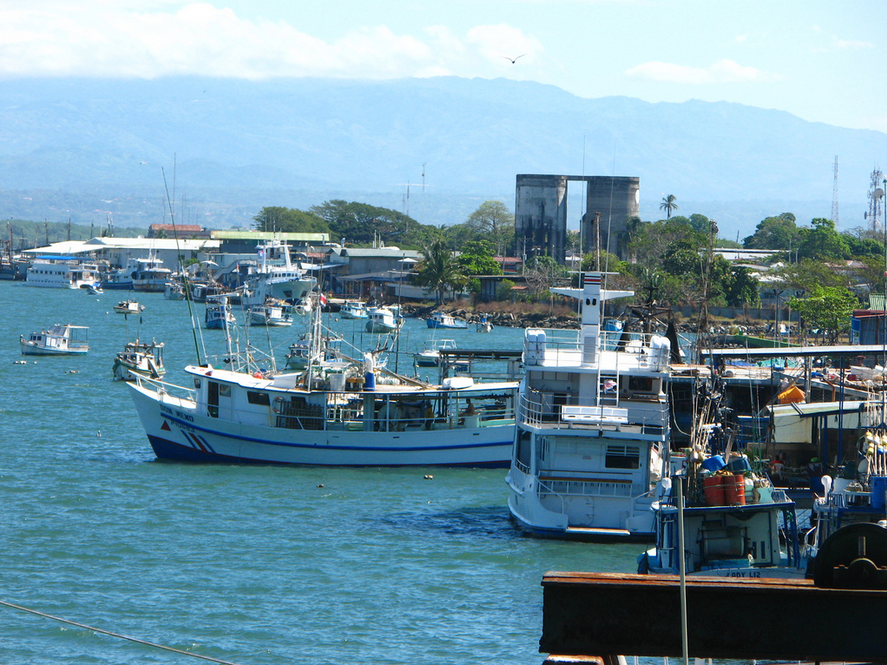
Image: File:Puntarenas, Costa Rica - Fishing boats.png by micah craig, via Wikimedia Commons (https://commons.wikimedia.org/wiki/File:Puntarenas,_Costa_Rica_-_Fishing_boats.png). License: CC BY-SA 3.0 (https://creativecommons.org/licenses/by-sa/3.0/). Cropped for display.
I arrive in Puntarenas with an image of the sea, but the first thing that holds me is the town. The waterfront is alive with small errands and unhurried conversations. A bicycle passes. Someone waits in the shade. The air has that unmistakable coastal weight, warm and a little salty, and the Gulf of Nicoya stretches beyond the buildings like an open invitation. I had imagined this as a place to pass through on the way elsewhere. Within an hour, I want to stay.
The rhythm here is different from the polished beach holiday I had pictured when I first planned a Costa Rica trip. Puntarenas is a port city, a place with a working relationship to the water. I can feel that in the way people move along the shore, in the practical comings and goings near the piers, and in the sense that the horizon is also a route. The Gulf is not merely scenery. It connects communities and islands, and the city is one of the places from which that wider geography begins to make sense.
Walking the waterfront
I start along the Paseo de los Turistas, the waterfront promenade that follows the main beach. Morning light gives the water a pale, almost metallic sheen. The pavement is warm already. There are places to sit, but I keep walking at first, watching the line where the town meets the shore. The view changes slowly enough that I have time to notice details: the color of a painted wall, the shape of a bench in the shade, a family choosing where to stop.
Near the pier area, kiosks make the walk feel social. I see the kind of small purchases that belong to a day out: something cold to drink, a snack, a keepsake to carry home. The tourism board describes the paseo as a place for crafts and local treats, including the frozen dessert known as a Churchill. I order one and find myself studying its colors before I take the first spoonful. It is refreshing in the heat, but what I enjoy most is the simple permission it gives me to pause.
I sit where I can watch the water and the passing crowd. Children seem to move faster than everyone else. A couple walks shoulder to shoulder without any hurry. From here, the city is not a backdrop for a future excursion; it is the experience. The sea breeze arrives intermittently, never quite cool enough to erase the warmth. I let the morning lengthen.
There is an honesty to a port town that I find appealing. It is not trying to hide the practical side of its life. I can sense that boats, roads, local routines, and visitors all share the same narrow coastal space. That mixture gives the waterfront texture. I do not need every view to be pristine to find it beautiful. I need to feel that the place has a life beyond my visit, and Puntarenas does.
The gulf as a question
At the edge of the promenade, I look across the Gulf of Nicoya and try to imagine the map without pulling out my phone. The water seems broad from here, but it is also full of possible crossings. Islands interrupt the horizon. The coast bends away. I know there are places beyond the near shoreline that deserve their own days, but this morning I am content to let them remain shapes and questions.
That uncertainty is one of travel's quiet pleasures. I can stand in one town and feel the pull of several others. The Gulf of Nicoya is part of Costa Rica's Pacific geography, a place where coastlines and islands make any simple idea of a straight journey seem inadequate. The view invites movement, yet it also rewards stillness. I sit again and watch the light change on the water.
I think about how often travel plans treat a port as a connection rather than a destination. A ferry, a boat, a road onward: these are useful details, but they can flatten the place they pass through. Here I want to resist that. I want to know what it feels like to spend a morning on the paseo, to listen to the pace of the waterfront, to let lunch be more than a stop between departures. The city is worthy of its own chapter.
I wander back toward the busier stretch. The soundscape shifts in layers: voices close to me, traffic farther away, the dull wash of waves beyond. A breeze moves across the open side of the promenade, and I can feel the salt drying lightly on my skin. The scene is not spectacular in the way a waterfall might be. It is generous in a different way. It gives me ordinary moments that I can inhabit fully.
A table near the water
At midday I look for a place to eat without setting myself a deadline. A menu offers the familiar promise of a meal near the sea, but I am most interested in the view from the table. I watch people carry on with their day while I wait. I have spent enough trips racing toward the next attraction to know that a meal can become a blur. This one I want to remember.
When the food arrives, I let the conversation at nearby tables remain background music. I am not eavesdropping so much as enjoying the fact that this place is shared. A family has its own afternoon ahead. A pair of friends lingers over drinks. Visitors pause to check directions. Each small scene belongs to Puntarenas at this hour, and my lunch is only one more part of it.
I taste the meal slowly, then look back out at the gulf. From this angle the water seems to hold several colors at once. The near edge is darker; farther out, light turns the surface silver. I think of the islands again and how strange it is that something can be visible and still feel far away. Their presence gives the meal a sense of possibility. I could go. I could stay. Today I choose to stay a little longer.
The choice changes the day. Once I stop treating Puntarenas as a threshold, its details become vivid. The light on painted signs, the pattern of shade from the structures along the waterfront, the pleasure of a cold drink after walking in the sun: none is an attraction in isolation. Together they make a place. The memory will not fit neatly in a list of must-sees, and that is why I think it will last.
An afternoon with room in it
I spend the afternoon returning to places I passed too quickly in the morning. I stop to look at a craft display, then continue without buying anything. I walk toward the water and back. The heat makes me conscious of how I move; I search for shade and take it when it appears. The town feels slower now, perhaps because I am.
At one point I hear a boat before I turn and see it. The sound is a reminder that the gulf remains a working waterway even while I am here for pleasure. I watch it move across the open water, leaving a line that gradually dissolves. The horizon is full of departures, but the shore keeps its own steady rhythm.
The islands are still there in the distance. I could turn them into promises for another day: a boat ride, a longer exploration of the gulf, a different perspective back toward the mainland. Yet I do not want to claim an itinerary I have not made. What I can say is that Puntarenas makes me curious about the wider region. It offers both a grounded city experience and a view that suggests how much more lies beyond it.
I find a shaded seat and take out the small notebook I carry. I had expected to write practical observations, perhaps a line about where to go next. Instead I write about the way the day has slowed. A port town is usually described by motion, by the journeys it enables. This one has taught me something about staying. The longer I sit, the more the waterfront changes around me.
Clouds soften the light. People shift into new clusters. A child points out toward the gulf, and I follow the line of the gesture even though I cannot tell what caught their eye. I like the shared attention. Much of travel is learning to look where someone else is looking, then noticing something of my own along the way.
Evening on the paseo
As the day cools, the promenade becomes inviting in a new way. I walk the same stretch again, but it is not the same walk. The light has lost its sharp edge. The water holds more reflection than color. People who were seeking shade earlier now take their time in the open. The city seems to exhale.
I think back to my arrival and the narrow idea I had of what this day would be. A stop by the coast. A look at the gulf. Maybe a quick lunch. Puntarenas has given me something less tidy and more satisfying: a sense of a place where local life and travel meet without either disappearing. The waterfront is built for visitors, yet it belongs to the city. I feel that balance in the ordinary flow of the evening.
I stay until the first lights begin to compete with the fading sky. The islands are harder to distinguish now. Their outlines soften, and the gulf becomes a broad darkening surface. I do not need a final dramatic image. The day has been a succession of modest ones, each adding weight to the next.
Tomorrow I may travel onward. Perhaps I will cross the gulf, or perhaps another road will carry me down the coast. The details can wait. Tonight I want to keep the memory of sitting by the water with no departure to catch, of tasting something cold on a warm promenade, of watching a port city move through its own afternoon.
Puntarenas has made me reconsider what counts as a highlight. Sometimes a landscape earns my attention through grandeur. Sometimes a town earns it through the way it holds daily life in public view. The gulf remains an invitation, but the place from which I looked out at it is no less memorable. I came expecting the horizon. I leave remembering the shore.
I also leave with a new kind of patience for the journey beyond. The map may tell me which coast or island comes next, but it cannot tell me what an unscheduled hour will offer. Here that hour contained a bench, a breeze, and the realization that I was no longer waiting for the real trip to begin. It had begun while I was standing still. If I return to Puntarenas, I would give it another full day. I would walk the paseo without a checklist, sit at a different table, and watch how the gulf changes under another sky. The city would be familiar enough to welcome me and alive enough to surprise me again.
Editor's note: This first-person story is an illustrative, researched narrative created for travel inspiration. It does not recount an actual visit by a Costa Rica Travel Professionals staff member or customer. The scenes and conversations are imagined; services and conditions vary.
A world of wonder awaits
Plan your Costa Rica adventure
Tell our destination concierges what you want from Costa Rica, and we will help shape the journey.