Pacuare River: Through the Gorge | Costa Rica Travel Professionals
Travel Stories
Pacuare River: Through the Gorge
I heard the Pacuare before I saw it. Somewhere below the trees, water was moving with a force that made the morning feel charged. I had imagined the day in snapshots: a raft, a rapid, rainforest leaning over the river. Standing at
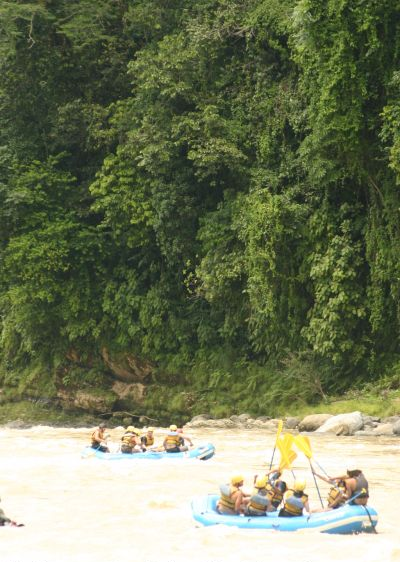
Image: File:Pacuare River.png by http://seebeforeyoudie.net, via Wikimedia Commons (https://commons.wikimedia.org/wiki/File:Pacuare_River.png). License: Public domain (https://creativecommons.org/publicdomain/mark/1.0/). Cropped for display.
I heard the Pacuare before I saw it. Somewhere below the trees, water was moving with a force that made the morning feel charged. I had imagined the day in snapshots: a raft, a rapid, rainforest leaning over the river. Standing at the edge of the launch area, I realized the experience would be more complicated and more interesting than a sequence of thrills. The river had its own conditions. The people who knew it would decide what was appropriate. My job was to listen, paddle when asked, and make room for the quiet sections as well as the active ones.
The landscape on Costa Rica's Caribbean slope seemed to gather moisture from every direction. Leaves shone in the soft light. A misty hillside rose beyond the water. I had brought excitement, but also a little nervousness that I did not want to hide. Whitewater is a real physical activity, and the responsible way to approach it is with a qualified guide, suitable equipment and an honest understanding of current river conditions. That thought steadied me. The safety briefing was not a delay before the adventure. It was the beginning of it.
Learning to move as a boat
As we prepared, I watched the guide explain how we would respond to instructions and work together. In my imagination, I had been a solo traveler facing the river. In reality, a raft depends on coordination. I listened to the other paddlers repeat a direction, saw someone adjust a life jacket, and felt my attention shift from my own nerves to the group. The river would not care whether I looked brave. It mattered that I understood what to do and that I said something if I did not.
The first strokes felt awkward. My paddle caught the water at a different angle from the person beside me. Then our timing began to match. The boat moved into the current, and the bank slipped away. Up close, the water held more colors than I expected: pale broken foam, darker green reflections, brown where a tributary seemed to carry earth from the hills. I was too busy watching the surface to feel afraid. The river asked for attention now, not an opinion about what might happen later.
In a calm stretch, I looked up. Rainforest covered the slopes above us, dense enough that I could not tell how far the trees continued. A narrow fall of water appeared against rock and vanished behind leaves as we moved. I had wanted a dramatic view into a gorge. What impressed me was how the view changed every few paddle strokes. A wall of green became a series of ledges, trunks and openings. The river gave us no fixed viewpoint. It carried us through the scene.
Then the guide called for paddling. The boat lifted, dropped and turned. I concentrated on the voice ahead of me and the rhythm of the group. For a few seconds, the world narrowed to water, paddle and the edge of the raft. When we emerged into smoother current, everyone seemed to laugh at once. I felt my shoulders loosen. The excitement was real, but so was the relief of having acted together. I looked behind us at the water we had just crossed and saw it already changing shape.
Between the rapids
The pauses became the part of the day I had not known to anticipate. When the guide let us rest our paddles, I could hear water dripping from the trees and the lower, continuous sound of the current beneath the raft. A bird crossed from one bank to the other; I could not identify it and did not try. Light reached the river in irregular patches. I sat with wet hands around the paddle shaft and watched one bright patch slide across the surface until it disappeared under the boat.
I had seen images of the Pacuare framed as an extreme achievement. There is a place for excitement in its story, but the river did not feel like a contest. Conditions can change, and an outing should fit the people in the boat as well as the water on the day. I liked that the guide made room for both caution and delight. I could enjoy the lively sections without pretending that risk was the point. The surrounding forest was too rich to reduce to a backdrop for my adrenaline.
At one bend, the banks seemed to close in. The sound of our paddles echoed back from the sides, and I watched droplets leap from a rock into the current. Whether the feature was a famous landmark did not matter. It was ours for a moment because we were passing through it, though we did not own it. I felt small in the best way. The river was carrying rain from a much larger landscape, and our boat occupied only a brief moving space on its surface.
I thought about how different the gorge would feel on foot. From a trail, I might have watched the river as a line below me. From the raft, the water was the route. Every turn altered the order of sights and sounds. I could not skip ahead to the next viewpoint. That made the journey unusually complete. Even when I anticipated another rapid, I remained aware of the calm water beneath us and the forest reaching above.
The group had become more familiar without a long conversation. We knew who checked the riverbank for birds, who laughed first after a lively section and who watched the guide most closely before a turn. Those small patterns made our shared work feel natural. I had expected to remember my own reactions most vividly. Instead, I kept noticing the way one person's steady paddling helped the next person find a rhythm. The raft was a temporary community formed around attention. When the water grew quiet, that attention did not vanish. We carried it into the silence, listening together.
A different sort of arrival
When we stopped, I stepped onto land with the slight uncertainty of someone whose body still expected the raft to move. My legs were steady enough, yet the river's rhythm continued in me. I found a place to sit and looked back at the water. It moved past without acknowledging the effort that had felt so intense minutes before. I liked that indifference. It returned the river to its own scale. I had taken part in a guided outing; I had not conquered anything.
The rest gave me time to notice the details I had missed while paddling. Water marked the rocks in fine lines. The air smelled of damp earth. A leaf floated near the bank, turned once and continued downstream. I began to understand why some travelers choose to spend longer in the Pacuare area rather than treating the river as a single item on a list. The forest and the water reward time at different speeds. A rapid might fill ten seconds of memory; a quiet view can expand to hold an entire afternoon.
I was careful with the story I imagined telling later. It would have been easy to enlarge every wave, to claim a wildlife sighting I was not sure of, or to make the guide into a character with a speech I could quote. The honest version was better. I had felt nervous and then capable. I had worked with a group, watched a rainforest from the water and discovered that the calm spaces were as memorable as the whitewater. None of that required exaggeration.
The way out gave me another look at the landscape from above. The river appeared and vanished between trees. I recognized no particular bend, but I knew how those bends had felt from the water. A map would show the route as a line. My memory held changes in sound and pace: the call to paddle, the impact of spray, the release into a smooth stretch, the long green slope moving beside us. It was a fuller geography than the map could offer.
I thought, too, about what it meant to leave the place well. An outing ends, but the river continues through communities and habitats beyond the section a visitor sees. Keeping litter with us and following the guide's instructions near the banks felt obvious, yet the day's excitement could have made those simple acts easy to forget. I wanted my memory to include care as well as exhilaration. The gorge was not a ride built for me. It was a real place that had allowed me a short passage, with the help of people whose work deserved attention and respect.
Carrying the current forward
That evening, I found myself moving more slowly. My arms remembered the paddle; my eyes kept returning to whatever water I could see. The day had asked for physical effort, but it had also asked for trust. I had trusted the guide's judgment, the group's response and my ability to speak up. Those are ordinary travel skills in a new setting, yet the river made them feel immediate. I would carry them into other adventures long after the damp clothes were dry.
I also thought about the difference between planning an experience and scripting it. Planning matters: choosing a reputable operator, checking current conditions and deciding whether the activity suits me. Scripting would mean expecting the same water, weather and emotion promised by someone else's photograph. The Pacuare had reminded me that the best part of travel often begins where the script ends. I could prepare well and still let the place surprise me.
In memory, the gorge grew quieter. The rapid remained, but I returned more often to the patch of light moving on the water and the brief bird crossing between banks. I had come for motion. I left with a new appreciation for the intervals that let me see where I was. The river made those intervals possible by carrying us forward whether or not we paddled. For a few hours, I had been part of its pace, attentive to the people beside me and the forest around us. That was enough.
If I were to return, I would not ask the Pacuare to repeat itself. I would begin again with the day's conditions and the judgment of people who know the water. I would listen during the safety talk and look up during the calm. I would let the gorge reveal itself one bend at a time. The memory I wanted to keep was not of having defeated a river. It was of moving through a living landscape with care, effort and a sense of wonder large enough to include silence.
Before sleeping, I tried to describe one particular bend in the river. The more I searched for the right words, the more I remembered the small things around it: the paddle resting briefly against my knee, a damp sleeve cooling in the breeze, the sound of another person laughing after we had all caught our breath. Those details mattered because they kept the day human. I had not traveled through a landscape alone, and I had not watched it through a screen. For a short time, I had been alert to the water, to other people and to my own limits. The combination stayed with me longer than the rush of any one rapid.
Editorial note: This first-person story is an illustrative, researched narrative created to inspire travel. It does not describe a documented visit by a Costa Rica Travel Professionals staff member or customer; the narrator, river conditions, guide, group and moment-by-moment scenes are imagined.
A world of wonder awaits
Plan your Costa Rica adventure
Tell our destination concierges what you want from Costa Rica, and we will help shape the journey.