Liberia: Guanacaste Culture and Sabanero Heritage | Costa Rica Travel Professionals
Travel Stories
Liberia: Guanacaste Culture and Sabanero Heritage
I arrived in Liberia with the sea still in my mind. Guanacaste is so often introduced through its beaches that I had almost treated the city as a passage on the way to somewhere else. Then I stepped into a street where everyday li
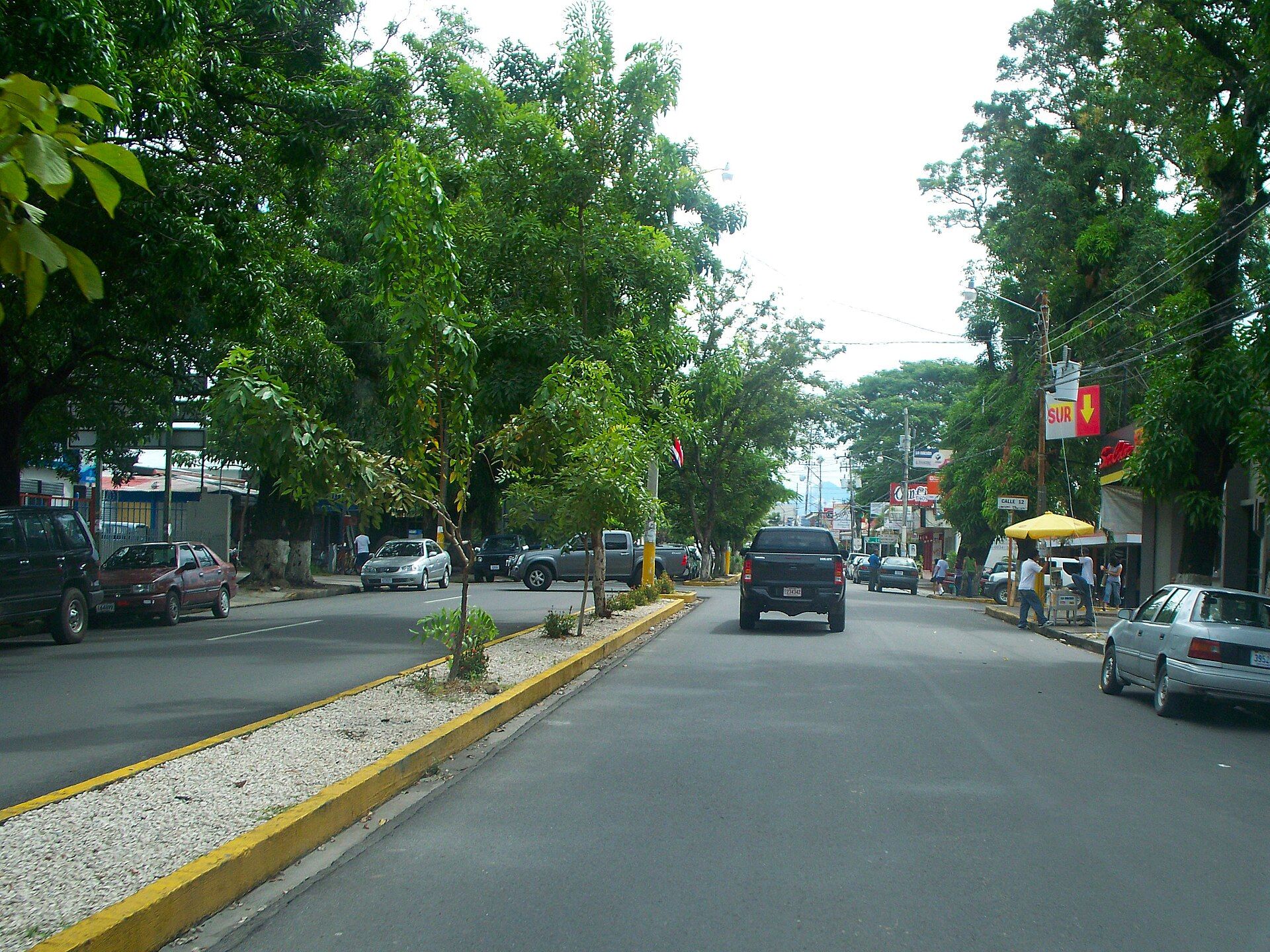
Image: File:Las Calles de Liberia, Costa Rica.jpg by Ll1324, via Wikimedia Commons (https://commons.wikimedia.org/wiki/File:Las_Calles_de_Liberia,_Costa_Rica.jpg). License: CC0 (https://creativecommons.org/publicdomain/zero/1.0/). Cropped for display.
I arrived in Liberia with the sea still in my mind. Guanacaste is so often introduced through its beaches that I had almost treated the city as a passage on the way to somewhere else. Then I stepped into a street where everyday life moved at its own pace, and the beach version of the province began to feel incomplete. The air was warm. Light gathered on pale walls. People were going about errands that had nothing to do with my itinerary. I was glad I had left time to stay.
The Costa Rica Tourism Board calls Guanacaste an important center of cultural and natural heritage and identifies Liberia as one of the region's commercial centers. The province is also often described as a cradle of Costa Rican folklore. I wanted to approach those words carefully. Culture is not a performance arranged for visitors. It lives in language, music, food, work, memory, and ordinary exchanges. I could not understand it fully in a day, but I could begin by taking the city seriously as a place in its own right.
I walked without trying to turn every corner into an attraction. A doorway framed shade. Sunlight made another wall almost too bright to look at. A conversation floated past without offering itself to me as a story. My first instinct was to photograph the scene. My second was to put the camera down and keep walking. It felt better to let the city remain lived in rather than make it a backdrop for my idea of “authentic” travel.
The city behind the gateway
Liberia is a gateway for many journeys through Guanacaste, but a gateway is also a destination if I allow it to be. I thought of the region's range: Pacific coastline, tropical dry forest, lowland mountain forest, protected areas, and working towns. The tourism board's regional description connects these landscapes to a heritage that is not contained in any single excursion. I had come to the city to feel that wider context.
As I moved through the streets, I noticed the contrast between exposed light and pockets of shade. I paused where I could look back along the route I had taken. The scene was not spectacular in the way a crater or waterfall can be. It was textured. People crossed my view and continued on. Sounds rose and fell. I felt my own pace adjust to the city's. This was a different form of travel attention from scanning a forest for wildlife, and I liked it.
I wanted to understand the word sabanero, which carries an association with the cattle and plains traditions of Guanacaste. I could write about the idea of that heritage without pretending I had met a particular rancher, heard a family history, or attended a festival. The temptation to invent such a scene was strong because it would make an easy story. Instead, I let the question guide my curiosity: how do landscapes and livelihoods shape a region's identity, and how does that identity continue to change?
The answer would not be waiting on one street corner. It would require listening to people who choose to share their knowledge, visiting appropriate cultural spaces, and recognizing that contemporary Liberia is not frozen in a folklore postcard. For this imagined day, I began with humility. I noticed what I could, and I held back from claiming what I could not know.
An afternoon of small observations
At midday the light seemed to flatten the distance between buildings. I looked for shade and found myself slowing again. A city can ask as much patience as a protected forest. In both places, the hurried traveler sees only the obvious outline. In Liberia, the outline might be a quick stop before a drive to the coast. Once I stayed, I saw how much a simple walk could reveal about scale, climate, and the rhythm of public space.
I imagined sitting with a cold drink and opening my notebook. What could I honestly write? The warmth, the bright facades, the sound of traffic mingling with voices, the feeling of being a visitor in a place that did not pause for me. I could write about my own changing assumptions. I could not claim that one short encounter represented Guanacaste's people. That distinction seemed important. An evocative travel story can still keep its feet on the ground.
I returned to the tourism board's description of the province as a place of diverse protected areas and strong cultural heritage. The phrase made more sense after a day in the city. The region's landscapes and human stories belong together, but neither should be used to decorate the other. A dry forest is not merely scenery for a cowboy tale. A city is not simply a staging point for nature excursions. Each has its own complexity.
I thought about a traveler building an itinerary with only famous beaches. That trip could be lovely, yet it would miss a chance to experience the province's inland life. Liberia offered a way to widen the frame. Even a few unhurried hours could change the question from “How quickly can I reach the coast?” to “What else is Guanacaste?” The city did not need to prove itself through a list of superlatives. It changed my attention by being ordinary and particular at the same time.
Heritage without a costume
The image of the sabanero can be romanticized easily. I imagined a horse, open plain, and sunset, and I understood why that picture travels well. But heritage is more than a costume for a photograph. It involves work, local memory, and ways of describing the land that I would need to learn from people who know it. I did not want to invent a conversation with a “local cowboy” or present a staged activity as if it had happened. The honest story was my effort to see the region beyond the marketing shorthand.
That effort made room for questions I had not expected. What has changed as tourism has grown? How do residents experience a city that travelers treat as a gateway? Which traditions are shared publicly, and which belong to families or communities on their own terms? I did not answer these questions in a single walk. I carried them forward. They made the trip feel less like collecting places and more like beginning a relationship with a region.
I saw a small patch of shade and stayed there long enough to watch the street change. A vehicle passed, then the sound of footsteps returned. A cloud briefly softened the light. Nothing was arranged for my benefit. That was exactly why the moment stayed with me. It gave me a glimpse of a city continuing its day while I worked out how to be a respectful guest in it.
I considered seeking a cultural event on another visit, if one were scheduled and open to visitors. I would check current information rather than promise a performance on a particular evening. Likewise, I would look for community-led ways to learn about Guanacaste's heritage rather than assuming that every encounter could be bought or scripted. The planning itself could become more thoughtful without draining the wonder from travel.
The region in a wider frame
Later I pictured the journey outward from Liberia. The province holds beaches, dry forest, mountains, and wetlands. I had seen some of those landscapes in photographs, but the city gave them a human center in my mind. People work, gather, travel, and make decisions in the same region that visitors come to admire. Remembering that would make every later stop richer.
I also noticed how quickly I had been willing to label the city by its usefulness to my route. An airport, a highway, a convenient pause: those descriptions might help with logistics, but they do not describe an experience. Once I walked, the city became a collection of sensory details and unanswered questions. It acquired depth without needing me to claim special access to its culture.
The more I thought about the sabanero tradition, the more I wanted to separate appreciation from imitation. I could be interested in the history of cattle work and folklore in Guanacaste without pretending to belong to it. I could seek reliable cultural sources and listen when local people speak for themselves. The role of a traveler is not to take possession of a story. It is to make enough room for the story to be heard.
That approach made the city feel more inviting, not less. It relieved me of the pressure to extract a definitive “local experience” from an afternoon. I could let a walk be a walk and a question remain open. I could enjoy the warmth, look closely at the streets, and plan to learn more. A good trip often begins with exactly that kind of unfinished curiosity.
Leaving room to return
As the light changed, I realized I would remember Liberia as the place where my Guanacaste itinerary widened. I had arrived thinking in destinations: beach, park, excursion. I left thinking in connections: city and countryside, work and landscape, tradition and present life. I had not solved those connections. I had noticed them, and that was a start.
If I were planning this journey again, I would give Liberia deliberate time. I would use current local information to choose any museum, event, or guided cultural experience, and I would not promise that an activity would be available merely because it fit a good story. The simple act of walking and paying attention had already made the day worthwhile. Anything more would be an opportunity to learn, not a required proof of arrival.
I imagined one final glance down the street. The light still found the pale walls. The city still moved according to its own needs. I was the one who had changed. I no longer saw a stop between other places. I saw a living center of a province whose beaches and forests had first drawn me here. Liberia made the wider journey feel less like a series of views and more like a place with history, work, and people at its heart.
The next morning, in this imagined itinerary, I would carry that lesson into whatever landscape came next. At a wetland, I would remember that conservation and local livelihoods share a region. At a beach, I would remember that the coast is connected to inland towns and roads. If I heard music associated with Guanacaste, I would want to know who was playing it and in what setting, rather than treating it as generic vacation atmosphere. The city had made those questions feel natural. It did not supply every answer, but it showed me why asking mattered.
I kept returning to one small memory: the decision to stop in the shade instead of rushing onward. Nothing dramatic happened there. The street stayed busy, the warmth stayed with me, and the day continued. Yet that pause gave the city room to be more than a point on a map. It gave me time to recognize that an itinerary can connect famous landscapes while still overlooking the places where people make a home. Liberia would not be overlooked in my next plan.
Editorial note: This first-person story is an imagined traveler narrative informed by official destination information. It does not recount a staff or customer visit. No specific event, encounter, or cultural performance is represented as having happened.
A world of wonder awaits
Plan your Costa Rica adventure
Tell our destination concierges what you want from Costa Rica, and we will help shape the journey.