La Paz Waterfall Gardens in the Highlands | Costa Rica Travel Professionals
Travel Stories
La Paz Waterfall Gardens in the Highlands
The sound reached me before the waterfall did. At first it was a low thread beneath the forest's other noises, easy to mistake for wind moving through leaves. As I followed the path at La Paz Waterfall Gardens, the thread thickene
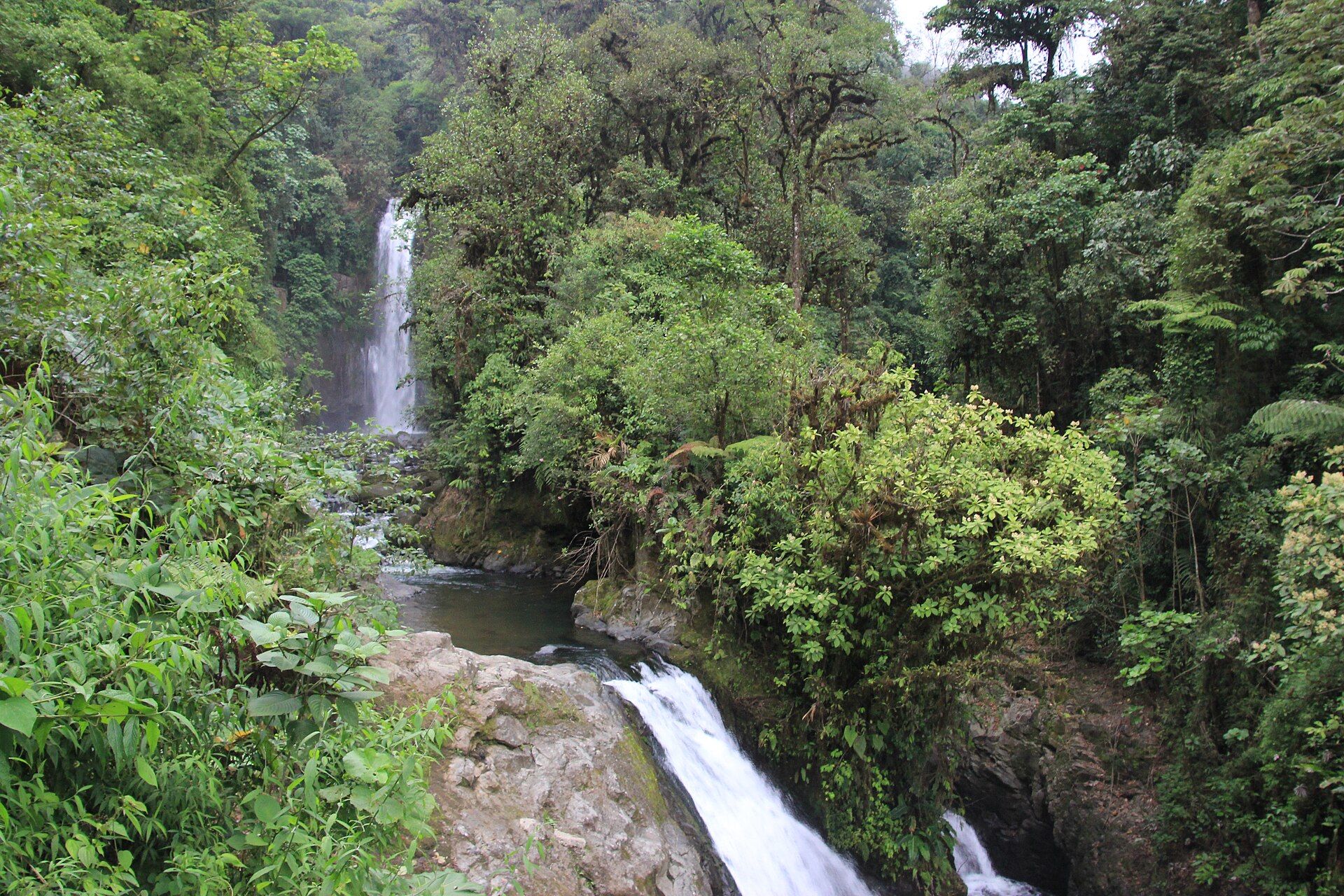
Image: File:La paz waterfalls - panoramio.jpg by diego_cue, via Wikimedia Commons (https://commons.wikimedia.org/wiki/File:La_paz_waterfalls_-_panoramio.jpg). License: CC BY-SA 3.0 (https://creativecommons.org/licenses/by-sa/3.0/). Cropped for display.
The sound reached me before the waterfall did. At first it was a low thread beneath the forest's other noises, easy to mistake for wind moving through leaves. As I followed the path at La Paz Waterfall Gardens, the thread thickened into a steady rush. I had come to the highlands near Vara Blanca expecting waterfalls, of course, but sound changed the expectation into anticipation. Each turn seemed to bring the water closer without revealing it completely. The forest held the view back just long enough to make me notice everything along the way: a dark wet stone, the sheen on a leaf, the way cool air settled against my skin.
I began with the feeling of being between climates. The air carried the softness of moisture, and the vegetation gathered around the path in overlapping greens. It was easy to understand why this highland setting invites an unhurried day. The attraction is known for a series of five waterfalls, but I did not want to turn them into numbered stops. I wanted the walk between them to matter. Water was present even when I could not see it, shaping the air and the sounds around me. A trail can become its own kind of story when it gives you time to approach the main scene slowly.
At the first clear view, the water seemed to break the forest open. It fell through a frame of rock and plants, white against the darker walls around it. I stopped short, not because the sight was entirely unexpected, but because the scale felt different in person than in my imagination. Photographs flatten a waterfall into one beautiful surface. Here I could hear the unevenness of the flow, see mist lifting at the base, and sense how the moving water changed the space around it. The scene was not a still picture waiting for me to arrive. It was continuous, and I was briefly standing within its reach.
I let other visitors pass before moving on. The paths and steps are part of the designed visitor experience, and I followed them carefully, especially where moisture made the surface feel slick. The operator describes handrails along the waterfall route, but I did not assume that any path would be effortless for every traveler. Stairs, weather, and individual mobility matter. In my imagined day I was able to take the route slowly, stopping where it made sense. That pace gave me a different pleasure from rushing to the next viewpoint. I could feel the ground change underfoot and the sound of the previous falls recede while the next one grew louder.
The gardens include animal exhibits as well as the waterfall trail. I approached those areas with a different kind of attention. A butterfly moving through an enclosure is not the same as a wild creature appearing in the forest, and I did not want to blur the distinction. The operator describes an aviary, butterfly areas, and other managed habitats; those spaces may offer a chance to learn and observe, but they should be represented honestly as part of a curated attraction. I found myself lingering with the colors and movements while remembering that the free-ranging lives of the surrounding forest continued outside the designed paths.
The contrast between curated spaces and the ravine felt useful rather than awkward. A visitor attraction can make a landscape approachable, providing a route through steep terrain and points where a person can pause safely. At the same time, the falling water reminded me that the most memorable part of the day was not arranged for my convenience. The river followed its own course. The operator had created access to viewpoints; it had not invented the force of water carving through rock. Holding both truths made the visit feel clearer and more respectful.
As I approached another waterfall, I tried not to compare it with the first. The temptation was immediate: which one was tallest, which one would make the best photograph, which one deserved the most time? I put the ranking aside. This fall sounded different, and the angle of the trail changed how I saw it. Water spread across one section of rock and gathered into a stronger line elsewhere. Plants held to the damp edges. A visitor can know the site contains five named falls and still experience each one as a particular encounter rather than a score in a private contest.
I paused beneath the highland light and watched mist drift toward a patch of vegetation. It seemed to disappear and then reappear as the wind shifted. The small movement held me longer than the grand view. I began to think about how water connects every part of the setting: the river, the waterfall, the damp rock, the plants, the air I breathed. The five falls were the most visible expression of that system, but not the whole of it. Even when I could not see the river directly, I could hear its work below the path.
The attraction's name includes the word gardens, and that made sense as I walked between viewpoints. There was a designed sequence to the day, a way of moving from one experience to another. Yet the forest kept refusing to become merely a backdrop. A leaf caught a drop of water and bent under its weight. Light appeared briefly through a break in the canopy. A bird called from somewhere I could not locate. I did not add that bird to an imaginary sightings list. Its unseen presence was enough to make the place feel wider than the route I followed.
At a rest point, I sat long enough for the urgency to leave my legs. I thought about the kinds of travelers who might enjoy a day here: someone drawn mainly by waterfalls, a family interested in the gardens' managed wildlife areas, someone who wants a highland change of pace between other Costa Rica landscapes. Those are different ways of using the same place. A thoughtful itinerary would not force everyone into one version. It would allow time to choose a route, take breaks, and notice what genuinely draws attention.
Another set of steps brought the sound closer again. The trail's descent gave the waterfalls a rhythm of approach and release. I could hear one fall strongly, then lose it behind a bend, then catch the next. The changing sound made the distance feel tangible. I realized that the day was teaching me to listen as carefully as I looked. I had arrived thinking of waterfalls as visual attractions. I would leave remembering a layered soundtrack: water striking rock, water moving farther down the ravine, footsteps on the path, voices briefly rising and fading behind me.
The larger La Paz Waterfall has its own presence in the operator's account of the site, including its relationship to the road below. I did not need to claim a particular stop or a perfectly framed view to understand its significance in the sequence. The named falls are connected by the same river and the same highland setting. To me, the pleasure lay in moving through that connected landscape. Each viewpoint offered a new scale, from a close rush of water to a broader view of canyon walls. The route felt less like a set of isolated attractions than a long conversation with one river.
By the time I turned back toward the upper grounds, the coolness on my skin had become part of the memory. I was aware of my shoes, my breath, the gentle fatigue of climbing after a descent. Those bodily details mattered. A waterfall garden is easy to describe in superlatives, and the operator naturally celebrates its site. My own imagined story felt more grounded in the ordinary effort of walking, pausing, and looking again. The beauty did not require a promise that everyone would feel the same thing. It was there in the sensory encounter, open to each visitor's attention.
I thought about the role of weather. In the highlands, light and rain can change a visit quickly. Rather than treat that uncertainty as a flaw, I pictured how the route might feel under different skies: brighter greens after a shower, stronger contrasts when sun finds the ravine, a softer outline where mist lingers. I would still check current conditions and the operator's guidance before visiting. Preparation and openness can live together. Knowing what is available on a given day makes it easier to enjoy the surprises that remain.
The exhibits prompted another thought about storytelling. It would have been easy to write that I had encountered a wild sloth or a rare bird just because the gardens list those animals among their attractions. That would confuse a managed exhibit with a chance meeting in the forest. I preferred a more precise memory: looking carefully at the attraction's spaces, then stepping back onto the waterfall trail and hearing water take over again. The distinction did not diminish either experience. It made room to appreciate each on its own terms.
Near the end of the visit, I returned to a view I had passed earlier. The waterfall was unchanged in its broad outline, but I had changed. At first I had been eager to see what came next. Now I wanted to linger, comparing the sound to the memory of the other falls and noticing a new line of water against the rock. Revisiting a place within the same day can be a quiet luxury. It proves that the first glance is rarely the whole encounter. A second look can reveal what anticipation concealed.
The drive away from the highlands would carry me toward a different Costa Rica mood, perhaps warmer and more open. I liked knowing that the waterfall's sound would travel with me even after it faded outside the window. This place had given a shape to the day: approach, descent, pause, return. It had also reminded me that a thoughtfully planned journey does not have to erase effort or weather. Those elements can deepen a visit when travelers have the time and information to meet them comfortably.
I imagined telling the story later and found that I would not start by listing all five waterfall names. I would begin with that first low sound beneath the forest, the moment before I could see water at all. It captured the feeling of the place better than a ranking. La Paz Waterfall Gardens was a route toward something beautiful, but it was also a practice in anticipation and attention. The path made room for sound, mist, curated habitats, and the strong fact of a river descending through a highland ravine.
The final feeling was not that I had collected five sights. It was that I had followed water for a while and allowed its movement to set the pace. In the rest of a Costa Rica itinerary, this highland day could be one chapter among beaches, towns, and forests. It would remain distinct because of its sound. Long after the photographs blurred together, I could imagine hearing the rush again and remembering the cool air, the damp stone, and the relief of standing still while the river continued on.
Editorial note: This is an illustrative first-person story, imagined from research to inspire travel. It does not describe a real visit by Costa Rica Travel Professionals staff or a customer. Check current operator information, accessibility details, and conditions before planning.
A world of wonder awaits
Plan your Costa Rica adventure
Tell our destination concierges what you want from Costa Rica, and we will help shape the journey.