La Fortuna: Waterfall and Town | Costa Rica Travel Professionals
Travel Stories
La Fortuna: Waterfall and Town
La Fortuna woke around me in layers. First came the small sounds close to my room, then voices outside, then the broader hum of a town getting on with its day. I stepped out with the waterfall in mind, but I wanted to notice the p
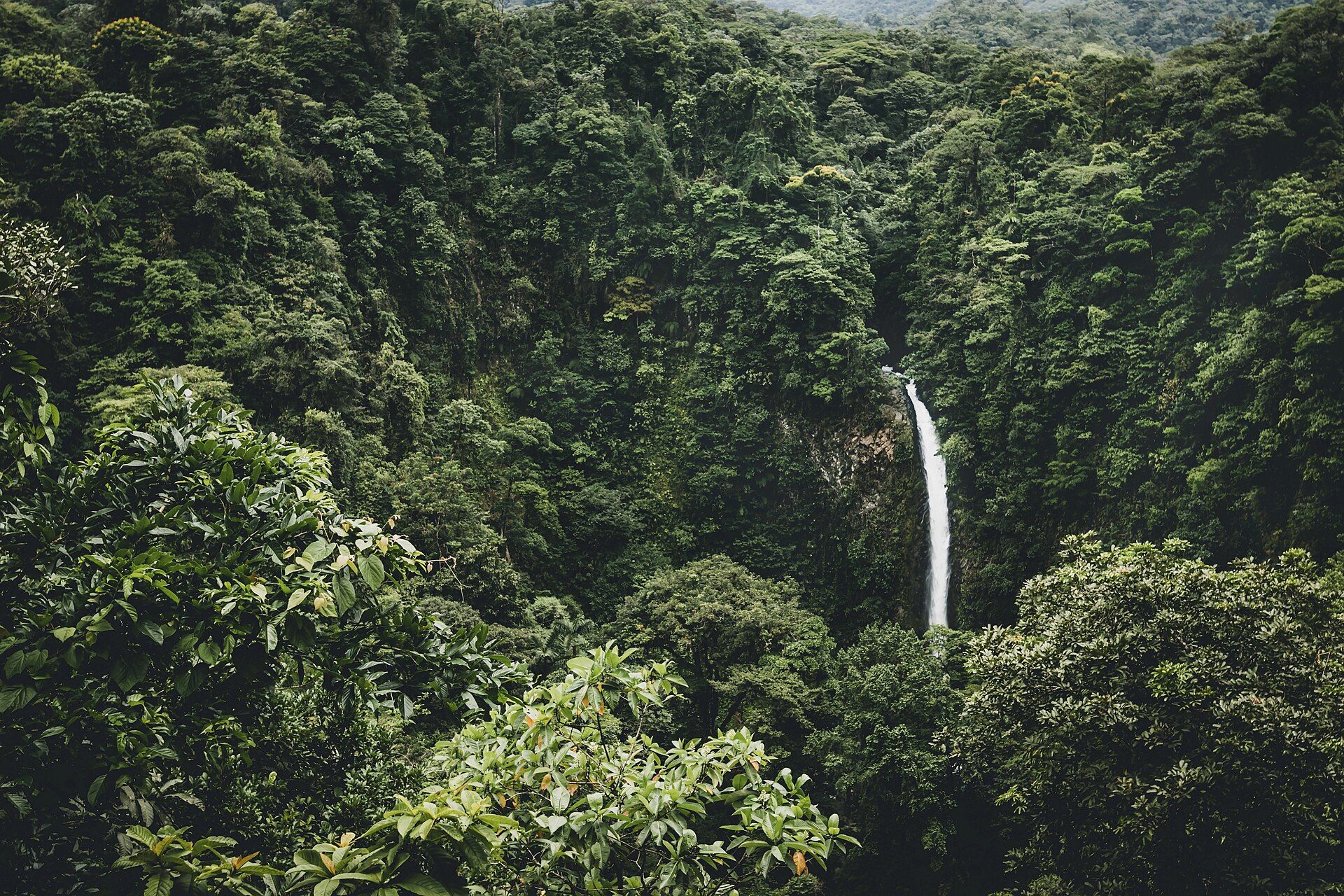
Image: File:La Fortuna Waterfall, La Fortuna de San Carlos, Costa Rica (Unsplash).jpg by Isabella Jusková bellaskova, via Wikimedia Commons (https://commons.wikimedia.org/wiki/File:La_Fortuna_Waterfall,_La_Fortuna_de_San_Carlos,_Costa_Rica_(Unsplash).jpg). License: CC0 (https://creativecommons.org/publicdomain/zero/1.0/). Cropped for display.
La Fortuna woke around me in layers. First came the small sounds close to my room, then voices outside, then the broader hum of a town getting on with its day. I stepped out with the waterfall in mind, but I wanted to notice the place I was leaving before I went. The volcano shaped the skyline when clouds allowed it, and the streets held a practical energy: people opening doors, arranging plans, greeting one another. It would have been easy to treat the town as a collection of tour departures. Instead, I gave myself a slow morning and let its everyday rhythm become part of the visit.
I found a place to sit with a warm drink and watched the light move across the street. My plans were simple. I would visit La Fortuna Waterfall, return without racing to a second attraction, and spend time walking in town. The waterfall's official site describes a descent of roughly five hundred steps, and that was enough to make me consider my pace before I started. A staircase down is also a staircase back up. I filled a water bottle, chose shoes with a steady grip, and left room in the day for pauses. Preparation did not dampen my excitement; it made space to enjoy the setting.
The route toward the waterfall took me away from the town's hum and into greener surroundings. I could hear birds, though I did not try to name every call. Leaves held the light differently from the painted buildings I had passed earlier. At the entrance, I checked the current guidance rather than assuming a remembered online description was still accurate. This was a managed visit, with paths and safety instructions that mattered. I was eager to hear the waterfall, but I wanted to arrive in a way that respected both the place and the people maintaining access to it.
The descent began gently enough to tempt me into hurrying. I stopped at a rest point and looked into the green below. A waterfall is often pictured as one grand white column, as if the entire experience were contained in a single view. Here, the approach mattered too. Moist air, layered vegetation, and the growing sound of water made the destination feel earned without turning the walk into a challenge for its own sake. I counted a few steps, then lost count and was relieved. The number could tell me how to prepare; it did not have to tell me how to experience the path.
Farther down, the sound became a steady presence. It filled pauses in conversation and seemed to come from more than one direction as the path turned. I noticed the way other visitors made room for one another on the stairs. Everyone had their own pace, and I found it easier to keep mine when I stopped measuring it against theirs. My legs felt the descent, but my attention was on the changing view. A broad leaf caught droplets of water. A gap opened in the trees. For a moment I glimpsed white movement beyond the green and felt the familiar childlike urge to speed up.
At the bottom, the waterfall had a scale no photograph had prepared me for. Water dropped with an energy that made the air seem to vibrate. Mist softened the edges of the scene, and the surrounding rock and vegetation gave the falling water its shape. I stood still long enough for the first rush of excitement to settle. Then I began noticing details: the pale color of spray against darker stone, the shifting patterns where water met the pool, the way voices became smaller beside that continuous sound. The view was beautiful, but the atmosphere was what I wanted to remember.
I stayed within the designated visitor area and followed the posted advice about water conditions. A striking pool can create a strong desire to enter, but appearance alone says nothing about currents or safety. The waterfall's managers provide current guidance, and it was wiser to listen than to assume a general travel article knew the day's conditions. I found a place to stand back and watch. People took photographs, adjusted rain dampened hair, smiled at one another. Their happiness added to the scene without making it a private discovery. I was one guest among many, sharing a place cared for by others.
After a while, I put my camera away. I had taken enough pictures to remember the broad shape of the falls; no image could carry the sound or the damp coolness on my skin. I watched the water for another few minutes, trying to notice that it never fell in exactly the same way twice. A heavy section would thicken, then break apart. Spray drifted with a small change in wind. The waterfall was constant and always changing, and that contradiction held me there longer than the need for a perfect frame.
The return climb was slower. I took the stairs at a pace that let me breathe comfortably and paused when I wanted to. The official site's step count had not been a threat; it had been useful information for treating my body kindly. Each rest gave me a new view of the forest. I imagined how different the same path might feel after rain, or to a traveler with different mobility needs. No single description can tell everyone whether an outing is appropriate. My own pleasant day did not erase the physical work of the climb, and I would describe it plainly to anyone considering the visit.
When I returned to town, the ordinary world seemed newly vivid. A storefront color looked brighter after so much green. Conversations sounded crisp after the roar of water. I was hungry, and I chose a leisurely meal without turning the restaurant into an invented endorsement. The pleasure was the pause: sitting with tired legs, drinking water, and allowing the morning to become a memory. I could have filled the afternoon with another major activity, but I liked having time to notice how La Fortuna itself received people returning from adventures. Its streets were not merely a transfer point between excursions.
I walked without a strict route, keeping to public areas and letting the town's shape reveal itself. Sometimes the volcano appeared as a presence beyond the buildings; sometimes cloud took it away. I had learned not to expect a clear summit simply because a photograph had promised one. Weather was part of the place. The changing view made me look at what was nearer: gardens, signs, an open door, the way afternoon light warmed a wall. It was a different kind of attention from standing beneath the waterfall, but the two experiences strengthened one another.
La Fortuna offers many activities, and that abundance can create an anxious itinerary. I felt the pull of it as I passed tour information and thought about everything I had not booked. Then I remembered the morning's climb and the pleasure of sitting still at the base. I did not need to prove that I had used every hour. A day can be full because its moments have depth, not because they are packed edge to edge. I made a note of ideas for another visit and let them remain future possibilities. The town was more enjoyable once I stopped treating it as a contest to complete.
In the late afternoon, I found a quiet place to watch the sky. The clouds rearranged themselves around Arenal, sometimes revealing a slope and sometimes hiding it. I was careful in my own mind not to blend the waterfall visit with the national park as if one ticket or path covered everything. Attractions in the region have different managers and access arrangements. That practical distinction matters for travelers planning a day. In the story, though, the places were connected by feeling: the town's lively base, the green descent, the sound of the falls, and the mountain weather changing overhead.
I thought about the people whose work made the morning possible. Trails and stairways require maintenance. Visitor guidance requires attention. The official waterfall organization, ADIFORT, connects the attraction to local stewardship. I did not need to claim a detailed breakdown of where every admission colón went to appreciate that the place was managed, not spontaneously available. A responsible visit includes respecting the route and current instructions. It also includes honesty in telling others what the experience asks of them physically, even while describing its beauty.
As evening arrived, I walked again through town. The pace had changed. Lights appeared in windows, and the day's heat softened. I had an image of the waterfall in my mind, but it no longer stood alone. It was attached to the water bottle I had packed, the steps I had climbed, the lunch that tasted better because I had taken my time, and the cloud moving over the volcano. These ordinary links gave the famous sight a personal scale. Without them, it might have remained an impressive picture. With them, it became a day.
I would tell another traveler to approach La Fortuna with both enthusiasm and breathing room. Check the waterfall's current official information, especially access and safety advice. Decide honestly how a long stairway fits your needs. Give yourself time to recover and enjoy the town rather than treating the falls as a photo stop between bookings. If cloud hides the volcano, let the cloud be part of what you see. A trip is not diminished when nature declines to match a brochure. Sometimes that is when it becomes most memorable.
The next morning, I found myself thinking not only of the water's force but of the pause halfway up the stairs. I had stopped to catch my breath, and in that pause I noticed a small leaf holding a bright drop. It was a tiny scene beside a large attraction, yet it stayed with me. La Fortuna had offered two ways to look: outward toward a dramatic waterfall, and inward toward the details I might miss when I hurried. The best part was discovering that I did not have to choose between them.
Before leaving, I glanced back toward the town and the mountains beyond it. I knew I had seen only one version of La Fortuna, shaped by the day's weather and my own pace. That felt like a reason to return, not a failure to finish. The waterfall would keep falling, people would keep living and working here, and the clouds would keep changing the view. I carried away the sound of the falls and a quieter memory of streets, shade, and the pleasure of letting one experience fill a whole day.
As I packed, I found a few damp marks on the page where I had described the falls. I could not tell whether they came from mist or from a water bottle in my bag. I liked the ambiguity. The notebook held the facts I needed to remember, but the day lived beyond those notes: the coolness at the bottom of the stairs, the warmth of town afterward, and the choice to leave part of the afternoon open. I would plan my next visit carefully and still let it surprise me.
Editorial note: This first-person story is an illustrative narrative composed from research. It does not describe an actual visit by a Costa Rica Travel Professionals staff member or customer. Confirm current waterfall access, safety guidance, and mobility requirements with the operator.
A world of wonder awaits
Plan your Costa Rica adventure
Tell our destination concierges what you want from Costa Rica, and we will help shape the journey.