Palo Verde: A Day in Guanacaste Wetlands | Costa Rica Travel Professionals
Travel Stories
Palo Verde: A Day in Guanacaste Wetlands
The first thing I noticed was how much sky there was. Guanacaste had already taught me to expect open country, but at Palo Verde the horizon seemed to keep moving farther away. A pale band of water lay between grasses and trees. A
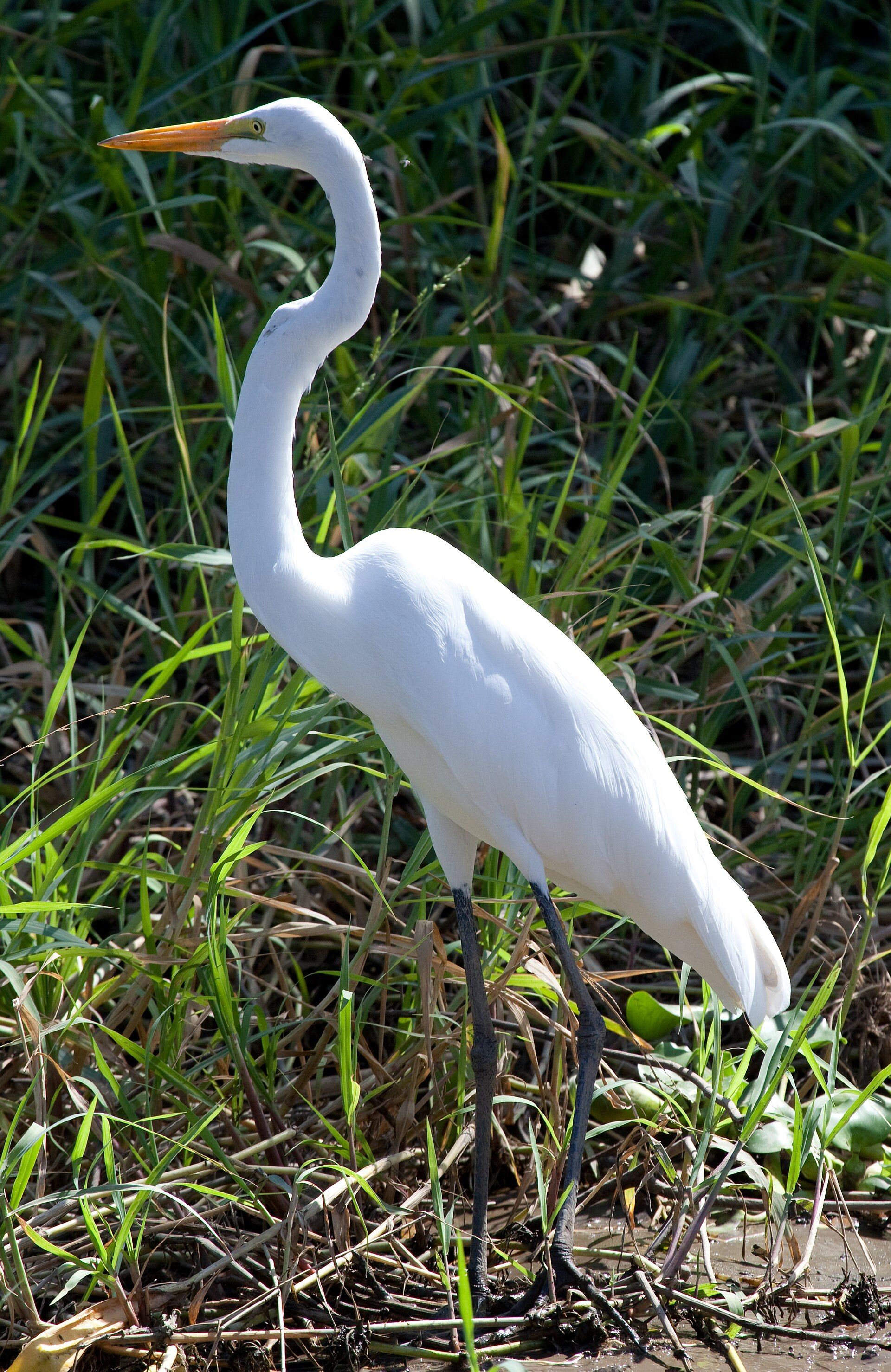
Image: File:Ardea alba -Palo Verde National Park, Costa Rica-8.jpg by Paul Kehrer, via Wikimedia Commons (https://commons.wikimedia.org/wiki/File:Ardea_alba_-Palo_Verde_National_Park,_Costa_Rica-8.jpg). License: CC BY 2.0 (https://creativecommons.org/licenses/by/2.0/). Cropped for display.
The first thing I noticed was how much sky there was. Guanacaste had already taught me to expect open country, but at Palo Verde the horizon seemed to keep moving farther away. A pale band of water lay between grasses and trees. Above it, birds crossed in uneven lines, some low enough to reflect in the surface, others reduced to moving marks against the light. I had come hoping to see wildlife. I had not expected the space around it to become the thing I remembered most.
There is a temptation, on a nature day, to begin with a list: what did I see, how close did it come, was there a photograph? I caught myself doing exactly that as I reached for my camera. Then a small movement at the edge of the wetland pulled my attention away from the screen. I could not identify the bird from where I stood. Its shape emerged, vanished behind a stem, and appeared again. For several minutes that was enough. The morning became less like a search and more like an invitation to look.
Palo Verde National Park protects a surprising mix of habitats in Guanacaste. The Costa Rica Tourism Board describes deciduous lowland forest, evergreen forest, flooded forest, limestone hill forest, grasslands, and mangroves, with wetlands covering about half the park. I had read those words before arriving, but the categories only became real as the view changed. Dry branches stood near watery ground. A cluster of dense green foliage interrupted a broad wash of gold. The scene would not settle into the single image of a tropical forest that I had carried in my head.
Where water changes the pace
I started by doing less. Instead of trying to cover ground quickly, I stopped near the wetland and let the foreground come into focus. The first minute offered only reeds. The next offered ripples. Then I began to notice how the birds used different parts of the same landscape: some crossed open water, some kept to its margins, and some stayed close to trees. The park is known for aquatic birds, both resident and migratory, yet I tried to avoid turning each sighting into a promise about what anyone else would see. Wildlife moves on its own terms. That unpredictability made the quiet moments feel honest.
The sound changed as often as the light. A call came from somewhere behind me, sharp and brief, and another answered farther away. Wind moved through dry leaves with a papery rattle. I heard water before I could see exactly where it opened. At one point I found myself listening with my whole body, as if a sound might tell me which way to turn. I had spent so many trips looking outward for a dramatic scene that the attention itself felt new.
I had imagined a wetland as a flat place. Here, the meeting between water, forest, and open ground made depth. A tree at a distance seemed to float until I noticed the strip of earth beneath it. Reflections doubled stems and broke them into fragments. Shadows changed the color of the bank. I liked that I could not take in the whole place at once. Every time I chose one detail, another passed unnoticed. The day was not a puzzle I could finish.
As the air warmed, I found myself thinking about why a landscape like this deserves protection. A marsh can look empty to a hurried traveler. It can seem less immediately spectacular than a volcano or a waterfall. Yet the apparent emptiness held movement at several scales. Insects flickered close to the grasses. Birds worked the margins. The water reflected a sky that would be different in an hour. Palo Verde's mosaic of natural communities gave me a more generous idea of what an attraction could be: not a single viewpoint, but a set of relationships unfolding in front of me.
A second landscape in the same park
Leaving the water's edge changed the mood. The drier ground felt firmer beneath my shoes, and the vegetation took on a different texture. I thought back to the tourism board's description of deciduous forest and limestone hills. Those were not just labels on a map. They were clues to why the park resisted a simple summary. Where the wetland encouraged long, outward views, the trees drew my gaze into layers: bark, branches, leaf shapes, patches of light, and the dark spaces between them.
I paused beside a tree and tried to picture this scene in a different season. Guanacaste's landscapes change with rain and dryness, and I knew that any photograph would capture only one version of the place. The thought made me more careful about the language I would use later. I could say what I imagined seeing on this illustrative day. I could say what the park's official description establishes about its habitats. I could not promise that a particular pool, bird, color, or condition would be waiting on someone else's visit.
That awareness did not diminish the story. It sharpened it. I noticed the differences between shade and sun, between the close quiet under trees and the exposed brightness beyond them. I noticed how a bird's call carried differently when the vegetation thickened. When I looked back toward the wetland, the opening in the trees framed it like a second room. My day began to feel like a conversation between two landscapes that belonged together.
On another trip I might have asked someone to hurry so we could fit in one more stop. Here I was grateful that nothing pushed me toward a finish line. I drank water, rested, and looked back over the way I had come. The most vivid image was not a rare animal. It was the edge between dry ground and wet ground, a place that from far away looked like a line but up close was full of gradual changes. The park taught me to distrust the neat borders on my mental map.
The long practice of looking
I returned to the open view with a different expectation. Earlier I had watched for motion as proof that the outing was working. Now I watched the patterns that held still long enough to be understood. A stand of grasses leaned in one direction. The water changed color where clouds crossed overhead. A small opening between trees showed another patch of wetland beyond, making the place feel larger than the section I could see.
When a group of birds shifted together, I felt the quick excitement that had brought me here in the first place. But it passed into something quieter. I did not need to know how many there were to enjoy the way the whole flock lifted and settled. Nor did I need to put a name on every wing to appreciate the wetland's role as a sanctuary for aquatic birds. The official fact and the imagined moment met naturally: this habitat matters because life uses it, and a visitor can feel that even without a perfect checklist.
I thought about the people who travel with children, older relatives, or friends with very different interests. Palo Verde offered an idea of shared attention rather than a single required thrill. One person could watch birds. Another could study the forms of the trees. Someone else might simply enjoy the broad Guanacaste light. The story I was making in my mind was not about conquering a trail or collecting a sighting. It was about finding a pace at which more than one kind of traveler could notice something worth remembering.
That does not make a day outdoors effortless. Heat, sun, changing weather, and the ordinary limits of attention all matter. I kept the day flexible in my imagination, leaving room to pause and return instead of treating the park like an appointment with a guaranteed spectacle. It felt more respectful to the place as well as to myself. A wetland is not a stage set for a visitor. It is a living system, and my best role in it was temporary observer.
At one point I lowered my camera and realized I had been standing still for long enough to forget what time it was. The foreground had changed subtly while I watched: a stem bent, a reflection wavered, a bird disappeared into cover. None of those moments would fill a travel brochure on its own. Together they formed the texture of the day. The memory grew through accumulation rather than a grand reveal.
What the afternoon left with me
The light later in the day made the wetland look almost unfamiliar. Areas that had been flat and bright in the morning held longer shadows. I traced the route of a moving cloud in the water and felt the familiar pressure to take one final photograph. Instead, I waited. Another bird crossed the scene. It vanished before I had focused the lens. For once I was not disappointed. The moment had happened, and I had been present for it.
I tried to describe the park to myself in a sentence. “A place to see birds” was true but too small. “A wetland in Guanacaste” gave the geography but missed the feeling. What stayed with me was the way Palo Verde made different environments visible at once: open water, grasses, mangroves, drier forest, and the transitions between them. Its richness was not hidden, exactly. It simply asked for more time than a quick glance.
That thought followed me as I imagined leaving the protected area. Trips often encourage a habit of ranking: the best view, the rarest animal, the most memorable activity. I could not rank this day so easily, and that became its gift. It had no single peak. It offered repeated chances to begin paying attention again. Every time my mind wandered toward a future stop or an unfinished message, some small detail brought it back: a shift in light, a sound behind the trees, a widening circle on the water.
I would include Palo Verde in a Guanacaste journey for that change of tempo. The coast and the high-energy excursions can make the region feel expansive in one way; the wetlands make it expansive in another. They remind me that travel does not always need a dramatic point of arrival. Sometimes it needs a place where I can stand quietly and notice how much is happening without me.
Before the view slipped out of sight, I looked back once more. The water still held the sky. The birds were no longer where I had first seen them. The line between forest and wetland was as complicated as ever. I felt no urge to solve it. I wanted only to carry its patience into the next part of the trip.
An invitation to slow down
If I were shaping a wider Costa Rica journey around this day, I would leave space around it. I would not make the wetlands a hurried stop between two fixed attractions. The park's range of habitats is precisely what makes a slow visit rewarding. The more I allowed one scene to lead to another, the more the place stopped being a backdrop and became the heart of the day.
I would also arrive ready for a different experience from the one in any photograph, including my own. Water levels, light, vegetation, and wildlife are never static. The certainty is not a particular bird on a particular branch. The certainty is that this protected landscape holds many natural communities in close proximity. That is reason enough to be curious.
The memory I would share with a friend is simple. I came looking for an encounter and found a way to listen. I walked from openness toward shade and back again. I watched the sky turn into water and the water break into small movements. I let a day be full without needing to fill it. In Palo Verde, that felt like the most generous kind of discovery.
Editorial note: This first-person story is an imagined traveler narrative informed by official destination information. It does not recount a staff or customer visit. Wildlife, weather, and on-site conditions vary.
A world of wonder awaits
Plan your Costa Rica adventure
Tell our destination concierges what you want from Costa Rica, and we will help shape the journey.