Gandoca-Manzanillo: Coastal Refuge | Costa Rica Travel Professionals
Travel Stories
Gandoca-Manzanillo: Coastal Refuge
At the edge of Manzanillo, the road seemed to give the coast back to the trees. I could still hear village life behind me, but ahead the path drew my attention toward a meeting of forest and sea. The Caribbean appeared between tru
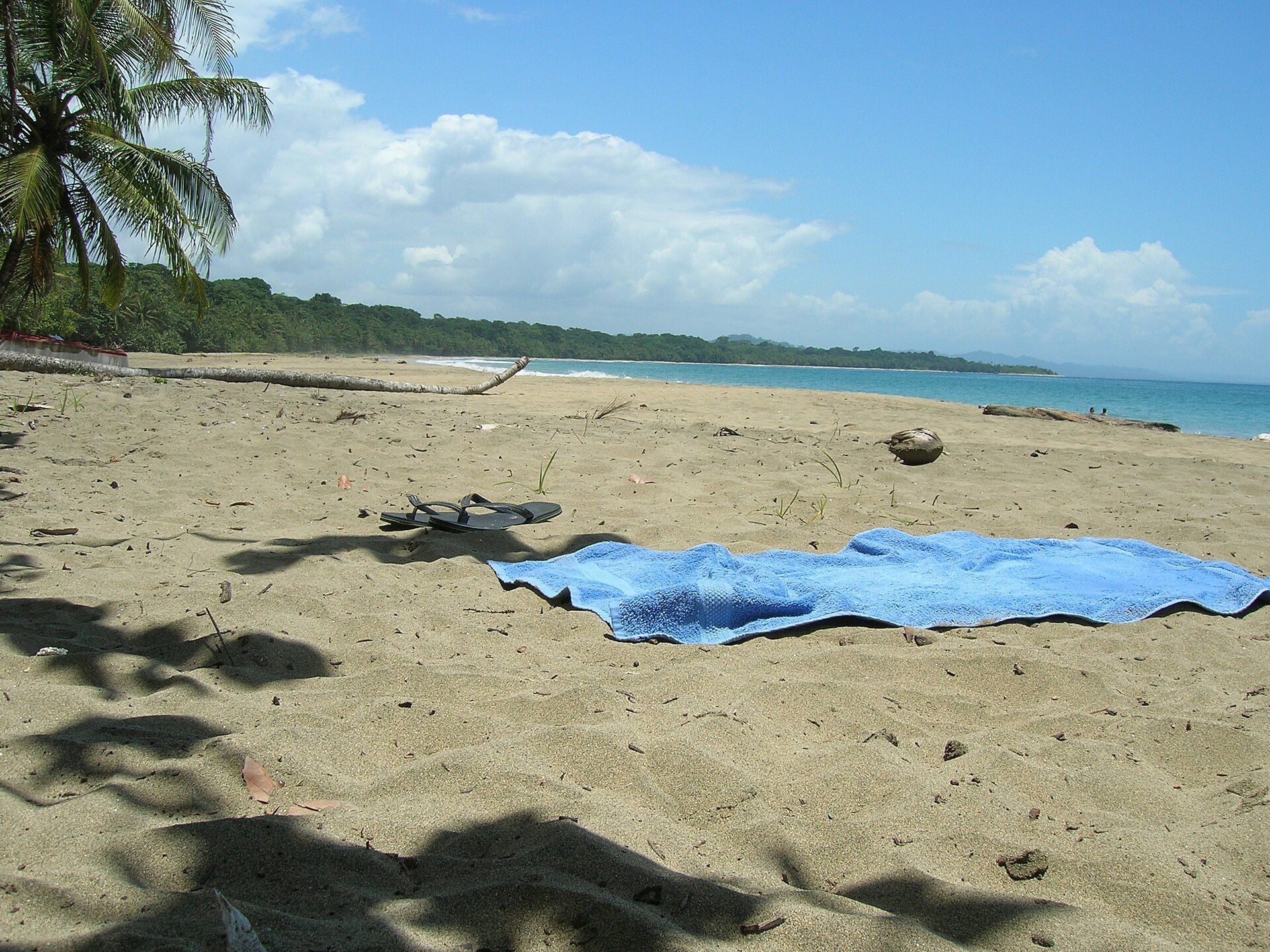
Image: File:Playa de Manzanillo, Costa Rica.jpg by Jaimedelamata, via Wikimedia Commons (https://commons.wikimedia.org/wiki/File:Playa_de_Manzanillo,_Costa_Rica.jpg). License: CC BY-SA 3.0 (https://creativecommons.org/licenses/by-sa/3.0/). Cropped for display.
At the edge of Manzanillo, the road seemed to give the coast back to the trees. I could still hear village life behind me, but ahead the path drew my attention toward a meeting of forest and sea. The Caribbean appeared between trunks in brief bright flashes. I had come to the Gandoca-Manzanillo refuge expecting a beautiful walk. I found myself thinking about the word refuge before I had gone very far. A protected place is a refuge for the life it holds. Visitors are guests in that purpose, not its center.
The southern Caribbean had already changed my sense of what a Costa Rica coast could feel like. Here the shore was not an empty strip separated from the forest. Roots, leaves, sand and salt air belonged to the same scene. I paused at an opening and looked in both directions: waves reaching toward land, branches reaching toward the light. It would have been easy to call the landscape untouched, but that word erases the people who live near it and the work involved in protecting it. I wanted to walk with more care than that phrase usually allows.
Following the edge
I began slowly, stopping whenever the path offered a view through the trees. Moist air settled on my skin. A leaf dropped somewhere nearby, loud enough to make me turn. The forest seemed full of movement that remained just out of sight. I had brought binoculars, but I kept them at my side for the first stretch. Looking closely without a lens helped me notice shapes: the curve of a trunk, the overlap of broad leaves, the small openings where sky or sea appeared.
The beach was never far from my thoughts. I could hear the surf even when vegetation hid the water. Every so often I caught sight of a pale line of foam and felt the path drawing me toward it. When I reached a safe, open place to pause, I watched the waves without assuming the water was suitable for swimming. Conditions along a coast can change. The pleasure of this visit did not depend on entering the sea. The view itself was enough to make me stand still.
I imagined how easily a wildlife walk could become a hurried search. A traveler wants the striking photograph: an animal in perfect light, a bird framed against a clear sky. But a refuge does not operate for the convenience of that wish. I stayed on the permitted route and let the forest remain partly private. I heard a call and waited. The bird did not appear. In the silence afterward, I noticed tiny movements in the leaves that I would have missed while pursuing a larger sighting.
There was a moment when the forest opened and the coast looked almost impossibly bright. The sudden view made me understand why travelers come here with cameras ready. I took one photograph, then lowered the phone. The light had already shifted. The picture would record a composition, not the warm air or the sound of water beyond the trees. I wanted to remember those things too. I stood long enough for the scene to change several times before moving on.
A protected place with more than one story
The official tourism description of Gandoca-Manzanillo places the refuge along Costa Rica's southeastern Caribbean coast. That simple geographical fact mattered as I walked. I was not in a generic jungle beside a generic beach. I was in a specific protected landscape at the end of a journey through communities with their own histories and daily routines. The refuge's name joined Gandoca and Manzanillo, reminding me that a single visitor's trail is only one part of a larger area.
I resisted trying to explain the entire ecosystem after a short visit. Forest, wetlands and marine life are connected here, but connection is not something I could map from a few hours on foot. What I could do was notice the visible edges. A branch cast a shadow across sand. Wind carried salt into a stand of trees. Water found its way through the ground after rain. These were not scientific observations. They were reminders that the boundaries on my map were less distinct in the living place.
That uncertainty changed the questions I asked myself. Instead of wondering how to reach every possible viewpoint, I wondered which places were meant for visitors and which were better left alone. I thought about how the same stretch of coast might look after heavy rain or at another time of year. A photograph would not answer either question. Current guidance from the people responsible for the area would matter more. I liked the idea of arriving prepared to be flexible, even if flexibility meant shortening a walk or choosing a different way to spend the day.
I thought about guided experiences. A knowledgeable local guide could help me see more and understand what I was looking at, while also advising on current access and conditions. That possibility appealed to me, especially because it would turn my questions into a conversation with someone who knew the area. I did not want to invent such a conversation for this story. The unfilled space was honest. It made me curious about what I could learn on another visit rather than pretending I had already learned it all.
Near a section of shore, I watched water move around a piece of driftwood. The scene was small and ordinary. It held my attention longer than a sweeping view had. A wave reached the wood and left a thin line of bubbles. Another wave changed the pattern. I wondered how many travelers would walk past looking for a more famous vista. I probably would have done the same at the start of the trip. The refuge had taught me, within an hour, to measure richness in layers rather than landmarks.
The pause that changed the walk
I found a place to rest away from the path of other walkers. The forest behind me sounded different from the beach ahead. One had little sharp noises and hidden movement; the other repeated a broader rhythm. Together they formed the sound of this coast. I drank water and looked at the path I would take back. It was the same route, but I knew it would not feel identical in reverse. The light would be different. I would be more familiar with the trees and perhaps less eager to reach an imagined highlight.
On the return, I found myself looking toward the forest more than the sea. I noticed the varied surfaces of leaves and the way a narrow opening could suggest a deeper space beyond. A shadow shifted. I stopped, waited, and discovered it was only wind. I smiled at my eagerness. The habit of looking carefully was worth keeping even when my guesses were wrong. The forest did not need to reward every pause with an animal.
I also noticed my own traces. Sand clung to my shoes, but I had left nothing behind. That seemed like the minimum a visitor could offer a protected place. The larger question was how a trip might support rather than strain the communities and landscapes that make it possible. I could choose local expertise, follow current rules and avoid treating conservation as a decorative claim. Those decisions begin before a walk and continue after it. The refuge made them feel concrete rather than abstract.
I stopped once more where the trees made a narrow frame around the sea. Earlier I had hurried to see beyond that frame. On the way back, I noticed the frame itself: one trunk rough and dark, another pale where light touched it, vines making irregular lines between them. The shore was visible only in pieces. I could not see far, yet I felt no need to move to a wider opening. A protected place does not have to reveal itself completely to be memorable. The partial view carried the feeling of the walk better than the broadest photograph I had taken.
When village sounds returned, I felt a little reluctance to leave the path. I had not covered everything, and that was the point. The protected landscape extended beyond the small portion I had been able to see. Wildlife had its own routes. People who live and work nearby held knowledge I did not. A short, careful visit could create affection, but it could not confer ownership or mastery. I wanted to leave with that distinction intact.
What a refuge gave back
Later, I looked at the sea from a different place along the coast. The colors were similar, but the feeling had changed. I saw the forest line behind the beach and thought about the path threading through it. A coast can be sold as an image of escape. Here, I had found something more lasting: a reminder that beauty and responsibility can belong to the same experience. The thought did not make the afternoon heavy. It made the light and water feel more valuable.
I remembered the driftwood and the changing bubbles around it. I remembered hearing an unseen bird and allowing it to stay unseen. I remembered the first view through the trunks, bright enough to stop me. None of those memories depended on a promised animal sighting or a perfect sunny photograph. They depended on being present and on accepting the limits of a visitor's knowledge. That was a surprisingly freeing way to travel.
The name Gandoca-Manzanillo stayed with me because it resisted shrinking into one beach or one trail. I could imagine returning with a guide, exploring another permitted area under current conditions and learning more about the conservation work associated with the refuge. I could also imagine doing less: sitting at the edge of the village, listening to the sea and remembering that the forest beyond it has a life of its own. Both possibilities felt worthwhile.
I was aware that inspiration can turn a place into a promise. It would be tempting to tell a future traveler that the path will always be open, the beach will always be calm and wildlife will always appear. None of that is mine to guarantee. What I can offer is the desire the day left with me: to arrive curious, check the conditions that matter, and let a locally informed plan make room for the unexpected. The refuge was beautiful because it was alive, and a living place does not repeat itself on demand.
By evening, the light had softened and the coastline was losing its sharp edges. I walked away without trying to turn the day into a claim that I had seen the wild heart of Costa Rica. I had seen a small, beautiful part of a protected coastal landscape. I had tried to move through it gently. It had given me a new way to look at the meeting of forest and sea, and a reason to make my next journey with the same care. That was enough to carry home.
Editorial note: This first-person story is an illustrative, researched narrative created to inspire travel. It does not describe a documented visit by a Costa Rica Travel Professionals staff member or customer; the narrator, weather, walk and moment-by-moment scenes are imagined.
A world of wonder awaits
Plan your Costa Rica adventure
Tell our destination concierges what you want from Costa Rica, and we will help shape the journey.