Corcovado: Rainforest on the Osa Peninsula | Costa Rica Travel Professionals
Travel Stories
Corcovado: Rainforest on the Osa Peninsula
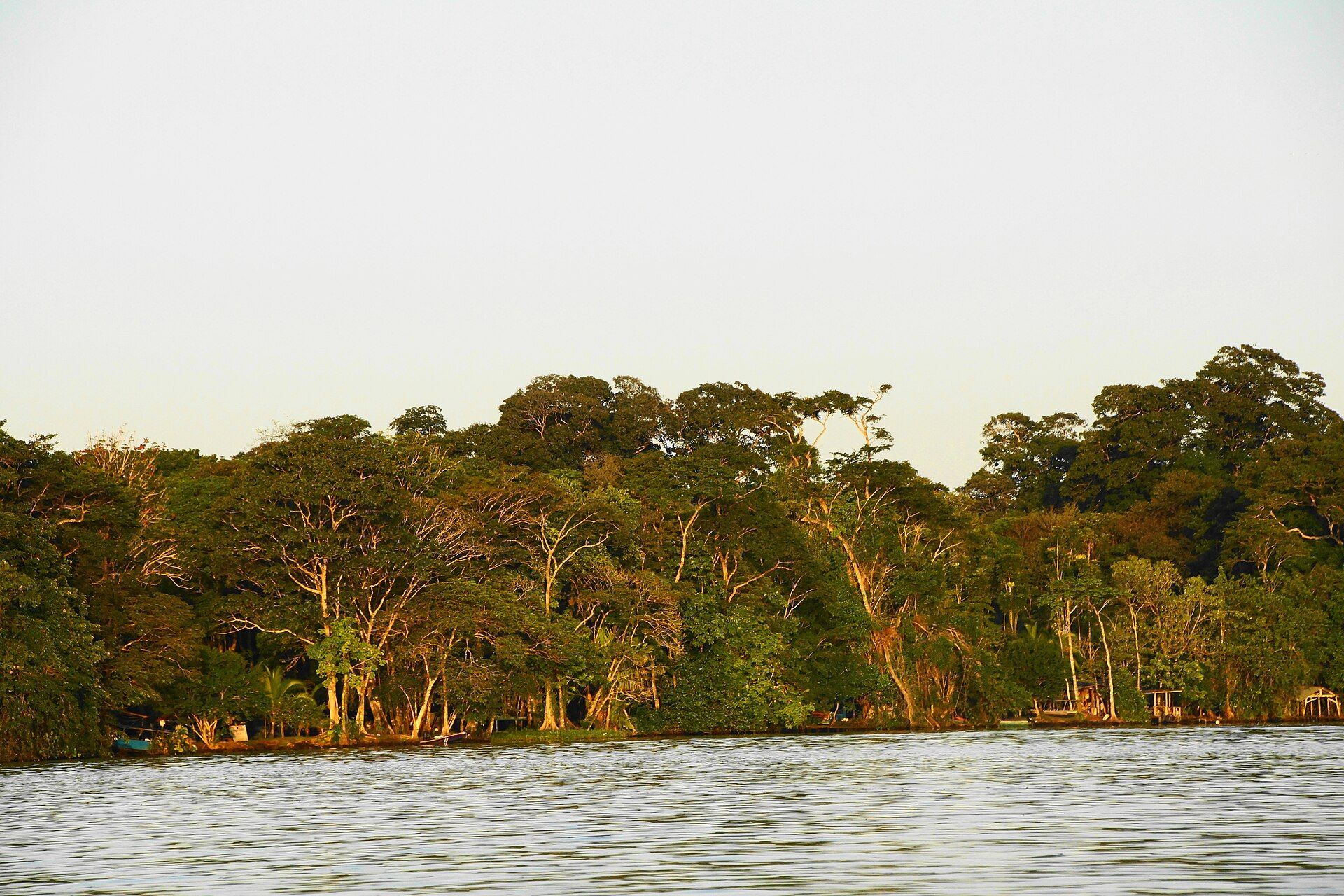
The forest begins before I step into it. On the approach to Corcovado, the green line of the Osa Peninsula seems to rise from the shore without giving away what lies inside. I look at the water, then at the trees, and feel the kin
Image: File:Corcovado National Park (8440028344).jpg by rob Stoeltje from loenen, netherlands, via Wikimedia Commons (https://commons.wikimedia.org/wiki/File:Corcovado_National_Park_(8440028344).jpg). License: CC BY 2.0 (https://creativecommons.org/licenses/by/2.0/). Cropped for display.
The forest begins before I step into it. On the approach to Corcovado, the green line of the Osa Peninsula seems to rise from the shore without giving away what lies inside. I look at the water, then at the trees, and feel the kind of anticipation that makes conversation fall quiet. I have read about the park's extraordinary variety of habitats, but the page in my mind cannot keep pace with the place in front of me.
I am visiting with an authorized guide, as the park requires. That detail matters for more than access. I have come to a protected landscape with rules shaped by conservation and safety, and I want to learn how to move through it with respect. The guide does not promise a parade of animals. Instead, we begin with a reminder to watch our footing, keep together, and notice the forest at more than one scale.
At the edge of the wild
Corcovado protects wet forest, rivers, mangroves, marshes, beach, and other habitats in one remarkable area of Costa Rica's south Pacific. I know those categories from research. On the trail they become transitions I can feel. The air changes as we move away from open shore. The light narrows under the canopy. Damp ground holds a different sound beneath each step. I have entered a place with many environments, not a single green backdrop.
At first I look for the dramatic. A large animal, a burst of color, a movement I can instantly name. The guide pauses beside a tree and asks us to look at something small. I lean closer and realize how much activity can be hidden in a patch of bark or leaf litter. The lesson is gentle but clear: if I only search the distance, I will miss the forest around my feet.
I begin to walk with more care. The path is not a race toward a viewpoint. It is a narrow way through a living system that continues beyond what I can see. The guide's attention moves easily between overhead branches and the ground. Mine lags behind, but I enjoy learning. A single sound can change where we all look. A rustle in the leaves can make the group still for a moment, then continue.
The Osa Peninsula has long held a particular place in travelers' imaginations. Words like remote and wild are easy to use, perhaps too easy. Standing here, I want to avoid treating the place as an empty stage for adventure. It is full of life and of people whose work protects it. My excitement feels more honest when it includes humility.
The forest at walking speed
The day grows warmer. I notice how the shade does not always mean coolness; the air can be dense and still beneath the canopy. Water glints in a low place. The guide points out how a different stretch of ground supports different plants. I do not need to retain every name to understand the larger point. The forest is varied, and its variety is part of why it matters.
We stop to listen. At first I hear nothing unusual. Then separate sounds emerge: a distant call, a quick movement in leaves, insects close by. I look toward one branch and catch a brief flash of color. It is gone before I can be sure what I saw. The guide offers a possibility but leaves room for doubt. I appreciate that. A good guide can make a place intelligible without pretending every glimpse is certain.
I think of the park's published figures describing thousands of insect species and hundreds of kinds of trees and birds. Numbers can sound like decoration in travel writing. Here they feel like a warning against oversimplification. I am seeing a fraction of a fraction. That makes the day no less rich. It makes each observation more precious.
The trail curves, and for a while the forest seems to close overhead. I feel my own body in the landscape: breath, footsteps, the need for water, the pull of a warm shirt against my back. This is not a passive view through a window. To be here is to move at the forest's pace and to accept a measure of effort. The effort makes me more present.
We cross another change in habitat and the air opens slightly. I can hear water somewhere beyond the trees. The guide explains that Corcovado's protected area includes rivers and coastal environments as well as forest. I am not trying to cover every one of them in a single outing. The day is a doorway, not a complete survey.
The possibility of wildlife
Corcovado is celebrated for wildlife, and I understand why visitors arrive hoping to see it. I hope so too. But I keep reminding myself that a wild animal is not a scheduled event. Our group has entered its habitat, not a theater. The guide's trained eye helps us notice signs and movements we might overlook, yet no skill can make a creature appear on command.
When we do pause for movement in the canopy, the moment is quick and imperfect. Leaves obscure part of the view. Someone sees more than I do. I see enough to feel the excitement run through the group, and then the branch is still again. I could turn the glimpse into a confident claim for a story, but the honest memory is better: several people looking up together, unsure and delighted.
The possibility changes how I hold myself. I step more quietly. I lift my eyes without forgetting the ground. I listen when the guide asks us to wait. Even in long stretches without an identifiable sighting, the forest feels inhabited. Its density is not empty space between highlights. It is the reason sightings have meaning at all.
I think about the animals I will not see. Some are active at other times, some live in places we will not visit, and some will simply remain out of sight. That is a healthy limit. The park's value cannot be measured by how many species appear for me in one day. Its value lies in the protection of a vast, complex community of life, much of which I will never know directly.
Where the trees meet the coast
As we move toward a more open stretch, the sound of the Pacific becomes clear. I had almost forgotten how close it was. The forest thins, and light comes forward in a broad wash. I step out where I can see the shore and feel the space widen around me. The shift is striking after the close attention the trail demanded.
I stand for a while with forest at my back and sea ahead. Corcovado's protected landscape includes a long sandy shoreline, but from this point I am aware of just one section of it. The scale is difficult to hold in my head. I let the view be local: water moving against sand, wind finding the edge of the trees, clouds crossing above.
The guide gives us time to rest. I drink water and notice the sound of the surf working against the forest's calls. Neither drowns the other out completely. They make a layered place, a meeting of habitats that feels both exposed and sheltered. I had imagined the beach as a break from the rainforest. Here it feels like one of the rainforest's borders, connected rather than separate.
I resist the urge to turn the moment into a heroic photograph. There is nothing heroic about standing here. The achievement belongs to the long work of protection and to the many living things that make this place what it is. My role is to receive the view, follow the rules, and leave no trace of my visit beyond memory.
Walking back with different eyes
On the return, I recognize a few shapes from earlier: a broad root, a bend in the path, a place where the light comes through at an angle. Yet the trail feels new. I am less intent on what might appear ahead and more attentive to what is already beside me. A plant I passed without noticing becomes interesting. The forest has not changed much in a few hours; I have.
I ask the guide a question and then realize that the best answer may be another question. How does this habitat change across seasons? What can a visitor learn without disturbing it? Which observations require years rather than hours? Corcovado seems to invite curiosity while reminding me that knowledge is earned slowly.
The group falls into a comfortable quiet. We have shared the walk, but each person will take a different story home. One may remember the possible animal glimpse. Another may remember the beach. I know I will remember the transitions: the air thickening under the canopy, the sudden sound of surf, and the moment I stopped looking for a spectacle and started seeing a habitat.
When we reach the edge again, I turn back toward the trees. The forest looks as dense and unreadable as it did when I arrived. I have learned a little, but I have not solved it. That feels right. A place like Corcovado should be able to resist a traveler's neat conclusion.
What I carry from Osa
I leave with an image of the guide's hand raised, asking us to pause. It was not the signal for a guaranteed sighting. It was an invitation to become more careful observers. That gesture sums up the day better than any single animal or view. Corcovado asked me to enter attentively and accept the limits of a short visit.
The park's diversity is often described in numbers, and those numbers are impressive. Yet my memory is tactile and particular: warm air in the shade, wet ground underfoot, a brief flash of movement, the open edge of the Pacific. The facts gave me a reason to come. The details gave me a reason to remember.
I would advise my future self to leave room in any Osa itinerary for uncertainty. Weather changes. Trails and access may change. Wildlife follows its own patterns. A guide can help me travel responsibly and interpret what I see, but the point is not to buy a promised scene. The point is to enter a remarkable protected place with enough attention to be changed by it.
Back from the trail, I can already feel the ordinary urge to summarize. I was in Corcovado. I walked in the rainforest. I saw the coast. All true, all too small. The day was a lesson in scale: the small details under a leaf, the many habitats held within a park, and the long horizon beyond the shore. I was present for only a brief part of that story, and I am grateful for the part I was given.
If I return, I hope I will bring the same willingness to be surprised. I may see different wildlife or none clearly at all. I may walk under rain rather than sun. I will still have the chance to listen, learn from an authorized guide, and meet the forest on its own terms. That is more than a single checklist could ever contain.
Editor's note: This first-person story is an illustrative, researched narrative created for travel inspiration. It does not recount an actual visit by a Costa Rica Travel Professionals staff member or customer. Wildlife sightings, access, trails, weather, and guide arrangements vary; park entry requires an authorized guide.
A world of wonder awaits
Plan your Costa Rica adventure
Tell our destination concierges what you want from Costa Rica, and we will help shape the journey.