Cartago Basilica and the Orosí Valley | Costa Rica Travel Professionals
Travel Stories
Cartago Basilica and the Orosí Valley
The day began with stone and ended with green. In Cartago, I stood near the Basilica of Our Lady of the Angels and watched people move through the space around it. Later, in the Orosí Valley, the view opened toward hills and culti
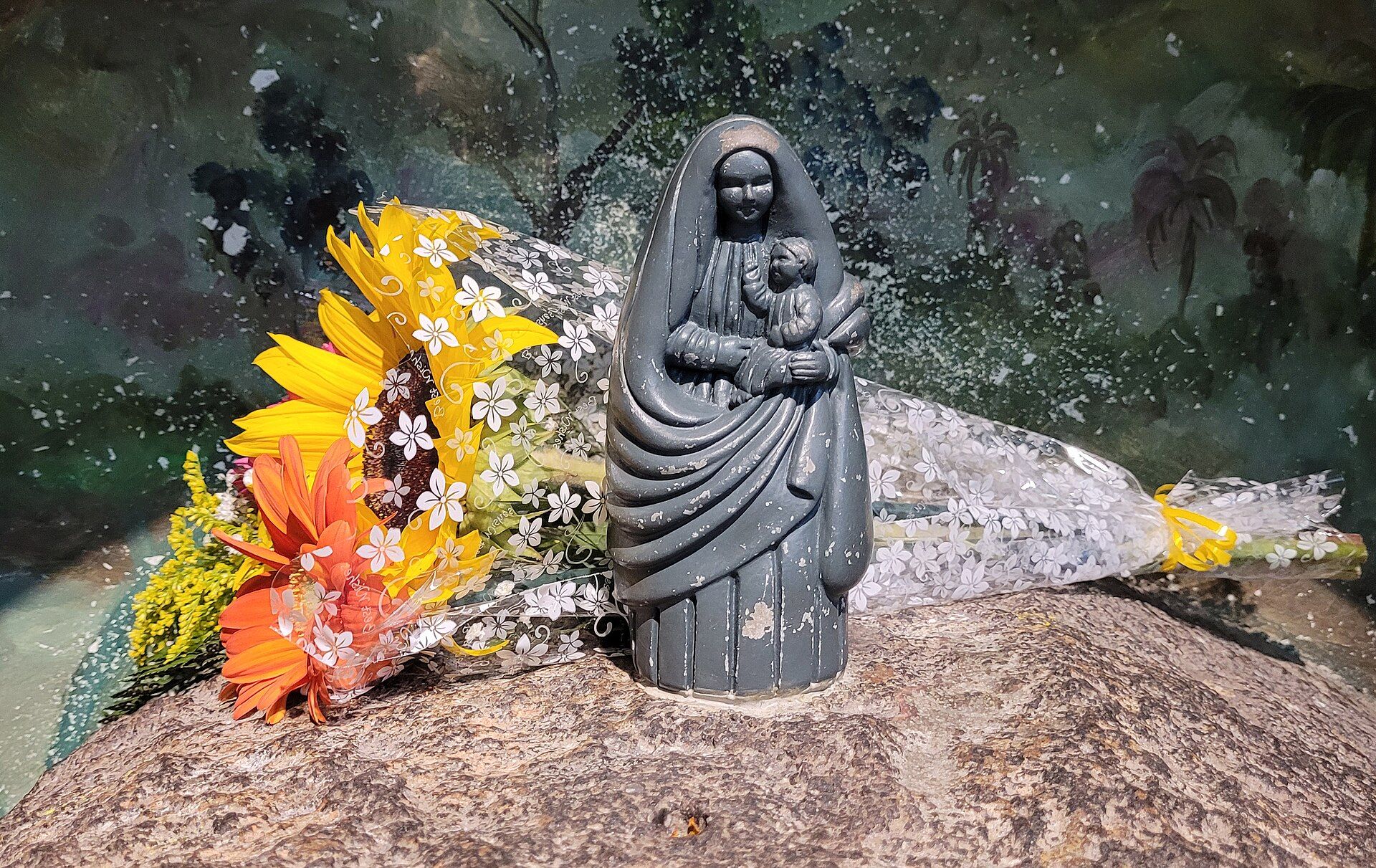
Image: File:Basilica of Our Lady of the Angels, Cartago 06.jpg by Bernard Gagnon, via Wikimedia Commons (https://commons.wikimedia.org/wiki/File:Basilica_of_Our_Lady_of_the_Angels,_Cartago_06.jpg). License: CC0 (https://creativecommons.org/publicdomain/zero/1.0/). Cropped for display.
The day began with stone and ended with green. In Cartago, I stood near the Basilica of Our Lady of the Angels and watched people move through the space around it. Later, in the Orosí Valley, the view opened toward hills and cultivated land. I had expected two separate stops: a landmark and a landscape. The journey between them made the pair feel like one story about how people live with place, memory, and change.
Cartago carries a long place in Costa Rica's history. The Costa Rica Tourism Board describes it as the former capital and highlights the colonial heritage of the province, including Orosí's historic church. The basilica is a place of living devotion, not merely a historic building for a traveler to admire. I wanted to approach it with that understanding. I could notice the architecture and atmosphere without treating worshippers as scenery or inventing their private thoughts.
I began outside, where the building's presence gave the day a formal opening. I imagined the light moving across its facade while people came and went for reasons of their own. The scene held a kind of quiet even when the surrounding streets were active. I felt the familiar visitor's wish to take a photograph, but I waited. First I wanted to look at the space as a place people use, not as an image to carry away.
A landmark that belongs to people
The basilica made me think about the difference between a monument and a living sacred place. A monument may invite a visitor to walk around it and gather facts. A sacred place asks for more care. I could enter only if appropriate at the time, follow posted guidance, and remember that prayer and ordinary community life continue whether I am there or not. I did not need a dramatic personal revelation to feel the importance of that distinction.
Outside, I looked at the movement of the city around the landmark. Cartago was not frozen in its former-capital history. Vehicles passed. People crossed the space. The building remained present amid current life, and that made the historical fact more meaningful. A city can carry centuries without becoming a museum. I wanted the story of this day to hold both the enduring structure and the people whose routines make the place contemporary.
I did not imagine a conversation with a worshipper or a guide to supply an easy quotation. Such a scene would feel vivid but would belong to no real person. Instead, I stayed with what a visitor could honestly notice: the building's public presence, the hush I felt when I slowed, and the awareness that others might be there for reasons much deeper than sightseeing. That was enough to make the stop feel consequential.
I had planned to keep moving, but the pause changed the tempo of the morning. I sat for a while and considered how Cartago fits into a broader Costa Rica journey. It is easy to build an itinerary around wildlife and dramatic terrain. A place like this adds civic and spiritual history. It reminds me that a country is shaped by memory as well as geography. The basilica gave that thought a visible form.
Toward Orosí
When I turned toward the valley, the mood changed gradually rather than at a single boundary. Streets gave way to more open views. The land folded and rose. Green spread across slopes in several tones. I had read that Orosí is known for its historic church, a temple the tourism board dates to the eighteenth century. I wanted to see the valley as more than a scenic ending to the Cartago stop. Its own built and natural history deserved attention.
The first broad view made me stop. I could see how a valley gathers the eye toward its center and then sends it up the surrounding hills. Cultivated areas interrupted the green in ordered shapes. Clouds softened parts of the distance. I did not name a particular farm, crop, or viewpoint without a source; what mattered in this imagined moment was the relationship between land and settlement. The scene felt inhabited even from afar.
I thought back to the basilica. Both places asked me to resist a flat description. “Historic church” and “pretty valley” were accurate only in the loosest sense. Cartago's landmark remained part of present devotion. Orosí's landscape held working communities and a colonial-era church. Neither existed to complete my photograph. They were places with ongoing meanings I could only begin to understand.
I moved more slowly as the valley came into focus. The air felt softer in the shade. A road bent out of view. Hills that had seemed smooth at a distance showed texture. I imagined stopping where it was safe and permitted to look, rather than treating a scenic road as permission to ignore practical care. The view did not need a risky angle. It was wide enough from a considered pause.
The old church and the living valley
The tourism board identifies Orosí's church as a notable example of colonial art and dates it to 1743. That one fact changed how I saw the valley. A building from that period is not merely old; it is a surviving point in a much longer story of place, religion, and community. I approached the idea of visiting it as I had approached the basilica: with curiosity and respect for its current use.
I imagined standing nearby, studying the contrast between the church's human scale and the hills beyond. The landscape was not a backdrop. It helped me understand why settlement, agriculture, and routes might gather in a valley, though I did not claim a specific historical explanation without checking it. The scene invited questions rather than a tidy lesson. How had the building been cared for? How had the community around it changed? What would a local historian emphasize that a passing visitor might miss?
I could not answer those questions by looking alone. That was not a failure. Travel sometimes gives me a reason to learn more later. I made a note to seek official interpretation and community perspectives rather than fill the gaps with a romantic story about colonial life. The temptation to do so was strong; old buildings and green hills make it easy. But the truth of a place is richer than a simple picture.
I paused again and looked toward the slopes. The valley had a quiet that felt different from the basilica's. In Cartago, the quiet was shaped by a landmark and the respect I brought to its sacred role. Here it came from space, distance, and a slower view. Both asked for attention. I was glad I had not packed the day so tightly that one experience pushed the other away.
The route as part of the memory
As the afternoon advanced, I realized that the journey between Cartago and Orosí would be the thread I remembered. At the start, I had looked at a building framed by city life. Later, I looked across a valley where built heritage sat within green terrain. The movement connected different scales of Costa Rica's story: national memory, local community, and the physical landscape that holds them.
I thought of the traveler who wants only one of the two: architecture or scenery. This day could serve either interest, but it became more compelling when I allowed them to meet. The basilica's presence made me more attentive to the valley's historic church. The valley, in turn, made me think again about how buildings belong to the places around them. Neither stop was complete in isolation.
The light shifted as clouds moved over the hills. A slope darkened and brightened again. I imagined taking a photograph but choosing not to rely on it as the whole memory. The camera could hold shapes and color. It could not hold the change in thought between morning and afternoon: the recognition that heritage is lived, and that a landscape is worked and remembered as well as admired.
I also considered how much a visitor cannot know in a day. I could learn established facts from official sources and notice my own responses. I could not speak for worshippers, residents, or the people who maintain historic places. That limit did not make the story empty. It gave the experience a respectful boundary and a reason to continue listening.
Why I would make room for both
If I were planning another Costa Rica journey, I would keep Cartago and Orosí together in the itinerary, with enough flexibility to honor each. I would check current visitor guidance for sacred sites. I would leave time to pause in the valley rather than use it as a drive-through backdrop. I would not promise a particular service, opening, road condition, or view. The meaningful part of this imagined day was not a perfect schedule. It was the shift in perspective.
I began with an interest in a famous basilica. I ended thinking about a broader region whose history and landscape are inseparable. The former capital, the living sanctuary, the old church, and the valley each offered a different way to consider continuity. Some things survive as buildings. Others survive as practices, memories, and relationships to land. A traveler may glimpse only a small part, but that glimpse can be enough to change the rest of the trip.
Before leaving the valley, I looked back toward the hills. They were not the same color as when I had arrived. The cloud had moved; the afternoon had deepened. I thought of the basilica's stone in the morning light and the Orosí church set against green. I did not need to choose which image represented the day. It was the movement between them that gave the day its meaning.
In my imagined notes, the two places occupied facing pages. On one I had written about arriving at the basilica and choosing to stand quietly before reaching for the camera. On the other I had sketched the way the valley pulled the eye from a nearer slope toward hills partly hidden by cloud. Looking at the pages together, I saw a common theme: the best view was never only visual. The basilica asked me to consider devotion and public memory. The valley asked me to remember work, settlement, and changing weather. Both became richer when I acknowledged what I could not see.
I would want to return with more time for the people who interpret these places. A guide, museum, or official heritage material could explain details that a passing visitor should not guess. I would ask how the historic Orosí church is preserved and how the community uses it now. I would ask what the basilica means in Cartago beyond the details a traveler notices from outside. I might not find every answer in one visit, and I would not turn anyone's response into a convenient line for a story without their consent. The questions themselves would improve the journey.
The day also reminded me to plan for contrast. A morning in a city and an afternoon looking over hills require different kinds of attention. I would leave a pause between them, even if it meant doing less. The memory became strong because I had time to let one setting settle before the next arrived. If I had rushed from landmark to viewpoint, I might have collected two photographs and missed the conversation between them.
Editorial note: This first-person story is an imagined traveler narrative informed by official destination information. It does not recount a staff or customer visit. Sacred-site access, road conditions, and weather should be checked for the intended visit.
A world of wonder awaits
Plan your Costa Rica adventure
Tell our destination concierges what you want from Costa Rica, and we will help shape the journey.