Britt Coffee Tour: From Bean to Cup | Costa Rica Travel Professionals
Travel Stories
Britt Coffee Tour: From Bean to Cup
The morning begins with a cup of coffee I do not drink right away. I hold it close enough to catch the aroma and think about how quickly I usually swallow a familiar pleasure. Coffee has accompanied early flights, conversations, u
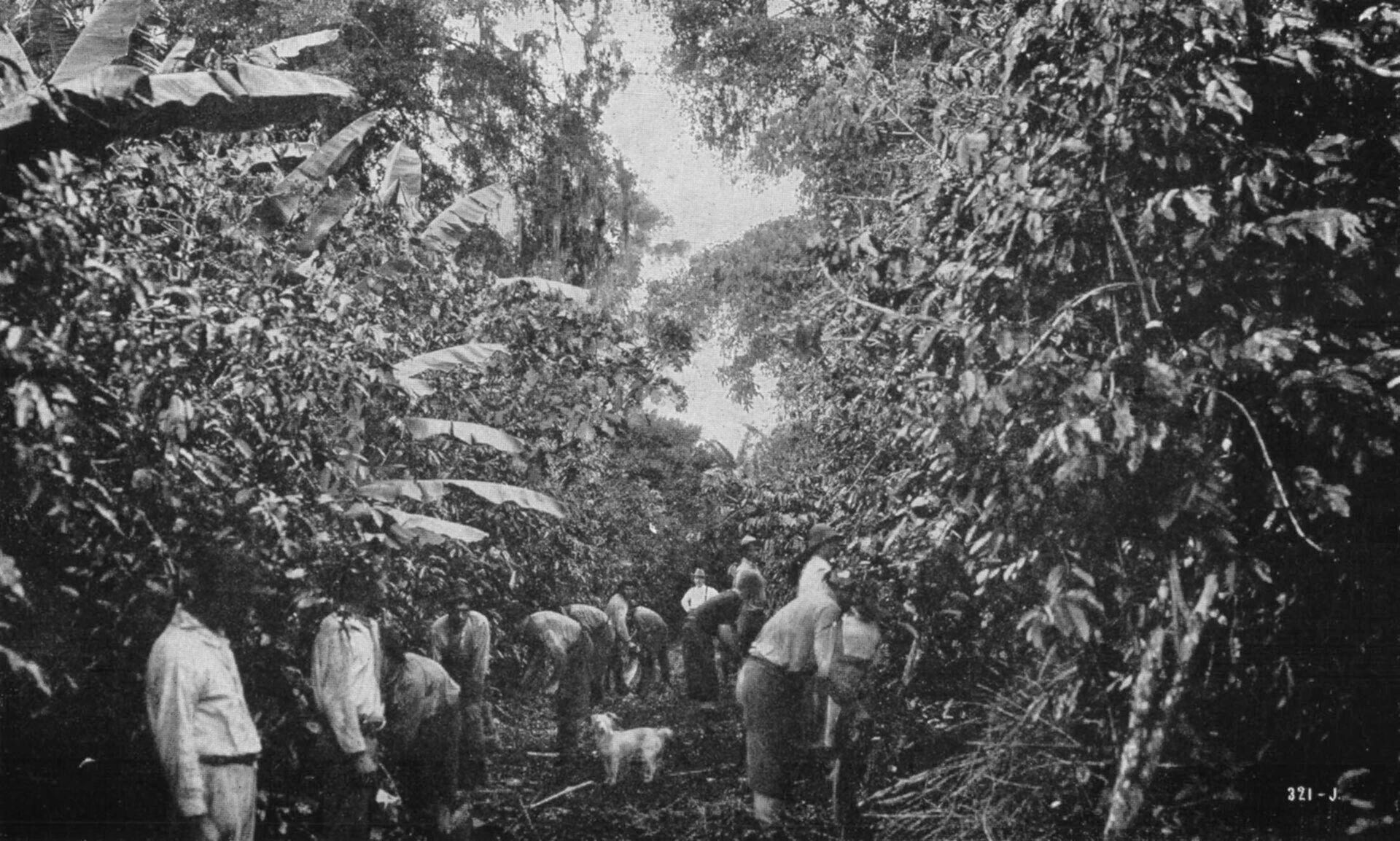
Image: File:Coffee plantation in Costa Rica.jpg by unknown creator, via Wikimedia Commons (https://commons.wikimedia.org/wiki/File:Coffee_plantation_in_Costa_Rica.jpg). License: Public domain (https://creativecommons.org/publicdomain/mark/1.0/). Cropped for display.
The morning begins with a cup of coffee I do not drink right away. I hold it close enough to catch the aroma and think about how quickly I usually swallow a familiar pleasure. Coffee has accompanied early flights, conversations, unfinished work, and quiet minutes at home. Yet I have paid surprisingly little attention to the journey behind it. In Heredia, at the Britt Coffee Tour, I want to follow that journey backward, from the cup in my hands toward the plant that started it.
The grounds feel green and carefully tended. I am aware that I am visiting a working story as well as a visitor experience: a place where coffee is grown, selected, roasted, and discussed with the kind of attention most of us bring only to the finished drink. I have come curious rather than knowledgeable. I know the taste of my usual coffee. I want to understand what gives it that taste.
Starting with the plant
I look at the coffee plant longer than I expected to. Its leaves are glossy; the fruit, where present, makes the whole process feel more like agriculture than the abstract idea of a commodity. In my kitchen, coffee arrives as a sealed bag of beans. Here I can begin to picture the stages before that bag exists. The gap between the two is the real subject of the day.
The tour invites visitors to learn how coffee is grown and selected, and I listen for the details that change what I thought I knew. I had imagined a straightforward chain: fruit picked, beans dried, beans roasted. The closer I look, the more decisions appear in between. Attention to a plant, to the condition of fruit, to the treatment of the seed inside, to the heat of roasting: each stage shapes what eventually reaches a cup.
I resist the urge to turn everything into a fact I can repeat later. Some knowledge is more useful as a change in habit. I begin to see why a cup can carry the work of many hands. I think of a farmer watching plants over time, of sorting and processing that reward patience, of the roaster's judgment at a moment when scent and color begin to change. Even when a tour simplifies a complex industry for visitors, it can make visible a chain of care that is easy to overlook.
As we move through the green setting, I catch myself reaching for my phone to photograph every detail. Then I put it away. The texture of a leaf, the smell of damp earth, the way a branch bends under fruit: these are easier to absorb when I am not trying to frame them. I can always take a picture later. For now I want to let the plant be a plant, not just a visual preface to a tasting.
The long middle of a familiar drink
Coffee seems simple when it is waiting at breakfast. The tour's account of cultivation, harvest, and roasting makes that simplicity feel like an achievement. I begin to think about all the ways the finished cup could have been different. A different choice at one stage might have shifted the flavor. A small delay might have changed a process. I do not pretend to master the science in one visit, but I enjoy seeing that there is science, craft, and experience behind what I had treated as routine.
One of the pleasures of the visit is noticing my own vocabulary expand. Before, I might have described coffee as strong or mild. Now I am trying to pay attention to aroma, body, acidity, and the way a flavor lingers. I do not need to sound like an expert. In fact, the less I worry about having the right word, the more I notice. A cup can be bright at the first sip and gentle afterward. Another can seem familiar at first and then reveal something I had missed.
The roasting stage is especially absorbing because it involves transformation that I can imagine with my senses. Heat changes the beans, and aroma becomes part of the explanation. I picture the moment when a roaster decides that the beans have reached the intended character. It is both technical and human. A timer alone cannot give me the full story of what someone has learned to recognize.
I think about Costa Rica as I listen. A coffee tour is not a complete account of a country's farming life, and I would not want to mistake it for one. It is a doorway. It points me toward landscapes, labor, and traditions that deserve more than a souvenir purchase. The best part of the experience is not that I can now claim to know everything about Costa Rican coffee. It is that I can no longer pretend there is nothing to learn.
Learning to taste
When the time comes to taste, I slow down. I bring the cup toward me and notice the aroma before I sip. Then I take a small mouthful and wait. My first impulse is to decide whether I like it. That is the habit I brought from home: immediate judgment, quick comparison, on to the next thing. I let that impulse pass and try again.
The second sip feels more interesting. I notice the temperature, the texture, and the way the flavor changes as the coffee cools. I think of how much I usually miss by drinking while doing something else. Here, tasting is not a test. It is an invitation to attend to a familiar object as if I had never met it. The cup grows more complex the longer I give it my concentration.
I glance around and see other visitors having their own quiet revelations. We may all be tasting the same coffee, but we are not having the same experience. Someone notices a flavor I would not have named. Someone else asks a question about preparation. I like that there is no single correct response required from us. Curiosity is enough to join the conversation.
I remember the first cup of the morning, the one I held without drinking. It seems like a different object now. The liquid is the same kind of thing, but the story behind it has expanded. I can picture the plant again. I can imagine the stages that separate fruit from roasted bean. I can recognize that every stage contains choices. That awareness does not make the drink less comforting. It makes it richer.
Beyond the tasting table
Afterward, I linger. It would be easy to treat the tour as finished once the cup is empty, but the setting gives me room to think. I am in Heredia, part of Costa Rica's Central Valley, with a day that could still unfold in many directions. The coffee visit has not filled the entire day; it has changed its tone. I feel inclined to notice origins, not only flavors, wherever I go next.
I think about how travel can make an everyday habit strange again in the best sense. At home, I do not ask where the coffee came from while the kettle boils. In Heredia, the question is present in the plants, the explanation of processing, and the tasting itself. The distance between source and cup has become visible. I cannot take that knowledge apart from the pleasure of drinking.
There is a difference between enthusiasm and a promise. I enjoyed this imagined day, but I would not want to claim that every visitor will have the same guide, weather, or tasting. The value of an experience like this lies in its invitation to ask better questions. What work is behind a flavor? What changes between one region and another? How can a traveler appreciate the people and landscapes connected to a product without reducing them to a quick stop? Those are questions I can carry beyond Heredia.
The operator presents several tour formats, but I do not need to fit every option into this single story. My attention is on the central arc: plant, process, cup. It is enough to turn a familiar morning ritual into a layered memory. The visit belongs among Costa Rica's travel experiences precisely because it connects pleasure with place.
Taking the cup home in memory
On the way out, I pause over the idea of buying coffee to bring home. A bag would be a useful reminder, but the more lasting souvenir may be a changed way of drinking it. I will still make coffee on rushed mornings. I will still have cups I barely taste. But I know there will be others when I stop for a moment, breathe in the aroma, and remember that the story began with a plant in the ground.
I imagine opening a bag weeks later and recalling this green morning. Not a single polished scene, but a sequence: a leaf that caught the light, an explanation that made me look again, the aroma of roasted beans, the surprise of tasting slowly. Travel memories often attach themselves to grand views. This one attaches itself to something small enough to hold in both hands.
Coffee also gives me a way to remember the Central Valley as more than a place between airport and coast. Heredia is part of the trip, not merely a point on the route. The landscape and the knowledge offered here change how I understand a product I encounter almost every day. That is a generous kind of travel: it reaches back into my ordinary life after I return.
I think of the people whose work a tour can only begin to show. A visitor experience can introduce a process, but it cannot contain the full lives of growers, processors, roasters, and everyone else involved. Remembering that limit feels important. Appreciation should make me more curious and more respectful, not more certain that I have seen it all.
When I finally drink the last of my coffee, it is cooler than when it was poured. The flavor has shifted a little. I realize I am paying attention right to the end. That small change in me is the day's clearest measure. I arrived for a cup of Costa Rican coffee and leave with a deeper sense of the journey inside it.
If I return, I would ask different questions. I would listen longer when the story turns from the tree to the choices made after harvest. I would taste without trying to identify every note. I would remember that learning can be as pleasurable as sipping, and that the best cup is not always the one I can describe most impressively. Sometimes it is the cup that makes me pause.
I would also make room for the questions that a single tour cannot answer. How does a growing region shape the people who work there? What does a harvest season feel like from the perspective of a family rather than a visitor? A good introduction does not close those questions; it opens them. My cup is empty, but the curiosity it started has become part of the journey. I carry that with me into the rest of the Central Valley, alert to the possibility that another ordinary object may have an equally extraordinary story behind it.
Editor's note: This first-person story is an illustrative, researched narrative created for travel inspiration. It does not recount an actual visit by a Costa Rica Travel Professionals staff member or customer. The tour scenes and tasting impressions are imagined; current tour content and availability should be confirmed with the operator.
A world of wonder awaits
Plan your Costa Rica adventure
Tell our destination concierges what you want from Costa Rica, and we will help shape the journey.