Bribri Territory: Learning Through a Community-Led Visit | Costa Rica Travel Professionals
Travel Stories
Bribri Territory: Learning Through a Community-Led Visit
The road seemed to ask me to put away the version of travel in which I arrived with all the answers. I had come toward the Talamanca region with an interest in cacao, but also with the uneasy awareness that a living culture could
Bribri Territory: Learning Through a Community-Led Visit
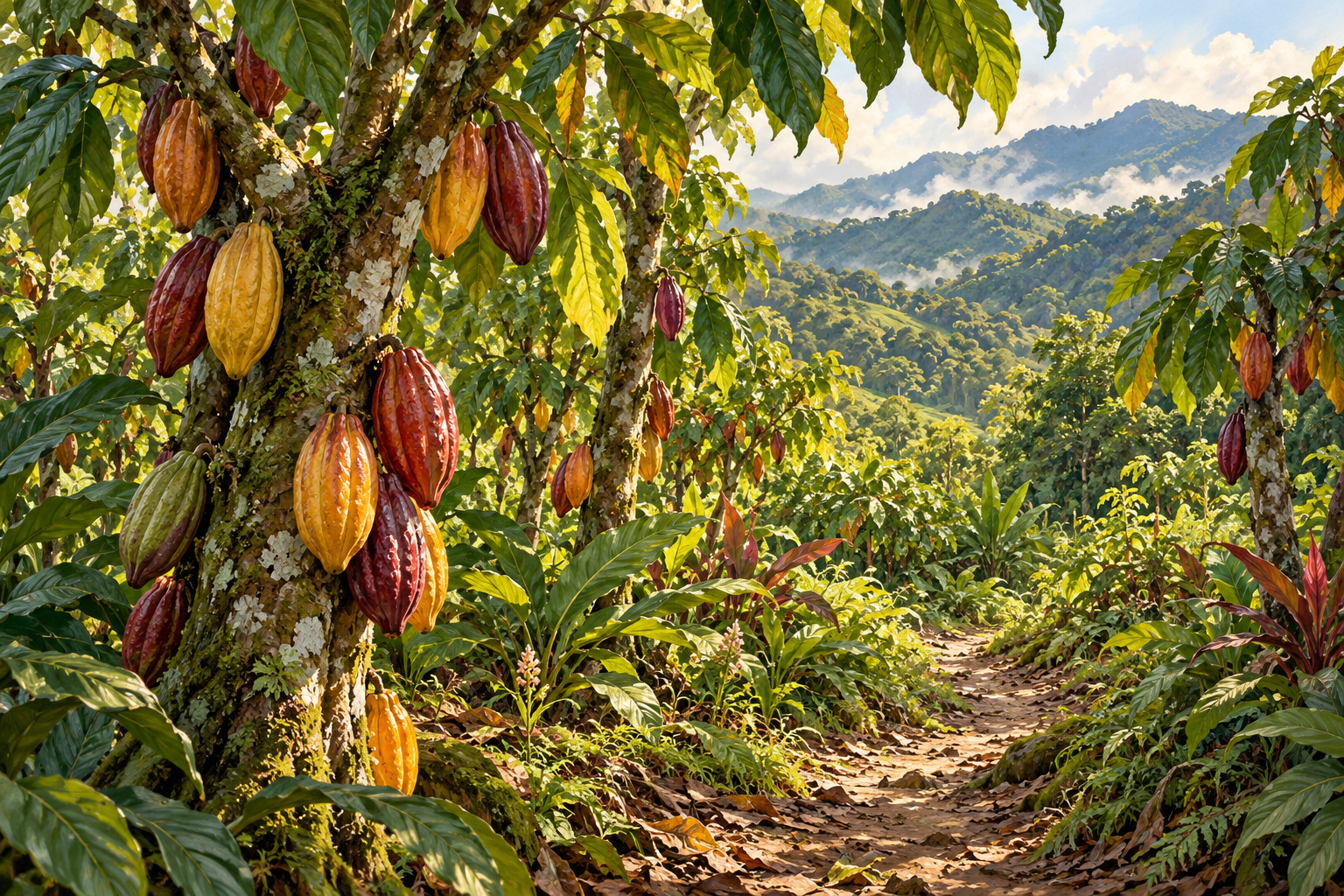
Illustrative AI-generated image created for this story; it is not a documentary photograph.
The road seemed to ask me to put away the version of travel in which I arrived with all the answers. I had come toward the Talamanca region with an interest in cacao, but also with the uneasy awareness that a living culture could be reduced to an afternoon activity if I let my curiosity become a kind of collecting. The visit I imagined was arranged through people who chose to welcome guests and explain their own work. That distinction mattered before I saw a single cacao tree. I was entering someone else's home region, where the story belonged to its residents. My role was to listen, to ask when invited, and to leave room for things that might not be mine to know.
At the meeting place, I found myself paying attention to ordinary movements instead of searching for a dramatic introduction. A bag was adjusted. Someone looked up at the sky. A path led beyond the edge of the road into deeper green. The day was warm, and the air carried the rich scent of wet leaves. I had expected the word “experience” to make everything feel neatly packaged. Instead, the first minutes were wonderfully unpolished. I was being reminded that real communities do not perform themselves on cue. A host might share a practice, a crop, or a memory, but the people around me had work and relationships continuing beyond my visit.
As we moved, I tried to keep my questions open. I could have asked for a list of facts about the Bribri, but I wanted to understand what this particular community had chosen to show. The Bribri people are not a single tour, and no one person's explanation can stand for everyone. That became the quiet principle of my day. When a plant was pointed out, I noticed how much more meaningful it felt to hear about it in the place where it grew. I did not pretend that one walk made me knowledgeable. In fact, the longer I listened, the more I recognized how much context sits behind even the simplest visible action.
The cacao trees gave the visit a gentle focus. Their fruit did not resemble the tidy bar of chocolate I usually met at home. Looking at a growing pod, I felt the distance between a familiar flavor and the labor, land, and decisions behind it. A community member guided the explanation, moving at a pace that allowed us to observe rather than rush toward a tasting. I could see why a photograph of a pod would tell only a fraction of the story. Trees were part of a cultivated landscape, and cultivation was part of family and community life. I wanted to remember the relationships, not only the botanical novelty.
At one point, I caught myself preparing a question simply because I had heard visitors ask it elsewhere. It was about a tradition I had no reason to assume would be shared with strangers. I let it go. The better question was how this community wanted visitors to participate. There is a difference between being welcomed into a conversation and demanding access to everything inside a culture. I had come to learn, yet learning required some restraint. The most important response to another person's generosity was not another clever question; sometimes it was to listen closely, accept a boundary, and avoid treating a private life as public material.
I watched the stages of a cacao demonstration with an attention I rarely give food. Texture changed as the process moved along. An aroma rose, first faint and then unmistakable. Hands knew the sequence more surely than mine ever would after a single lesson. I did not want to turn those hands into an anonymous symbol of “authenticity.” The people doing the work were skilled hosts who had chosen how to present it. If I remembered the moment honestly, I would remember the agency behind the lesson: what was shown, what was explained, and what was left outside the visitor's frame.
The surrounding green made me think about how easily a traveler separates culture from landscape. Here, the two were in conversation. Cacao needed land and care. Paths connected households and gardens. Weather shaped the day. Conservation was not an abstract virtue written on a brochure; it touched the choices people made while living in the area. I was careful not to assign motives to anyone I met, or to repeat a romantic idea that Indigenous communities exist outside modern life. I saw people making contemporary choices, using their own knowledge and resources to decide how tourism could fit among other forms of work.
When it was time to taste what had been prepared, I slowed down. I wanted the flavor to arrive without immediately comparing it to the chocolate I knew. It felt earthy and complex in my imagined cup, and I understood that the sensory moment belonged to a larger process I had only briefly witnessed. I asked before taking any close photographs. A camera can be intrusive even when it seems harmless to the person holding it. It records faces, homes, and labor for an audience the subject may never meet. Putting it down was a small way to stay present and let the visit be an exchange rather than a harvest of images.
We paused in shade, and I noticed the different scales of time around me. My itinerary was measured in days. A cultivated tree lived through seasons. A community organization might spend years building a way to host travelers on its own terms. The Nature Conservancy has written about Bribri women in the Yorkín area organizing tourism around cacao, and that account helped me understand how much initiative lies behind a visitor's seemingly simple afternoon. It was not for me to claim I had learned the whole history of Stibrawpa or of Bribri culture. I could, however, understand that community-led tourism is created by people, not bestowed by visitors.
The conversation turned back to practical things: where a visitor may walk, what can be photographed, how a booking supports the hosts directly. These were not details to squeeze into a travel hack. They were part of respectful participation. I had read enough to know that there are different communities, different offerings, and different ways to arrange a visit. It would be misleading to promise that every traveler could arrive unannounced and encounter the same demonstration. I would arrange directly with an authorized community enterprise, confirm the current plan, and follow the instructions given. Flexibility felt more appropriate than arriving with a rigid script.
I had imagined that a cultural visit might leave me with a vivid lesson I could repeat in a sentence. Instead, I came away with a better habit: pause before turning someone's life into my discovery. The afternoon had its pleasures, of course—the smell of cacao, the close green of the gardens, the surprise of seeing a familiar ingredient in its growing place. But pleasure was not the whole point. I had been allowed to see a little of how work, knowledge, and hospitality met. That access carried a responsibility to describe the visit without pretending ownership of what I learned.
On the return, the light through the leaves had changed. I recognized a stretch of path I had barely registered earlier, now looking different because I had spent hours asking how to see more carefully. I could imagine telling a friend that the cacao was fascinating, and that would be true, but incomplete. I would also tell them to choose a visit led by the community itself, to budget time for listening, and to ask permission before photographing people. Those actions would not guarantee a particular emotional revelation. They would simply make room for a more honest meeting.
The coast, with its beaches and lively villages, could still be part of my journey. Yet I no longer thought of the inland visit as a detour from the “main” trip. It had changed the shape of my attention. The pleasure of travel can be larger than scenery; it can include the humility of discovering that a place is not arranged around us. I found that thought oddly freeing. Without the pressure to consume every available detail, I could appreciate what had actually been offered. A shared explanation and the taste of cacao were enough to make the day memorable.
I considered how I would write about the visit later. I would not invent a personal bond with a host I had met for a few hours, or put words in a community member's mouth to give my account a satisfying ending. I would avoid making one afternoon stand in for all Bribri traditions. The story could still be vivid. It could include the warmth of the air and the roughness of a path underfoot, the moment I became aware of my own assumptions, and the satisfaction of learning from people who directed the encounter. Accuracy did not make the story smaller; it gave it a place to stand.
In the quiet after the demonstration, I thought of the cacao pod again. At first I had seen it as an object: unusual shape, striking color, a connection to chocolate. Later it seemed more like a doorway into a web of decisions. Who grew it? Who explained its use? Who decided what a visitor would see? The questions moved my attention away from the souvenir version of the experience. I had not become an expert, and I did not need to. A thoughtful traveler can leave with a deeper respect precisely because they recognize how much remains beyond a single day.
By evening, I felt grateful for the pace of the visit. There had been no need to claim a mystical transformation or an instant understanding of centuries of history. I had encountered a specific, community-directed way of sharing knowledge and had learned something about the responsibilities that come with receiving it. I hoped a future traveler would approach with the same willingness to let the hosts set the terms. The most generous invitation was not an invitation to take everything; it was an invitation to meet people as people, in a place they know better than I ever could.
Back near my lodging, I opened my notebook and found I had written fewer facts than expected. Instead there were questions, sensory fragments, and reminders: ask first; pay attention; do not generalize. I could picture the green around the cacao trees even after the light had gone. The day had made the world behind a familiar flavor feel more visible. It had also made my own habits more visible. I wanted to travel in ways that supported the people who choose to welcome visitors, and to tell their stories only within the bounds they themselves made clear.
What stayed with me most was not a claim that I had “discovered” Bribri culture. It was the experience of being a guest in a continuing story, one whose authors were already there before I arrived and would continue after I left. Travel rarely offers such a clean ending as a brochure suggests. This one gave me something better: a chance to carry curiosity and care together. If I returned, I would come again through a community-led invitation, ready to learn something different, and ready for the possibility that the most valuable lesson might be how to listen.
Editorial note: This first-person story is an illustrative narrative composed from research. It does not describe an actual visit by a Costa Rica Travel Professionals staff member or customer. Specific activities and access depend on the community host and current arrangements. The accompanying image is AI-generated and illustrative.
A world of wonder awaits
Plan your Costa Rica adventure
Tell our destination concierges what you want from Costa Rica, and we will help shape the journey.