Braulio Carrillo: Through a Rainforest Corridor | Costa Rica Travel Professionals
Travel Stories
Braulio Carrillo: Through a Rainforest Corridor
The road north left the city behind, and the green seemed to arrive all at once. A ridge rose ahead of us, almost hidden under cloud. Trees covered the slopes so densely that I could not imagine the ground beneath them. Then the r
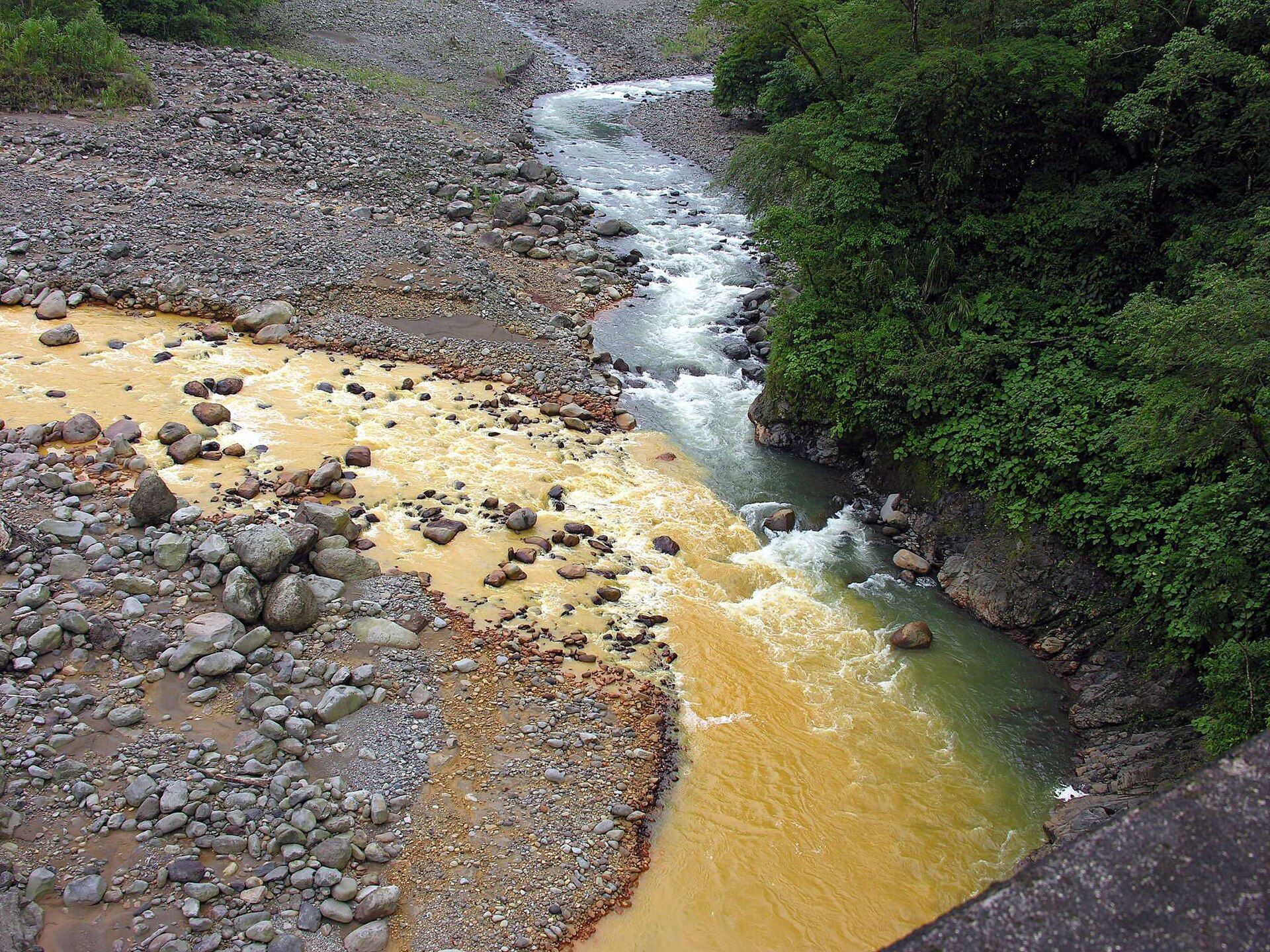
Image: File:Braulio Carrillo National Park.jpg by MongeNajera, via Wikimedia Commons (https://commons.wikimedia.org/wiki/File:Braulio_Carrillo_National_Park.jpg). License: CC BY-SA 3.0 (https://creativecommons.org/licenses/by-sa/3.0/). Cropped for display.
The road north left the city behind, and the green seemed to arrive all at once. A ridge rose ahead of us, almost hidden under cloud. Trees covered the slopes so densely that I could not imagine the ground beneath them. Then the road entered the mountains and the forest stood on both sides, tall and close. I had thought of Braulio Carrillo National Park as a place to stop on the way to somewhere else. Looking through the window, I began to wonder what I would miss if I only passed through.
The park protects a broad piece of the Central Volcanic Range. On a map it is an important block of habitat; from a car it can look like a long green blur. I wanted to exchange that blur for a few careful steps. We made a plan around an official public-use area rather than assuming any opening beside the road was a trail. The choice was practical, but it also felt respectful. A protected landscape is not an invitation to enter wherever I please. It offers specific ways to visit while keeping much of its life beyond my reach.
Leaving the road's rhythm
At Quebrada González, the noise of passing vehicles still reached me as I began walking. For a while it stayed in the background like a reminder of how close I was to the journey that had brought me here. Then the path curved, the trees absorbed the sound, and water and insects took its place. I had not traveled far in distance. The shift in attention was enormous. I felt my shoulders drop as my eyes adjusted to the dimmer light under the canopy.
The trail demanded an ordinary kind of care. I watched where I put my feet on damp ground and over roots, then stopped whenever I wanted to look up. It is surprisingly difficult to walk carefully and search for birds at the same time. Separating those tasks slowed me in a useful way. I noticed how leaves at shoulder height differed from those far above, and how a single patch of sunlight could turn a wet leaf bright enough to seem illuminated from within.
I had arrived expecting the forest to announce itself through wildlife. Instead, the first compelling sight was a tree trunk. Its surface held moss and small plants, and its base disappeared among fallen leaves. I stood close enough to see texture but far enough not to touch. The scene made me think about scale. The tree belonged to a forest extending well beyond the public path. My visit was a short line through it, and even that line offered more to see than I could take in.
Somewhere deeper in the green, a bird called twice. I waited for a third call that never came. I could have felt cheated by the absence of a sighting. Instead, I became more aware of the space between sounds. The forest was not quiet; it was layered. A small trickle nearby, insects farther off, wind moving through leaves at a height I could not judge. Nothing offered itself as a tidy focal point. The experience asked me to take in a whole atmosphere.
The corridor as an experience
Back on the road, the meaning of a rainforest corridor changed for me. I had used the phrase as if it meant a convenient route for travelers. Here it also described continuity in the landscape. The park holds forest across changing elevations and conditions. Its protected slopes matter because they remain connected on a scale much larger than the walk I could complete in an afternoon. The road cuts through that living expanse, and I felt fortunate to have seen even a small part of it from the ground.
As we drove on, I watched for openings that revealed the folds of the mountains. Clouds caught on one ridge while another briefly appeared behind it. Water ran along the roadside after rain. The changeability kept me from settling into a single postcard view. At times the forest looked impossibly lush. At others, cloud erased nearly everything except the nearest trees. I understood why a traveler might hurry through in poor visibility and think there was little to see. The obscured views were part of the place's character, and the nearby detail grew more vivid when the distant slope vanished.
I thought about the people who had made it possible to protect this forest and the continuing work required to care for it. A visitor can admire green from a window without knowing what it takes to keep a connected landscape intact. I did not want to claim expertise in conservation from a brief walk. I could at least allow the park to become more than scenery in my memory. It had a name, a public authority responsible for it, and boundaries meant to serve life beyond tourism.
The contrast with the city I had left that morning stayed with me. There was no clean dividing line between one world and the other. Water, weather, roads and people connected them. Yet entering the forest had made me aware of a different pace. Under the canopy, a few minutes of waiting felt substantial. In the car, the same minutes could disappear between bends. I wanted to carry some of the trail's attention with me as the journey continued.
I tried to imagine what this landscape looked like to someone who travels the route regularly. The bend that astonished me might be an ordinary marker in another person's week. That thought kept my sense of wonder from turning into a claim that I had discovered something. The forest was already known, studied, protected and lived beside. My role was to be a grateful visitor. The realization did not lessen the excitement of stepping onto the path. It made the experience feel more grounded, as if the wonder could exist alongside humility.
A second look at the same green
Later, I found myself describing the forest to a companion and hearing how inadequate my adjectives sounded. Dense. Wet. Green. All true, all too broad. I tried again, beginning with what I had actually noticed: the way drops fell from leaves after the rain had stopped; the bright opening above a dark stretch of path; the delicate plants on an old trunk; the bird whose call I heard but never saw. The details made the place return more clearly than the grand description had.
It also mattered that I could not turn every part of the experience into a photograph. The low light made some images indistinct. The water sounded better than it looked. I could not capture the temperature of the air changing as I stepped under the trees. I put the camera away for stretches and felt a familiar pressure lift. Nothing required me to produce proof that the forest had been worthwhile. I was allowed to experience it imperfectly.
Near the end of the walk, I encountered another traveler moving in the opposite direction. We exchanged a nod and stepped aside to give each other space. That small moment reminded me that public access is shared. Remaining on marked trails protects the place, but it also makes the encounter more pleasant for other people. I kept my voice low afterward, partly for wildlife and partly because the forest seemed to invite it. Respect here felt less like a list of restrictions and more like good manners extended to an entire landscape.
I paused at one last opening in the vegetation before leaving. The view was modest: more trunks, a shaded bank and a narrow piece of sky. Earlier in the trip I might have searched for a more dramatic frame. Now I noticed how the little patch of sky revealed the height of the trees around it. I listened for the bird again, heard only insects, and felt no disappointment. The walk had changed what counted as a successful stop. I had entered a place with no guarantee of a spectacle and found that sustained attention was its own reward.
I returned to the edge of the road with mud on my shoes and a different understanding of how to travel through the park. The road was useful; it connected destinations and made a broad region accessible. But a stop had given depth to the view. I no longer saw trees as a uniform wall. I knew that just beyond the moving window there were trails where light narrowed, water could be heard, and the smallest patch of ground held a surprising amount of life.
What stayed with me after the mountains
In the evening, when I was far from the trail, I looked at the map again. Braulio Carrillo occupied much more space than the route I had taken through it. The scale could have made my visit seem insignificant. Instead, it made the short walk feel honest. I had entered one public corner of a protected area, listened, watched and left the rest alone. I did not need to pretend I had known the whole park. There was dignity in a limited encounter if I paid it full attention.
I remembered an instant when the road noise had faded behind the trees. It had felt like passing through a doorway, though no door existed. The forest did not change to welcome me; my senses changed to meet it. I could imagine a different day with heavier rain or clearer skies, a different bird call or no call at all. The place would not owe me the same experience twice. That uncertainty made it feel alive rather than packaged.
The word corridor stayed with me as I planned the next part of the trip. It suggested movement, but not only my movement. Water passed through the hills. Clouds crossed the ridges. Animals used habitat in ways I could not see from a trail. People traveled the road to work, to visit family, to reach the coast. My brief passage was one strand among many. The park had helped me feel the complexity without asking me to master it.
I had once imagined a Costa Rica journey as a series of famous places separated by transit. Braulio Carrillo changed that picture. The land between stops was not empty time. A thoughtful pause could turn it into one of the most memorable parts of the trip. I would remember the bright leaf, the unseen bird and the sound of water where the road had nearly disappeared. I would remember looking out of the car afterward and knowing that the green was no longer a blur. It held more than I had seen, and I was glad of that.
The following morning, I found that I was still practicing the trail's slower way of looking. At another roadside stop I noticed a line of rainwater moving around a stone and the changing colors of a slope as clouds passed over it. I would have missed both before Braulio Carrillo. The park had not merely filled a gap in my itinerary. It had changed how I traveled through the gaps, and that felt like a lasting gift from a brief walk.
Editorial note: This first-person story is an illustrative, researched narrative created to inspire travel. It does not describe a documented visit by a Costa Rica Travel Professionals staff member or customer; the narrator, weather, walk and moment-by-moment scenes are imagined.
A world of wonder awaits
Plan your Costa Rica adventure
Tell our destination concierges what you want from Costa Rica, and we will help shape the journey.