Arenal: Rainforest Paths and a Thermal Evening | Costa Rica Travel Professionals
Travel Stories
Arenal: Rainforest Paths and a Thermal Evening
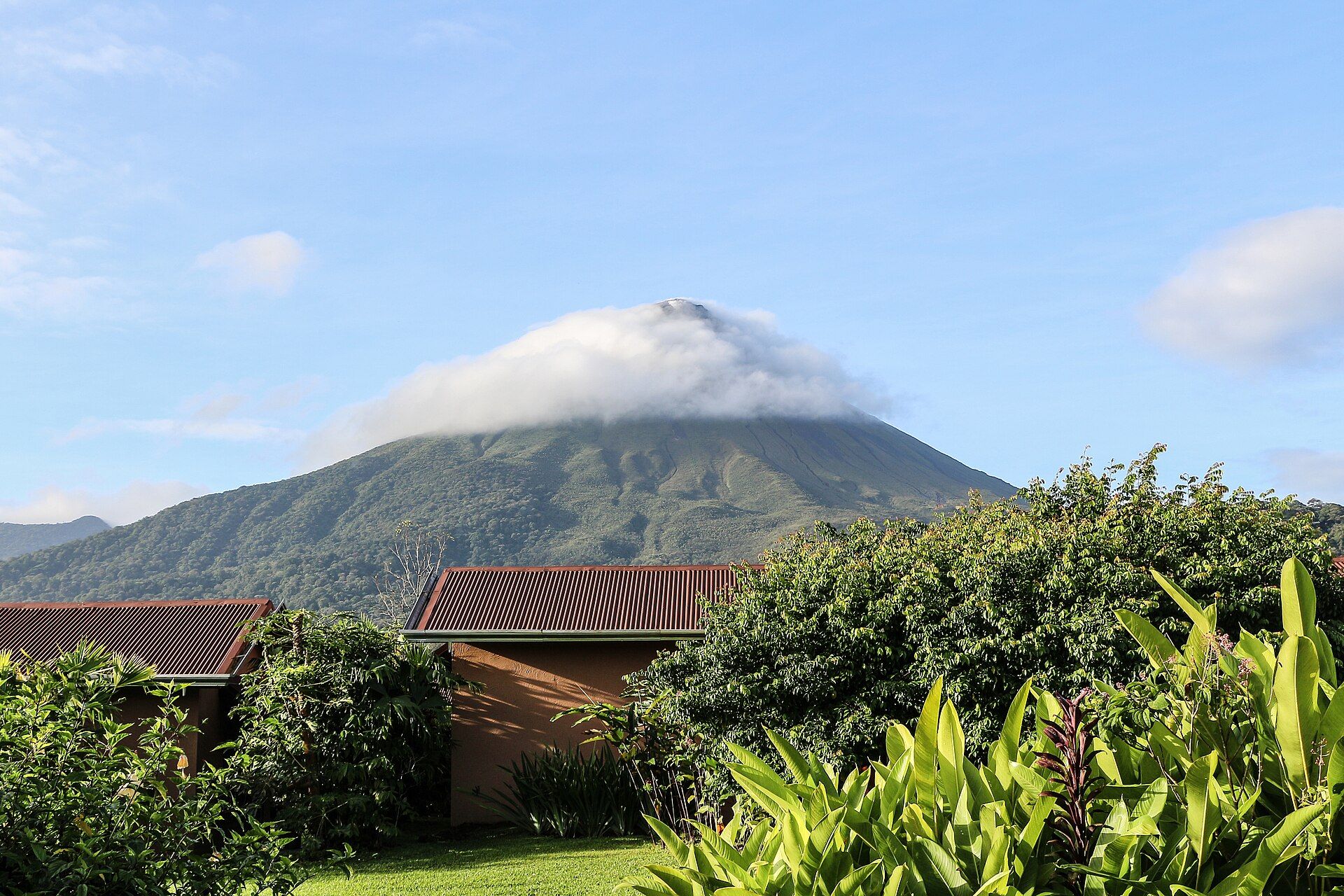
For most of the morning, the volcano is a rumor behind cloud. I know its outline from photographs, but the sky above La Fortuna has its own plans. I see a broad green slope, a low gray ceiling, and, now and then, a dark edge that
Image: File:Arenal Volcano 01.jpg by Bernard Gagnon, via Wikimedia Commons (https://commons.wikimedia.org/wiki/File:Arenal_Volcano_01.jpg). License: CC0 (https://creativecommons.org/publicdomain/zero/1.0/). Cropped for display.
For most of the morning, the volcano is a rumor behind cloud. I know its outline from photographs, but the sky above La Fortuna has its own plans. I see a broad green slope, a low gray ceiling, and, now and then, a dark edge that might be the mountain revealing itself. The uncertainty makes me look harder. Arenal is present even when it refuses to pose.
I have come for the combination that makes this part of Costa Rica so appealing: a walk through living forest by a volcanic landscape, followed by an evening in warm mineral water. In my mind the two parts of the day are separate. One is movement, the other rest. By nightfall I will understand how each deepens the other.
A mountain that changes the view
From the edge of La Fortuna, I keep glancing back toward the volcano. Its shape seems to rearrange with every shift in cloud. Once I catch a portion of the cone and stop in the middle of a sentence. A few moments later it is gone. The brief glimpse feels more compelling than a perfect view might have. It asks me to stay alert rather than check the sight off my list.
At Arenal Volcano National Park, the route enters a dense world of leaf shapes and shadows. The park's trails allow visitors to see forest, wildlife, and remnants of past lava flows from appropriate areas. That combination gives the walk an unusual sense of time. I am surrounded by growth, yet the ground also tells a story of change older than today's weather. Nothing feels frozen. The forest is reclaiming, adapting, and making something new.
The first stretch is humid enough that I feel it on my skin before I have gone far. I hear my steps against the path and a scattering of calls from the trees. I stop often, partly to look and partly because the landscape seems to reward a slower pace. A stand of broad leaves holds the rain that passed earlier. Water gathers at the tips and falls one drop at a time, the most delicate percussion against a much larger green background.
I keep my eyes on the marked trail. It is tempting to imagine that a better view waits just beyond the edge, but the boundaries are part of the experience. This is a volcanic environment as well as a protected habitat. Staying where visitors belong lets me pay attention to the place without pretending I own it. The path carries enough surprises of its own.
At a turn, the trees open. The mountain is still half wrapped in cloud, but a slope appears, dark and broad against the lighter sky. I stand there longer than the view seems to require. It is not a spectacular unveiling. It is a quiet adjustment in scale. The individual leaves and insects I was watching moments ago remain close, while the volcanic form makes the whole valley feel immense.
Reading the path slowly
The best part of the walk is the way it resists being summarized. There are no fireworks every hundred yards. Instead there is a sequence of textures: rough bark, slick leaf, a patch of exposed stone, a corridor where branches lean toward one another. I begin to notice how light changes the color of the same green. A leaf in open sun almost glows; another under the canopy seems nearly blue.
I hear a bird call I cannot identify, then spend a full minute watching the place where the sound came from. Nothing moves. The call comes again from farther away. I smile at how easily I can be fooled by the forest's acoustics. I do not need to know the bird's name for the moment to matter. The sound has made me look up, and looking up has shown me the layers overhead that I had missed.
On another stretch, the path crosses ground that feels different underfoot. The park's trails are associated with old lava areas, and the change in texture gives me a more tangible sense of the volcano's history than a distant photograph could. I do not try to read the rock like an expert. I simply notice the contrast between hard ground and the abundance of plants growing around it. The scene feels less like a story of destruction than one of succession.
There is also a human rhythm to the walk. Other visitors pause at different things: a distant view, a patterned trunk, the possibility of movement above. We pass one another quietly, each carrying a private version of the same landscape. I like that the park can hold both discovery and restraint. Nobody needs to claim the definitive Arenal experience. The mountain is larger than any single day here.
As afternoon light shifts, the clouds begin to move faster. I see a cleaner line of the slope for a moment, then another veil crosses it. I try to remember the view as it is, unfinished. Travel photographs often ask a place to look its most recognizable. This mountain offers something more interesting: a face that changes while I watch. I came wanting the postcard and find myself attached to the uncertainty.
Leaving the forest on my skin
Back near La Fortuna, I feel the walk in my calves and shoulders. It is the good fatigue that comes from paying attention as much as moving. The day has been warm and damp. My shirt carries the memory of the trail. I drink water, sit for a while, and watch the mountain disappear again behind the clouds. Arenal has not failed to appear; it has appeared in several partial forms, each one changing the mood of the moment.
The prospect of a thermal soak has been in the back of my mind all day. The area around La Fortuna is known for hot springs, with different venues offering different settings and arrangements. I have deliberately left the evening loose rather than build it around a photograph of a pool. I want the water to be a continuation of the day, not a reward I have to earn.
When I ease into the warm water, the first sensation is simple relief. The warmth reaches the muscles that carried me along the trail. I rest my arms at the edge and let the evening gather around me. There is no dramatic change in who I am. There is only a gradual softening: breath slowing, shoulders dropping, the day's sharp details returning in a gentler order.
I think of the rough bark I noticed in the park and the smooth surface of the water around my hands. I think of the way I kept trying to see the volcano whole and the pleasure of receiving it in fragments. The walk taught me to pay attention outward; the soak makes room to notice what the outward attention has done inside me. I feel both tired and awake.
The air above the pool is cooler than the water. That difference makes each small movement vivid. I lift my hand and feel the temperature change along my fingers. I hear a low conversation nearby, then it fades beneath the sound of water moving. The evening is not silent, but it has the kind of calm that gives every sound a little space.
What the clouds give back
I look toward the mountain once more as daylight thins. Its outline is only partly visible, but by now that feels right. Arenal's appeal is not limited to a clean view of a cone. The surrounding forest, the history written in the ground, the damp air, and the warm water belong to the same story. Even the clouds contribute by reminding me that the landscape is active and not arranged around my expectations.
I am tempted to narrate the day as a neat transformation: effort in the forest, relaxation in the pool. It was not quite that orderly. There were restful moments on the trail, when I stopped and listened. There are alert moments now, when I notice the change of air on my face. Motion and stillness have been interwoven from the start.
That realization changes how I imagine a trip here. I would leave space between activities. I would not schedule every hour to force a perfect volcano view. A morning cloud can become an invitation to look closer at the forest. A later opening in the sky can feel like a gift precisely because I have stopped demanding it. The mountain's timing is its own.
I also think about the people who keep these places accessible: park staff, guides, and those who care for the thermal spaces visitors enjoy. A trip can feel effortless from the traveler's side only when a great deal of care sits behind it. I want to travel with that awareness, to follow the rules of the protected area, to treat the water and surrounding land with respect, and to remember that the place is home before it is a holiday.
As the last light goes, I do not reach for my camera. There is little it could capture of the day's most important details: a drop falling from a leaf; the moment a cloud thinned; the first exhale in warm water. The picture I carry is less precise and more complete. It includes weather that changed my plans and a path that made me glad they changed.
Later, when I try to describe Arenal, I begin with the volcano and end with everything around it. I remember the green close to my face, the dark stone beneath it, and the warm water after the walk. I remember looking up repeatedly, never quite knowing what the sky would reveal. That is the shape of the day: a series of invitations to notice, to move, and finally to rest.
If I return, I may see the cone clear from the start. I would welcome that view. But I would still want the clouded version of this day in my memory. It showed me that the best travel moments do not always arrive when the landscape performs exactly as I pictured it. Sometimes they begin when I stop waiting for the perfect image and let the place unfold on its own terms.
I would make time, too, for an unplanned pause at the edge of the trail. The park is easy to imagine as a route toward a viewpoint, yet the moments that remain with me are the ones when I stopped traveling toward anything at all. Arenal gave me a reason to look farther, but it also taught me to look close.
That difference follows me into the evening. From the water I can no longer study a leaf or trace the texture of the path, but I can remember both with surprising clarity. My feet know the shape of the walk even as they rest. The mountain remains out there in the gathering dark, visible or invisible according to the cloud, and I am content for once not to check. The day has already given me more than the image I came to collect.
Editor's note: This first-person story is an illustrative, researched narrative created for travel inspiration. It does not recount an actual visit by a Costa Rica Travel Professionals staff member or customer. Weather, visibility, wildlife, and thermal venue conditions vary.
A world of wonder awaits
Plan your Costa Rica adventure
Tell our destination concierges what you want from Costa Rica, and we will help shape the journey.